
"The New Age of Borders: How Global Travel is Evolving in 2025"
From E-Visas to Biometric Passports — What You Need to Know Before You Travel This Year

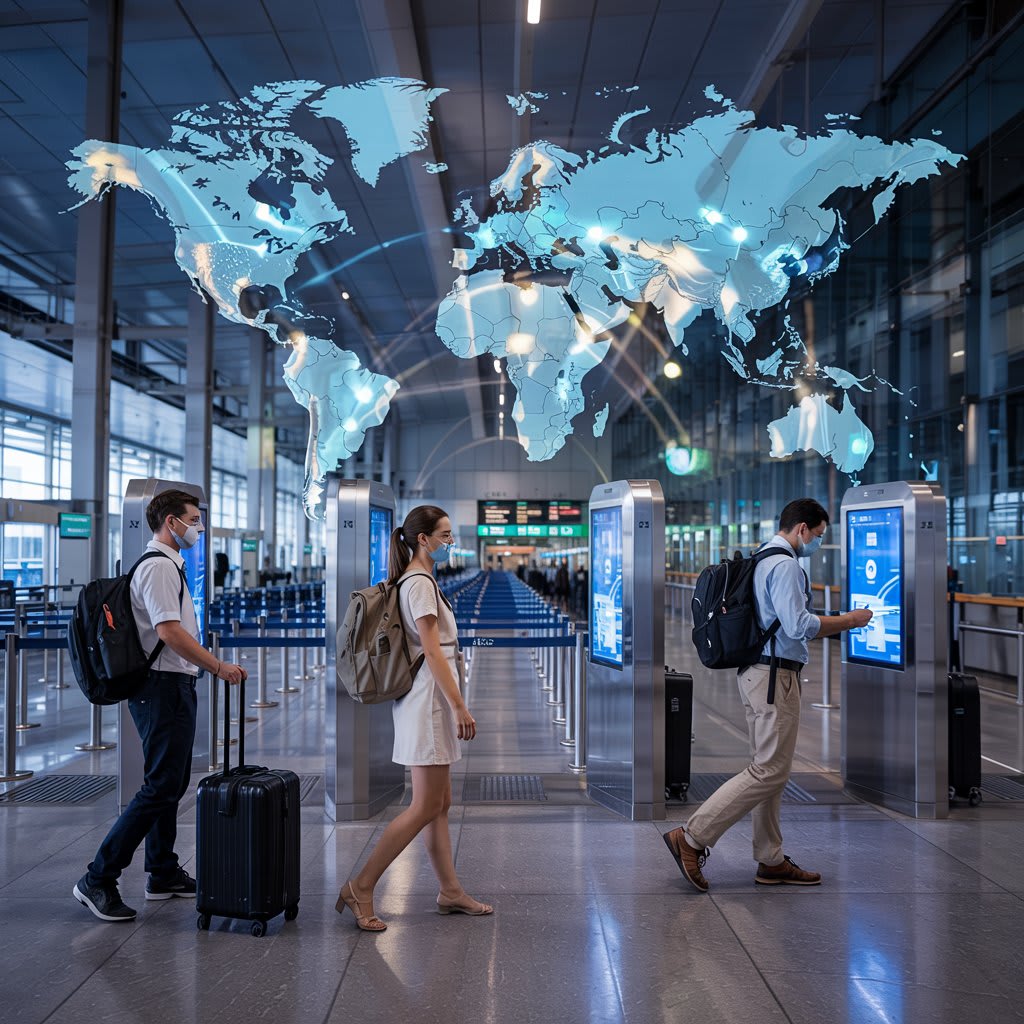
The world has changed dramatically over the past few years. International travel, once straightforward for many, now operates under new rules, new technologies, and new philosophies. As we move deeper into 2025, the very idea of borders is evolving — not disappearing, but transforming.
Travel is becoming faster, safer, and more high-tech than ever before. Yet it’s also layered with new regulations, digital identities, and shifting alliances. Whether you're a seasoned globetrotter or planning your first international trip, understanding how global travel works today is essential.
Let’s explore how technology, politics, and culture are reshaping the borders of our world.
1. The Rise of E-Visas and Digital Travel Permits
Gone are the days when getting a visa meant mailing your passport to a distant embassy.
Today, E-Visas dominate international travel. In fact, over 70% of countries now offer digital visa systems, allowing travelers to apply online, upload documents, pay fees, and receive approval — often within 48 hours.
Some highlights:
India's e-Visa program now covers over 150 countries.
Kenya made headlines in early 2025 by going fully digital for tourist visas.
The European Union launched ETIAS (European Travel Information and Authorization System), requiring non-EU travelers to complete a quick online security check before arrival.
E-visas are designed to make travel more accessible — but also to screen travelers more effectively before they arrive.
2. Biometric Passports and Face Recognition at Airports
The "smart border" is here.
Biometric passports, embedded with chips that store fingerprint, iris, and facial recognition data, are becoming the global standard.
When you arrive at many major airports — like Singapore’s Changi, London Heathrow, or Dubai International — you no longer need to see a human immigration officer.
Instead:
You scan your face.
A computer matches it to your digital passport.
The gate opens automatically if everything matches.
Benefits:
Faster processing (no long immigration lines)
Greater security (harder to forge identities)
Touchless travel (important in a post-pandemic world)
According to the International Air Transport Association (IATA), over 80% of travelers will use some form of biometric technology by the end of 2025.
3. Health Passes and Vaccination Proofs Are Still Needed
Although COVID-19 officially ended as a global health emergency, health documents are here to stay.
Many countries now require:
Proof of vaccination (not just for COVID-19, but others like Yellow Fever)
Health declarations for entry
Digital health passes stored on apps like the WHO Global Health Pass
For example:
Japan requires travelers from certain countries to show proof of flu vaccinations during peak seasons.
Brazil launched a "Clean Traveler" program awarding digital badges to those meeting high health and safety standards.
Travelers need to stay updated on health entry requirements for each destination, as rules can change quickly based on new outbreaks or public health concerns.
4. Border-Free Zones Are Expanding
While some borders are tightening, others are disappearing.
Schengen Area (Europe):
The Schengen Zone — which allows free movement across 27 European countries — continues to grow. Croatia officially joined in 2023, and negotiations are ongoing with other Balkan countries.
African Continental Free Trade Area (AfCFTA):
Africa is pushing for visa-free travel between member states to boost trade and tourism. Rwanda and Kenya, for instance, have already implemented visa-free entry for African citizens.
ASEAN Visa Proposal:
Southeast Asian nations are discussing an "ASEAN visa," similar to Europe’s Schengen, allowing travelers to move across countries like Thailand, Vietnam, and Indonesia with a single permit.
The future is trending toward regional mobility, making multi-country trips easier than ever.
5. Political Tensions and New Travel Restrictions
Not everything is easier in 2025.
Some regions have tightened travel rules due to political tensions.
Examples:
The US and China have stricter visa policies between them, requiring more extensive background checks.
Russia's invasion of Ukraine led to widespread flight bans over Russian airspace for Western airlines.
Some Middle Eastern countries maintain tight restrictions based on diplomatic relationships.
It’s crucial to check not only visa requirements but also political advisories before planning trips to sensitive regions.
6. Eco-Travel and Carbon Passports
Sustainability is a massive trend in global travel.
Several airlines and countries now offer "carbon passports" — a digital record showing the environmental impact of your travels.
Some initiatives include:
Incentives like discounts for choosing eco-friendly flights.
Tracking personal carbon emissions from air travel.
Access to “green lanes” at airports for low-impact travelers.
Countries like Costa Rica and New Zealand have launched full “Green Entry Programs” where sustainable behavior earns special travel perks.
Travelers in 2025 are encouraged — and sometimes even rewarded — for reducing their ecological footprint.
7. The Rise of Travel Bubbles and Regional Tourism
Instead of global free-for-alls, many countries focus on "travel bubbles" — safe corridors between nations with low infection rates and stable relations.
For instance:
Australia and New Zealand re-established a "Trans-Tasman Bubble" for citizens to travel quarantine-free.
Caribbean nations created regional alliances offering mutual entry without tests or quarantines.
This regional focus boosts local economies and allows safer, more manageable tourism.
Conclusion
Global travel in 2025 is more complex, exciting, and innovative than ever before.
Technology is making borders smarter. Health and sustainability are influencing policies. Regional partnerships are encouraging closer ties between neighboring countries. Yet political tensions remind us that travel freedom is never guaranteed.
For modern travelers, flexibility, preparation, and digital savvy are key.
The world’s doors are open — but you’ll need the right digital keys to walk through them.
Welcome to the New Age of Borders!
#Travel2025 #FutureOfTravel #GlobalTravel #DigitalNomadLife #SmartBorders
About the Creator
Muhammad Rafiq
"Writer, dreamer, and believer in second chances. I create stories that light a fire in your soul and push you closer to your goals."
Keep reading
More stories from Muhammad Rafiq and writers in FYI and other communities.




Comments
There are no comments for this story
Be the first to respond and start the conversation.