
The Mysterious Case of the Tunguska Event: A Cataclysmic Explosion with No Explanation
A Cataclysmic Explosion with No Explanation

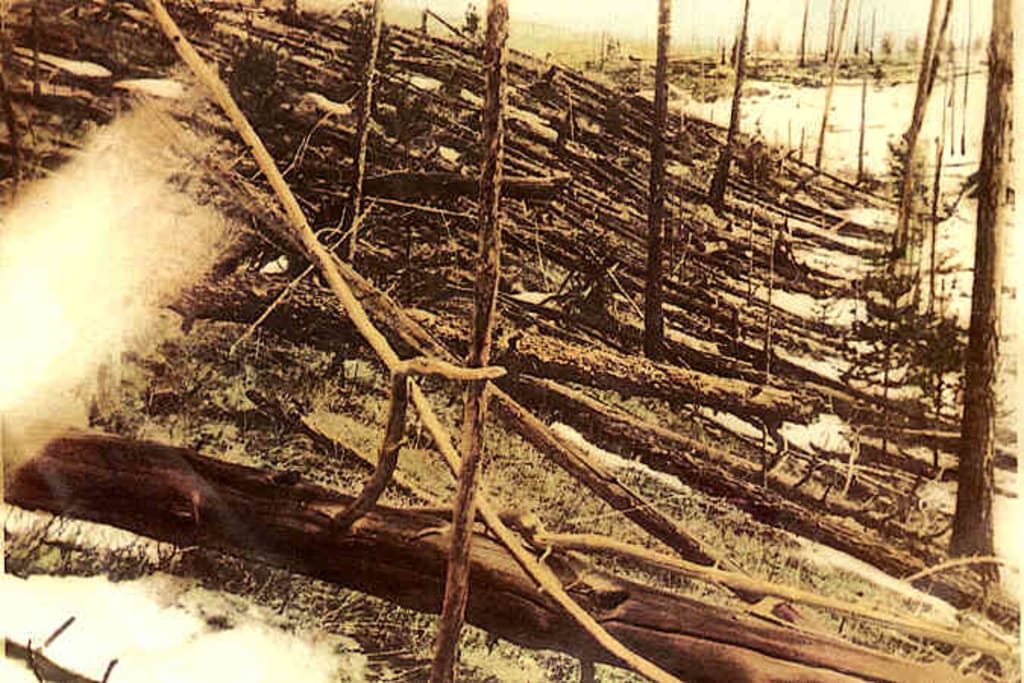
In the vast expanse of Siberia, in the early morning hours of June 30, 1908, a serene landscape was abruptly shattered by a cataclysmic event that would baffle scientists, confound experts, and fuel countless theories for decades to come. This event, now known as the Tunguska Event, would go down in history as one of the most enigmatic and mysterious occurrences ever witnessed by humanity.
The remote Tunguska region of Siberia was virtually untouched by modern civilization at the time. The indigenous Evenki people inhabited the area, living in harmony with the untamed wilderness. On that fateful morning, as the sun was beginning to rise, a sudden and intense explosion tore through the atmosphere. The blast released an energy equivalent to over a thousand Hiroshima atomic bombs, flattening approximately 2,000 square kilometers of forest and knocking down an estimated 80 million trees.
The shockwave generated by the explosion reverberated around the world. Seismic stations as far away as England registered the event, and atmospheric changes were detected across the globe. Witnesses in nearby settlements reported seeing a brilliant fireball streaking across the sky before a deafening explosion shook the earth beneath their feet. Despite the immense power of the explosion, remarkably, there were no confirmed human casualties. This was largely due to the sparsely populated nature of the region.
The aftermath of the event painted a surreal scene. An eerie silence enveloped the devastated landscape as the enormity of the destruction became apparent. The fallen trees formed intricate patterns radiating outward from the epicenter of the explosion, giving the area an otherworldly appearance. The Evenki people, who considered the land sacred, were deeply affected by the sudden transformation of their homeland.
In the wake of the explosion, a flurry of scientific inquiries began. Expeditions led by Russian scientist Leonid Kulik set out to investigate the event's cause. However, the region's remote location and harsh climate posed significant challenges. When Kulik and his team finally reached the blast site in 1927, they found a marshy lake occupying the epicenter. Yet, there was no sign of a crater, and the absence of a massive impact site puzzled researchers.
The first theories surrounding the Tunguska Event suggested that a meteorite or comet had collided with Earth. However, the lack of a substantial impact crater cast doubt on this explanation. Furthermore, no fragments of a celestial body were discovered at the scene. Some scientists proposed that the explosion was caused by the airburst of a comet, where the object disintegrated upon entering Earth's atmosphere, releasing an enormous amount of energy.
As time went on, alternative theories emerged. Some speculated that the explosion was triggered by the ignition of a natural gas deposit beneath the Earth's surface. Others proposed the involvement of antimatter or even a black hole. However, these hypotheses lacked substantial evidence and were often met with skepticism from the scientific community.
The Tunguska Event remains an unsolved mystery to this day, captivating the imagination of researchers, writers, and conspiracy theorists alike. Despite numerous expeditions, advanced technology, and sophisticated analysis techniques, no definitive explanation for the explosion has been agreed upon. The enigma of the Tunguska Event serves as a reminder of how much we still have to learn about the workings of our universe.
The legacy of the Tunguska Event stretches far beyond the confines of Siberia. Its impact on the fields of astronomy, geology, and space science spurred new avenues of research and led to a greater understanding of the potential hazards posed by space objects. The event also ignited the public's interest in cosmic phenomena and planetary defense.
As scientists continue to delve into the mysteries of the cosmos, the story of the Tunguska Event remains a poignant reminder that, despite our advanced knowledge and technology, there are still moments in history that elude our understanding. The explosion over Siberia's vast wilderness continues to beckon us with its unanswered questions, inviting us to explore the uncharted territories of the universe and uncover the truth behind its enigmatic origins.
About the Creator
Keep reading
More stories from Sagar Karn and writers in FYI and other communities.
The Strange Mystery of the Oak Island Treasure: A Search for Wealth and Secrets
In the heart of the tempestuous Atlantic Ocean lies a small and enigmatic island known as Oak Island. Surrounded by myths and legends, this remote piece of land has captured the imagination of treasure hunters, adventurers, and historians for generations. It is a place where reality and fiction intertwine, where the thirst for wealth and the allure of secrets collide in a strange and captivating mystery.
By Sagar Karn2 years ago in FYI




Comments
There are no comments for this story
Be the first to respond and start the conversation.