
THE MOST TERRIBLE STREET IN LONDON
The notorious stretch in Spitalfields was somewhere that boasts a murder on average once a month and a murder in every house.

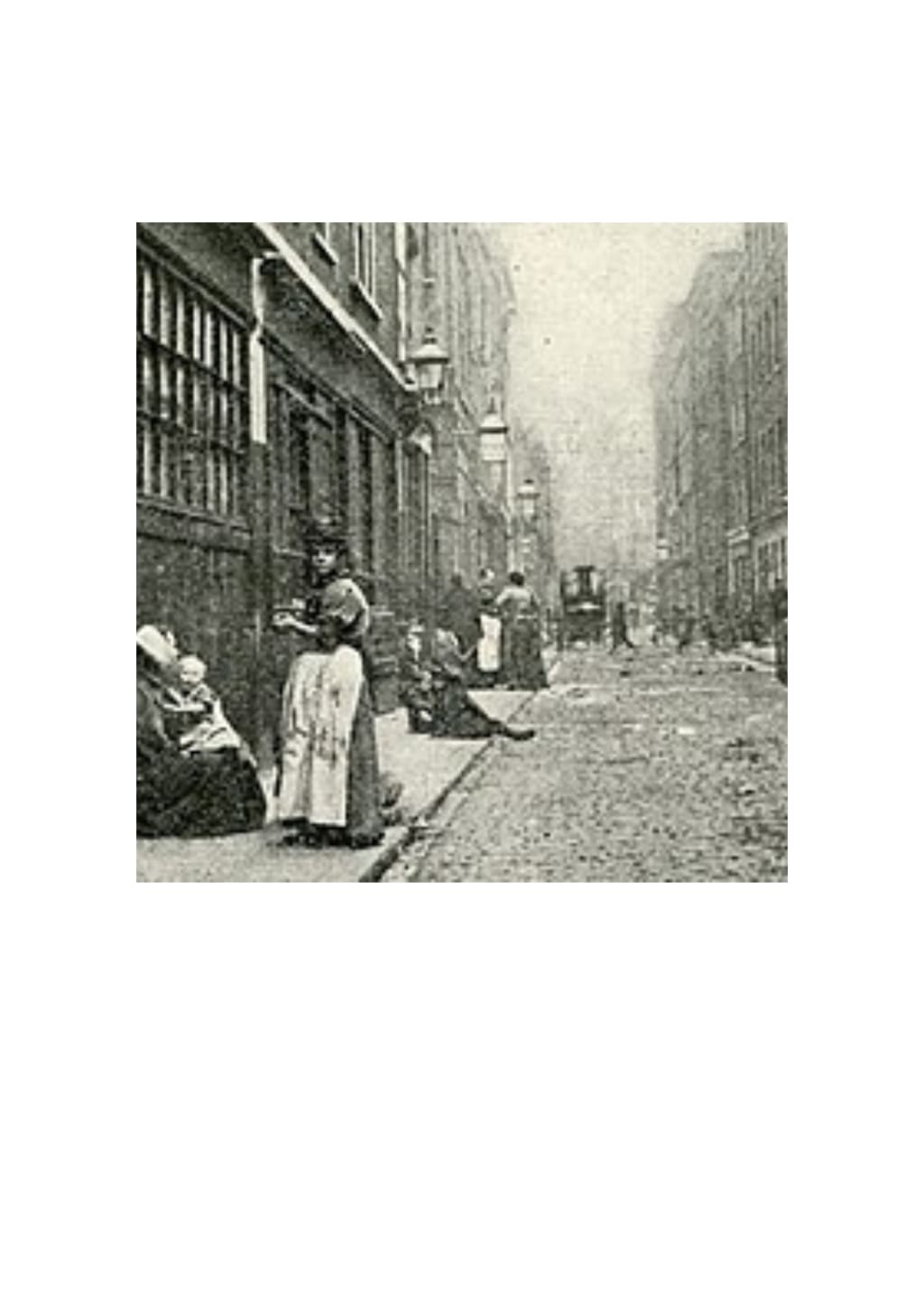
Laid out in 1674, Spitalfields was London’s chief silk weaving area. And by the 18th century, Dorset Street was already looking dilapidated. In the 19th century–when the trade was disappearing, rambling, filthy lodging houses dominated it. They even enclosed the gardens so the property-owners could jam even more people into their accommodation.
On the wall of the Ten Bells pub, near Spitalfields Market. There’s a Victorian tiled mural portraying the area in the middle of the 18th century. Back then, the area was at the peak of its wealth as London’s silk weaving district. One scene portrays a prosperous-looking man and lady visiting a weaver’s shop. It shows them examining cloth.
Silk weaving was not the only trade in Spitalfields–Truman’s brewery had operated there since 1669 and Spitalfields Market was developing in the 18th century. However, its fall was a bitter blow for the district. Some people who lost their jobs turned to crime and prostitution to keep the roofs over their heads. While others starved to death.
A colourful account of crime and vice in Dorset Street is given in Ralph L. Finn’s biography of a Jewish boyhood in the East End: ‘It was a street of whores. There is, I always feel, a subtle difference between a whore and a prostitute. Whores are debauched old bags. It teemed with nasty characters–desperate, wicked, lecherous, razor-slashing hoodlums. No Jews lived there. There were pubs every few yards. Bawdy houses every few feet. It was peopled by roaring drunken fighting-mad killers.’
Many of the settlers from Ireland, fleeing the famine, appeared in the vicinity in pursuit of work and put an enormous problem on East End property and there were soon accounts of severe overcrowding.
In response to demand, lodging houses, including ones in Dorset Street, sprung up to deliver for those needing places to live in. These places offered housing nightly and was frequented by those on the edges of society, including criminals and prostitutes. Soon the housing in the courts and alleys became infested with people and disease and illness spread in the suffocating atmosphere.
Things got worse when the authorities began demolishing slums, which put pressure on the accommodation that lingered. Only serving the interests of the property-owners who shoved up the rents. A policeman in Spitalfields in the late 1900s said of the lodging houses that the landlords of these places are greater criminals than the unlucky unfortunates who have to live in them.
Irrespective of its status, it still came as a huge shock. When the fifth murder committed by Jack the Ripper, took place in Miller’s Court, Dorset Street, in late 1888. The landlord John McCarthy could not overlook his tenant, Mary Jane Kelly, was over six weeks in arrears with her rent. He decided it was time to see if Kelly would pay up. He ordered his assistant, Thomas Bowyer, to pay Kelly a visit before she left for the day. When Bowyer got there, he knocked on the door but got no answer. He turned the corner of the yard and spotted a two of the windowpanes were smashed. Reaching in he pulled the curtain across to see if she was there. He saw what looked like two chunks of meat sitting on the table near the bed. Looking in a bit more, he saw a bloody corpse, contorted beyond recognition. With parts of the rest of the body scattered over the blood-soaked bed.
If you visit Spitalfields you won’t find anyplace named Dorset Street. The local council renamed it, Duval Street. In the 20s the Corporation of London acquired Spitalfields Market and started a major transformation of the area, which included the demolition of the north side of Duval Street, including Miller’s Court. The fruit market opened in 1928. Another market development in the 1960s caused Duval Street to become a lorry park. The buildings on the south side of Dorset Street were demolished and made into a multi-storey car park in the 60s.
About the Creator
Paul Asling
I share a special love for London, both new and old. I began writing fiction at 40, with most of my books and stories set in London.
MY WRITING WILL MAKE YOU LAUGH, CRY, AND HAVE YOU GRIPPED THROUGHOUT.
paulaslingauthor.com
Keep reading
More stories from Paul Asling and writers in FYI and other communities.
THE VICTORIAN FALLEN WOMAN
In the nineteenth century, femininity held an important position. A woman’s social and cultural role was sanctified, and the woman was protected and defended. But what women did not adhere to the ideal? A woman deviating from the norm, ‘fallen’ from virtue, was both an outcast and a threat, a victim and a scapegoat.
By Paul Asling4 years ago in FYI
The Art of Traveling in Style: A Guide to Luxury Travel Services
Traveling has always been more than just moving from one place to another—it’s a chance to discover, unwind, and experience life in ways that stay with you forever. But there’s a distinct difference between a standard trip and a journey that feels truly luxurious. Luxury travel services are not just about expensive hotels or first-class flights; they are about crafting experiences that are seamless, personalized, and meaningful.
By All 4 Season7 days ago in FYI




Comments
There are no comments for this story
Be the first to respond and start the conversation.