


Who is Dr. Masaru Emoto? What is his water experiment?
Dr.Masaru Emoto was a Japanese businessman, author and pseudo-scientist. Emoto did experiments with water and began to take photographs of frozen ice crystals. He quoted that these photographs of crystals are filled with much wisdom for us. In contrast to tap water, natural water displays a beautiful array of crystals—even more so when the natural water is exposed to beautiful music. There are also fascinating differences generated in the crystals when the water is shown different words, such as "gratitude" or "stupid."
Dr Emoto wrote his first book, The Messages of Water along with a collection of photographs in June 1999. Later he had all his Japanese explanations translated to English, which led to further successes.
What water does to us is much more than what we think.
The average human body is 70 per cent water. We start out life being 99 per cent water, as fetuses. When we are born, we are 90 per cent water, and by the time we reach adulthood we are down to 70 per cent. If we die of old age, we will probably be about 50 percent water. In other words, throughout our lives, we exist mostly as water. Water in a river remains pure because it is moving. When water becomes trapped, it dies. Therefore, water must constantly be circulated. The water—or blood in the bodies of the sick is usually stagnant. When blood stops flowing, the body starts to decay, and if the blood in your brain stops, it can be life-threatening. But why does blood become stagnant? We can see this condition as the stagnation of emotions. Modern researchers have shown that the condition of the mind has a direct impact on the condition of the body. When you are living a full and enjoyable life, you feel better physically, and when your life is filled with struggles and sorrow, your body knows it. So when your emotions flow throughout your body, you feel a sense of joy and you move towards physical health. Moving, changing, flowing—this is what life is all about.
Water is a life force. If we lose 50 per cent of the water in our bodies, we can no longer maintain life. Water, carried by the blood and bodily fluids, is the means by which nourishment is circulated throughout our bodies. This flow of water enables us to live active lives. Water serves as the transporter of energy throughout our body. If the body is clogged and soiled, then the cargo in the freight car will also become filthy, and so it is essential that water always remain clean. More now than in the past, the medical community has begun to see water as a transporter of energy, and it is even being used in the treatment of illness. Homoeopathy is one such field where the value of water is recognized.
How did Dr Emotto do his experiment?
He put fifty different types of water from different sources in fifty different Petri dishes then froze the dishes at -20°C (-4°F) for three hours in a freezer. The result is that surface tension forms drops of ice in the Petri dishes about one millimetre across. The crystal appears when you shine a light on the crown of the drop of ice. When he photographed the formation of the crystals, he realized that different water formed different crystals. Some of them were clearly similar, some were deformed, and in some types of water, no crystals at all formed. First, he looked at the crystals of tap water from different locations. The water of Tokyo was a disaster not a single complete crystal was formed. Tap water includes a dose of chlorine used to sanitize it, utterly destroying the structure found in natural water. However, within natural water, no matter where it came from—natural springs, underground rivers, glaciers, and the upper reaches of rivers—complete crystals formed. Then the researcher exposed the water to music. After considerable trial and error, they reached the conclusion that the best method was probably the simplest—put a bottle of water on a table between two speakers and expose it to a volume at which a person might normally listen to music. They used the same water that they had used in previous experiments. First they tried distilled water from a drugstore.
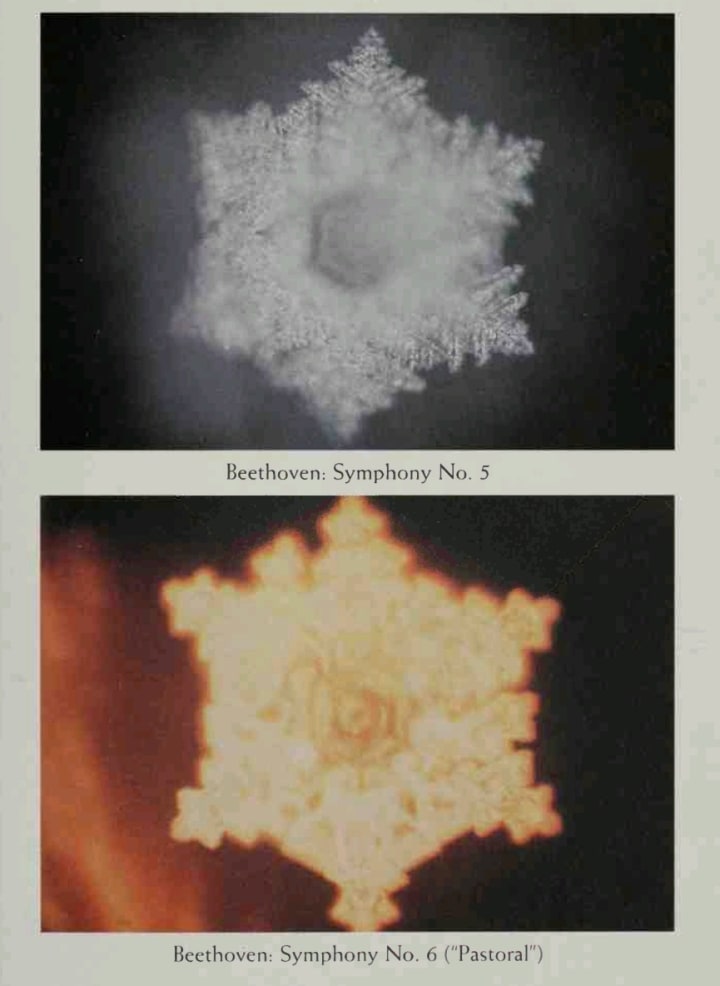
Beethoven's Pastoral Symphony, with its bright and clear tones, resulted in beautiful and well-formed crystals.
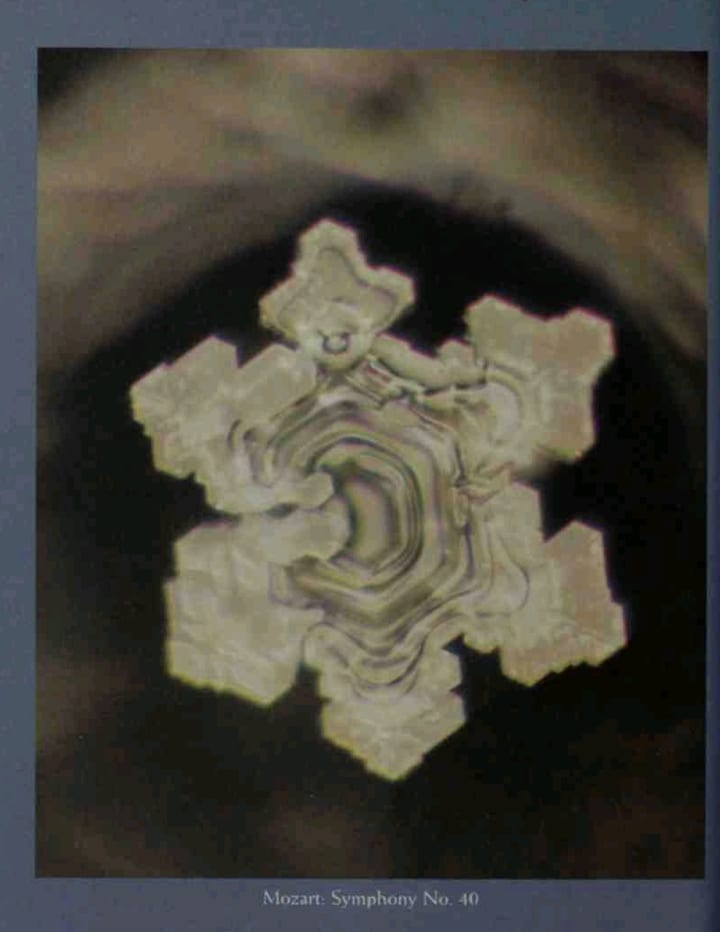
Mozart's 40th Symphony, a graceful prayer to beauty, created crystals that were delicate and elegant.
And the crystals formed by exposure to Chopin's Etude in E, Op. 10, No. 3, sur- prised us with their lovely detail.
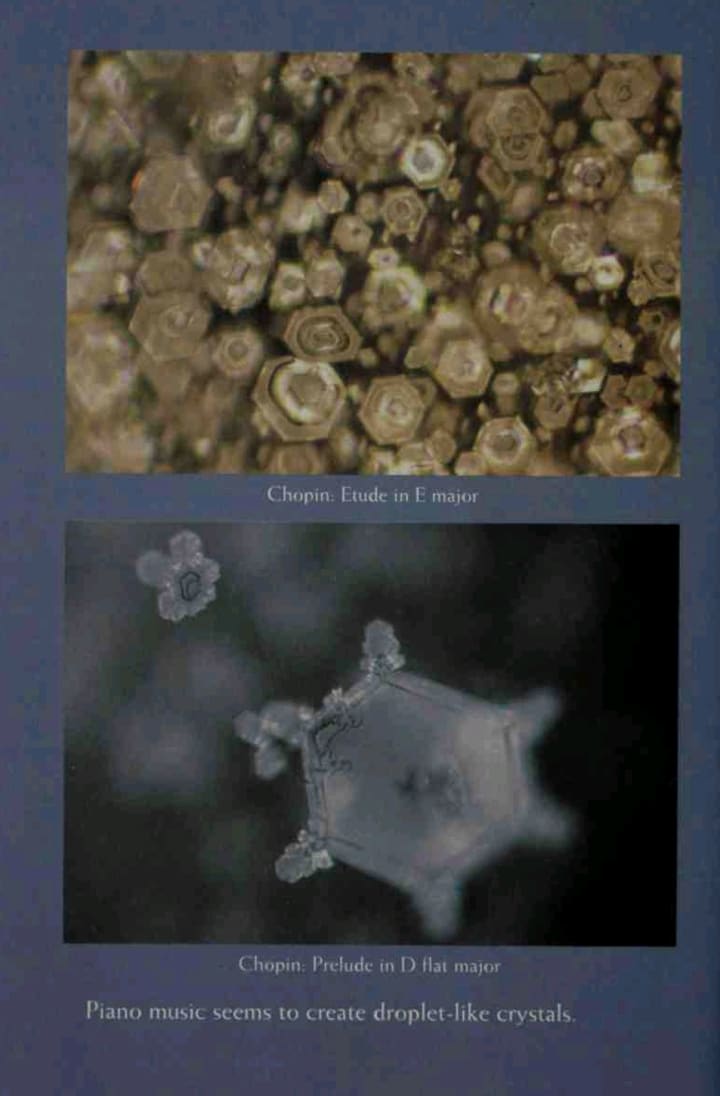
All the classical music that they exposed the water to resulted in well-formed crystals with distinct characteristics.
In contrast, the water exposed to violent heavy metal music resulted in fragmented and malformed crystals at best.

They wrote words or phrases like "Thank you" and "Fool" on pieces of paper, and wrapped the paper around the bottles of water with the words facing in. Water exposed to "Thank you" formed beautiful hexagonal crystals, but water exposed to the word "Fool" produced crystals similar to the water exposed to heavy-metal music, malformed and fragmented.
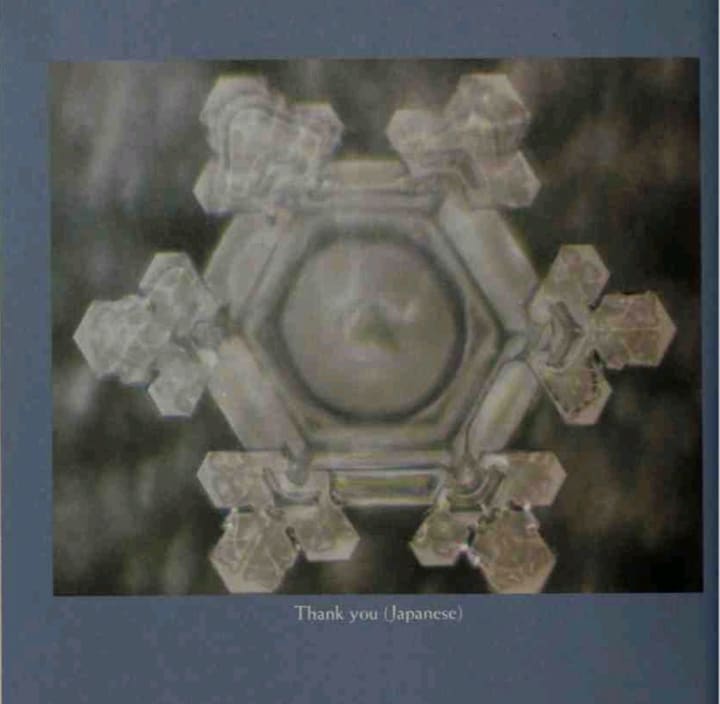
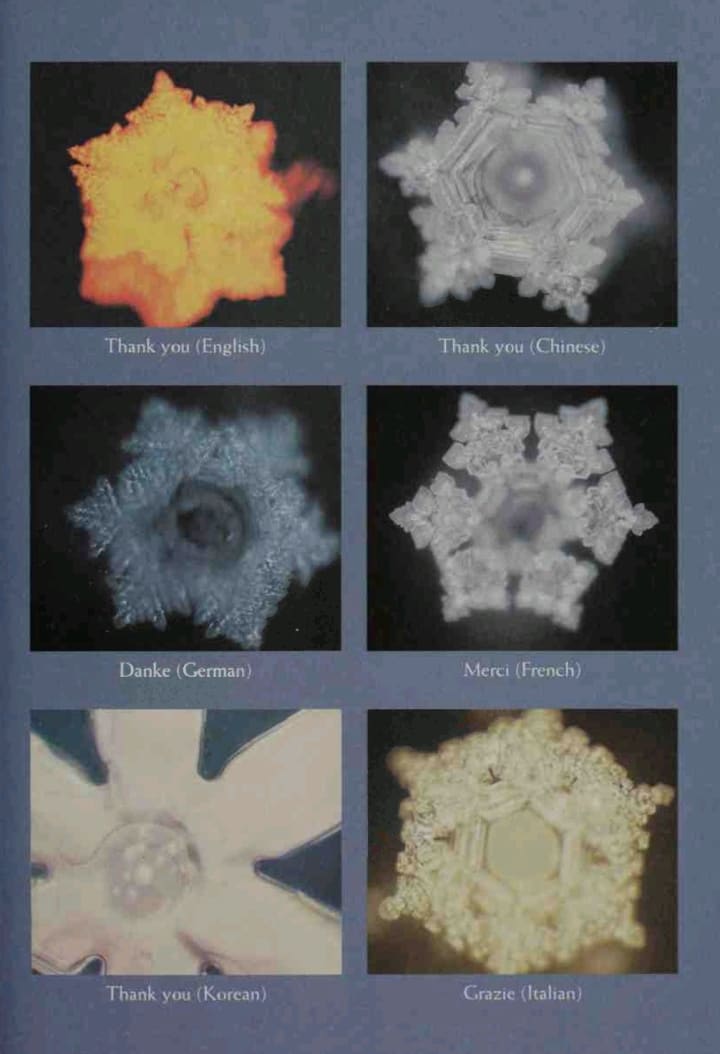
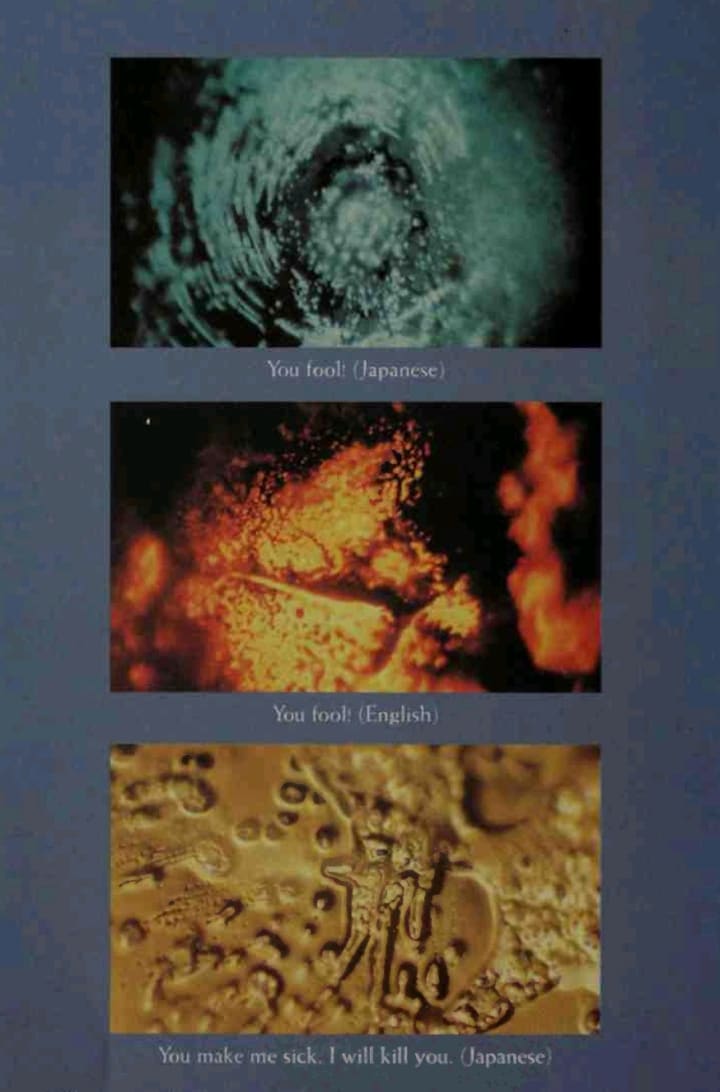
Further experimenting showed that water exposed to positive expressions like "Let's do it!" created attractive, well-formed crystals, but that water exposed to negative expressions like "Do it!" barely formed any crystals at all.
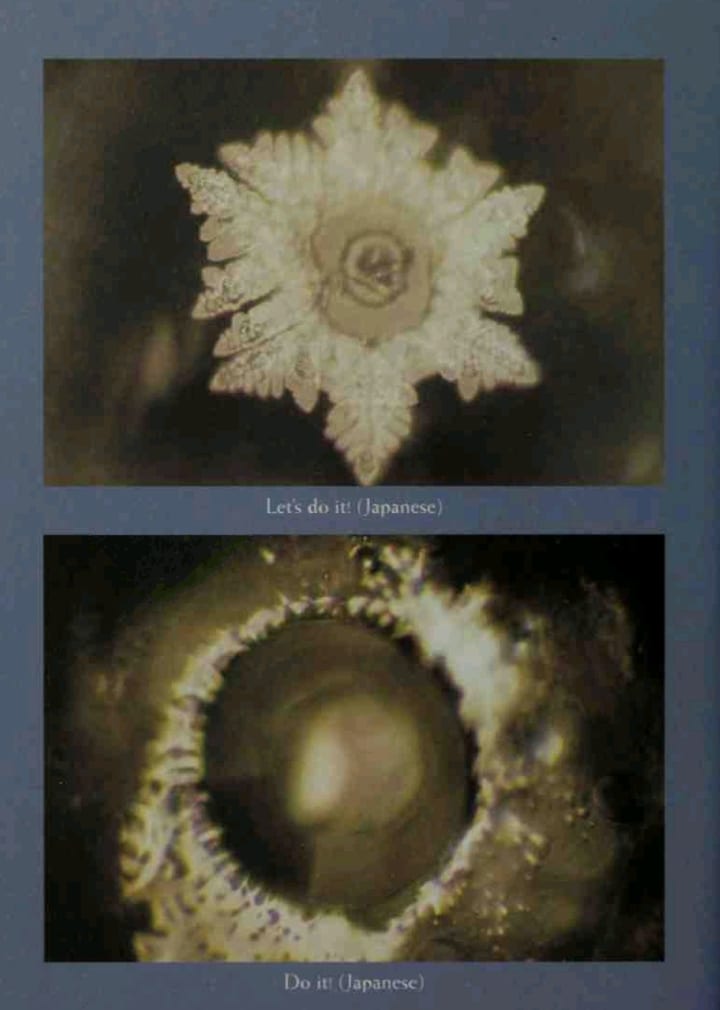
The lesson that we can learn from this experiment has to do with the power of words. The vibration of good words has a positive effect on our world, whereas the vibration from negative words has the power to destroy.


Comments
There are no comments for this story
Be the first to respond and start the conversation.