


I worked in the healthcare field and because of this I studied and learned a lot about the origin of today’s medicine. Not too long ago, during one of our trips, I got to help a midwife doctor and the experience was amazing. I realized that, although I know a lot about medicine I did not know anything about midwifery. In my head, I thought that maybe it was the way Indians did it and we copied. I had a midwife for one of my birth and the questions pondered even more one me. I wondered when midwifery came to light and then wondered who brought it back to our culture today. That is when I found out about Louise Bourgeois Boursier. She is one of the first midwives recognized in history. She was born in 1563 outside of Paris and not much is known about her childhood life aside from the fact that she knew how to write and read. This is the story of how she became “The” midwife.
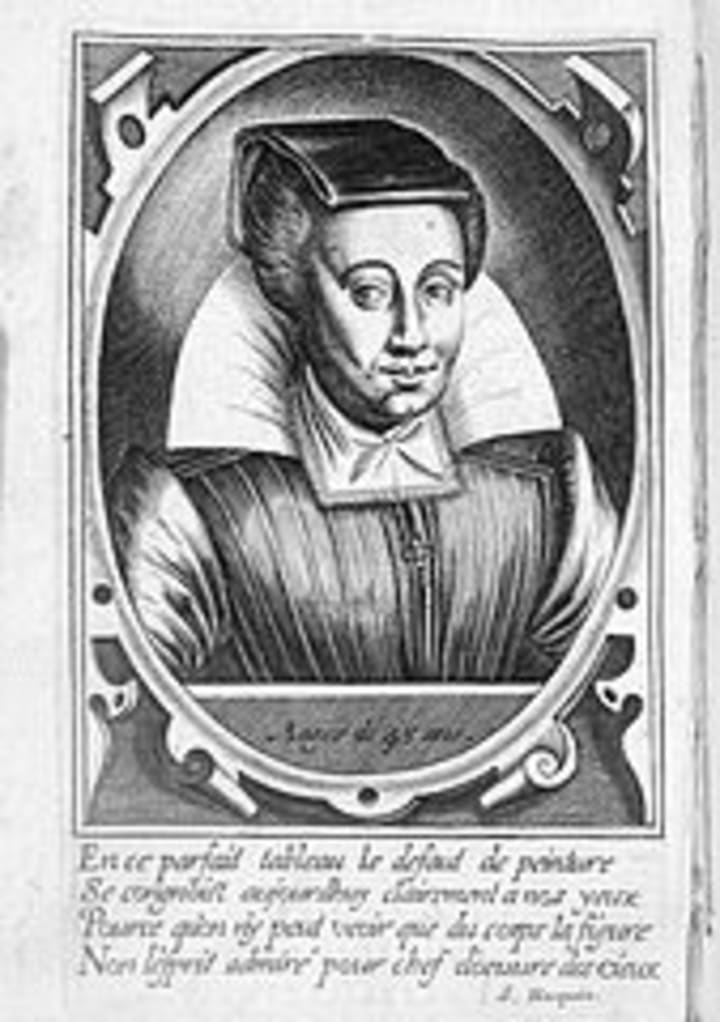
At 21 years of age, she became the wife of Mr. Martin Boursier a Surgeon and Barber. Parents of three children, they all lived a comfortable life. A few years later, Mr. Boursier became the surgeon of the royal army. He had studied with Ambroise Paré who became an acclaimed and acknowledge surgeon. Being with them most of the time, Louise learned a lot of medical terms and skills which was illegal for women. Her husband gave Louise her first lesson of anatomy and she pursued her studies in midwifery afterwards. She had to stop, during the civil war of 1589 when her city was attacked, to flee the area with her children. Life was hard back in those times, and most of the belongings they had with them were only to survive.
She then got the chance to graduate from midwifery school and pass the official board examination. This led her to obtain the official license to practice midwifery in 1598. People around started talking about her and were questioning the couple. It was terrible for a mother to work during that period and it was even worse as her husband was a doctor. It was unthinkable to intertwine doctors and midwives together. Midwifery was meant for women because not much knowledge was needed. In case of an emergency, they had to refer to doctors who were the one’s well-educated and well paid. Even though people around continued making negative comments, She continued with the support of her husband.
Things changed when she was asked to be the midwife of the second wife of Henri IV. She was at the service of the royal court for a total of 26 years and was paid 500 crowns for a boy and 300 crowns for a girl. Today this would mean around 300 dollars for a boy and 180 dollars for a girl. The amount may seem like a lot of money but considering all the hours required during pregnancy this was a few pennies per day. In 1610, she received a yearly pension of 300 crowns from King Henry making her one of the best-paid women.
Furthermore, she was the first woman to publish a book about obstetrics that included some anatomy. With all the knowledge she had acquired, she decided to pursue her writing and help other midwives. She wrote books to dispense general advice while giving birth, on the normal births, on the positioning during birth and the fetus, on the ligation of the umbilical cord and the prolapse of the cord. She was the first one to make a connection between malnutrition and the health of the fetus and she was also the first one to prescribe iron to treat anemia. Madame Louise also brought the theory and many arguments on the fact that not only women but men could be infertile.
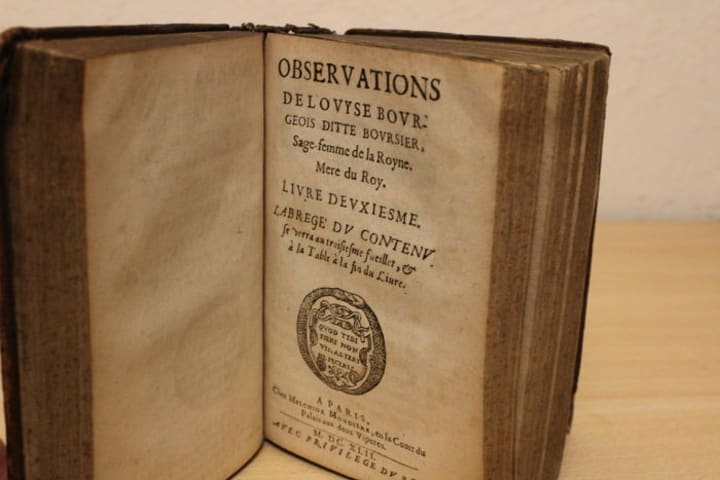
In 1627, Louise was the midwife of Marie De Bourbon, wife of King Louis XIII’s brother, and she died after giving birth. An autopsy was performed to find the cause of death. She died because of an infection, today called peritonitis, caused when pieces of the placenta are left inside the uterus. The blame was on Louise and on the fact that Marie did not have access to an educated doctor. Louise fought back and wrote a report entitle, “An apology of Louise Bourgeois questioning the doctor’s qualification.” In this report, she mentioned that the autopsy was done with a lack of good intentions on their parts. This led to a war between the doctors and midwives but her report made a lot of valuable publicity for free to all the obstetricians.
Louise was a very strong woman and she was able to demonstrate that midwives needed access to a decent education. She asked the board of doctors to let them access some lectures and dissection classes. They unanimously refused but permitted them to practice midwifery. When the midwives saw that they were refused to attend higher education they started a petition. They had a lot of names on that list, including different socioeconomic groups like obstetric doctors. It was sent a second time, in 1636, and, once again, their request was unanimously rejected. Louise Bourgeois did not get the chance to see the progress of her work because she passed away the same year. Today more than 20,000 midwives practice in France, in part due to Madame Louise Bourgeois Boursier's advocacy. Still today, midwifery is not legal in every country, and some are still fighting with local physicians. Only time will tell if Madame Boursier's vision of midwifery sees the light.
About the Creator
Hippy vagabond
We are the dynamic duo of imagination and wellness, your go-to source for captivating fiction stories and soul-stirring poetry. We transport you to worlds where dreams come alive. Join us on a beautiful journey of wonders and well-being.
Keep reading
More stories from Hippy vagabond and writers in FYI and other communities.
We are the change
We were featured in our local newspaper because of what makes my family unique. When your family picture gets featured in the newspaper, it can be a moment of pure pride. You suddenly hit five minutes of fame, which can get overwhelming. We had more than five minutes, so the readers asked many questions. We are a family that isn't conforming to what society dictates.
By Hippy vagabond4 years ago in Earth
Key Hardware Components That Keep Aircraft Structures Secure
Modern aircraft are built with exceptional precision, combining advanced engineering with thousands of interconnected components. While engines, avionics systems, and aerodynamic structures often receive the most attention, the smaller structural hardware used throughout an aircraft plays an equally critical role. These components provide the connections and reinforcement necessary to keep the aircraft stable, secure, and capable of withstanding the demanding conditions of flight.
By Beckett Dowhan6 days ago in FYI



Comments
There are no comments for this story
Be the first to respond and start the conversation.