
The Man Who Bet Against the World
One bet. A shattered economy.

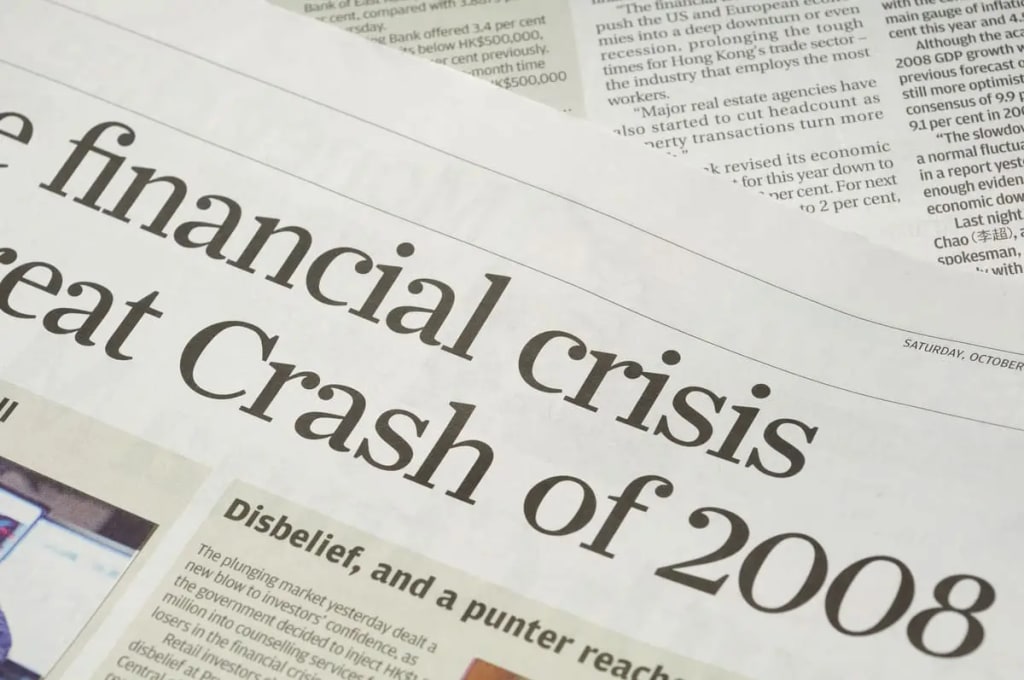
How the 2008 financial crisis made millionaires and broke millions
Did you know that the biggest economic disaster since the Great Depression was entirely predictable? In 2008, the global economy collapsed under the weight of its own greed, and while millions of families lost their homes and livelihoods, a few visionaries saw it coming—and bet against it. Among them was a man whose story reads more like a thriller than a financial analysis. The 2008 financial crisis wasn’t just about numbers—it was about deception, hubris, and a silent war that played out in the heart of Wall Street. Welcome to the true story behind the crash—and the man who turned disaster into fortune.
In the early 2000s, the American housing market looked unstoppable. Everyone was buying homes—first-time buyers, investors, and even those with shaky credit histories. Banks were handing out loans like candy on Halloween. Why? Because the housing market was booming, and they wanted a slice of the profit. But this wasn’t just optimism. It was reckless.
Behind the scenes, financial institutions were bundling risky mortgages into complex financial products called mortgage-backed securities. These packages were then sold to investors under the guise of being safe, stable, and lucrative. This system, known as subprime lending, was built on a ticking time bomb: people who couldn’t pay their mortgages. Yet banks, ratings agencies, and investors kept playing along—blinded by the potential gains.
Here’s where the story takes a sharp turn. While the world was drunk on the illusion of infinite growth, a few outsiders saw the cracks forming. One of them was a hedge fund manager named Michael Burry. An unconventional thinker with a medical background and a deep knowledge of finance, Burry started digging into the numbers. What he found shocked him: millions of subprime loans were set to default within a few years.
Instead of warning the world, Burry did something radical. He created a new kind of financial contract that would allow him to bet against the housing market. These were called credit default swaps. At the time, the idea of the housing market collapsing was laughable to most investors—but Burry wasn’t laughing. He was preparing for impact.
Other savvy investors soon followed. They too began to wager that the market would fall. This wasn’t just risky—it was nearly suicidal. For years, they lost money while waiting for the collapse. Friends doubted them. Colleagues mocked them. But they stayed the course.
And then, in 2008, the bottom fell out.
Homeowners started defaulting on their mortgages in waves. Property values plummeted. The mortgage-backed securities, once considered rock-solid, turned into worthless paper overnight. Banks failed. The stock market crashed. The world was plunged into a global recession.
The consequences were staggering. Millions of people lost their jobs, their savings, their futures. Major banks had to be bailed out by governments using taxpayer money. Trust in the financial system was shattered. And yet, those who had bet against the market—like Burry—walked away with massive profits. His fund made over $700 million.
It wasn’t just luck. It was insight, calculation, and the courage to stand alone.
The financial crisis of 2008 revealed deep flaws in the global economic system—flaws that, in many ways, still exist today. Lack of regulation. Greed at the highest levels. A refusal to listen to warnings. And a tendency to prioritize short-term gain over long-term stability.
The story also raised important ethical questions. Is it right to profit from a collapse that causes so much suffering? Is betting against the market an act of genius—or of cold detachment? These are questions we still struggle with.
What’s undeniable is that the crisis—and the men who foresaw it—changed the world forever. The 2008 financial crisis wasn’t just a crash. It was a mirror. And in that reflection, we saw a system built on illusions, driven by greed, and vulnerable to collapse.
So the next time you hear about a “hot market” or “easy loans,” remember 2008. Remember that markets rise and fall, but it’s often the quiet, skeptical minds that see the truth first. And sometimes, those minds place a bet that goes against the world.
What would you have done if you had seen it coming? Would you have joined the crowd—or bet on the fall? Let’s talk about it in the comments.
About the Creator
Bubble Chill Media
Bubble Chill Media for all things digital, reading, board games, gaming, travel, art, and culture. Our articles share all our ideas, reflections, and creative experiences. Stay Chill in a connected world. We wish you all a good read.
Keep reading
More stories from Bubble Chill Media and writers in FYI and other communities.
Why France Is a Secular Country
France often presents itself as the “homeland of secularism.” This principle—both political, philosophical, and legal—has become a cornerstone of its national identity. But why did France embrace secularism so strongly, and why is it so different from other countries? To understand this, we need to look at history, at the law that shaped it, and at the challenges it faces today in a globalized and multicultural world.
By Bubble Chill Media 5 months ago in FYI
Top 10 Luxury Travel Experiences Around the World for 2026
Luxury travel in 2026 is no longer just about opulence; it’s about immersive, transformative experiences that combine comfort, adventure, and cultural depth. For seasoned travellers seeking something beyond ordinary vacations, the world offers a rich tapestry of unique journeys—from private islands to cultural explorations with personal guides. Below, we explore ten luxury travel experiences that promise exclusivity, personalization, and unforgettable memories.
By All 4 Season5 days ago in FYI


Comments
There are no comments for this story
Be the first to respond and start the conversation.