
The legend of the Nephilim
What were they according to the original legend?

The Nephilim are among the most mysterious and enigmatic figures mentioned in ancient texts, especially within the context of the Bible and various mythologies. Their origin, nature, and legacy have fascinated scholars, theologians, and mythologists for centuries. This article delves into the origins of the Nephilim, their portrayal in the Bible, and their role in various mythologies.
Origins of the Nephilim in the Bible
The term "Nephilim" appears primarily in two places in the Hebrew Bible: Genesis 6:1-4 and Numbers 13:32-33. The word "Nephilim" is often translated as "giants," but its root meaning is more complex, often interpreted as "the fallen ones."
Genesis 6:1-4
In Genesis 6:1-4, the Nephilim are described as the offspring of the "sons of God" and the "daughters of men":
"When human beings began to increase in number on the earth and daughters were born to them, the sons of God saw that the daughters of humans were beautiful, and they married any of them they chose. Then the Lord said, 'My Spirit will not contend with humans forever, for they are mortal; their days will be a hundred and twenty years.' The Nephilim were on the earth in those days—and also afterward—when the sons of God went to the daughters of humans and had children by them. They were the heroes of old, men of renown."
This passage raises numerous questions: Who were the "sons of God"? Were the Nephilim giants? Why were they considered "heroes of old, men of renown"?
Interpretations of the "Sons of God"
The identity of the "sons of God" is debated among scholars. The two primary interpretations are:
Angelic Beings: Some scholars argue that the "sons of God" were fallen angels who took human wives, resulting in the Nephilim. This interpretation aligns with some ancient Jewish texts and the Book of Enoch, an apocryphal text that expands on the Genesis account, describing the descent of 200 angels who mated with human women.
Line of Seth: Another interpretation suggests that the "sons of God" were descendants of Seth, Adam's third son, who were righteous, while the "daughters of men" were descendants of Cain, symbolizing the mingling of the godly and the wicked.
The Nephilim in Numbers 13:32-33
The second biblical mention of the Nephilim is in Numbers 13:32-33, where the Israelite spies describe the inhabitants of Canaan:
"And they spread among the Israelites a bad report about the land they had explored. They said, 'The land we explored devours those living in it. All the people we saw there are of great size. We saw the Nephilim there (the descendants of Anak come from the Nephilim). We seemed like grasshoppers in our own eyes, and we looked the same to them.'"
Here, the Nephilim are described as giants, creating fear among the Israelites. This passage has fueled the idea that the Nephilim were a race of giants, distinct from regular humans.
The Nephilim in Mythology and Apocryphal Texts
Beyond the Bible, the Nephilim are featured in various mythological and apocryphal texts, often described with awe and fear.
The Book of Enoch
The Book of Enoch, an ancient Jewish text not included in the canonical Bible, provides an elaborate account of the Nephilim. It describes the fall of the Watchers, a group of 200 angels who descended to Earth, took human wives, and fathered the Nephilim. These Nephilim are depicted as giants who caused great destruction and moral corruption.
Enoch's text expands on their fate, explaining that the Nephilim became evil spirits after their physical death, tormenting humanity and leading them astray. This portrayal influenced later Jewish and Christian demonology.
Gnostic Texts
Gnostic writings also reference the Nephilim, often linking them to celestial beings who fell from grace. In these texts, the Nephilim's origin and role are sometimes tied to dualistic themes of light versus darkness, emphasizing their fallen and corrupted nature.
Mesopotamian Myths
Parallels to the Nephilim can be found in ancient Mesopotamian myths, such as the Epic of Gilgamesh, which features semi-divine beings and giants. The character of Gilgamesh himself is described as part divine and part human, reflecting similar themes of divine-human offspring.
Modern Interpretations and Cultural Impact
The Nephilim have continued to capture the imagination of modern readers and have been featured in various literary and cultural works. From novels and movies to conspiracy theories and fringe archaeology, the Nephilim have been reimagined in countless ways.
Literary Works
Many modern writers have drawn inspiration from the Nephilim, weaving them into fictional narratives that blend ancient mythology with contemporary themes. Notable examples include John Milton's "Paradise Lost," which references the fallen angels, and modern fantasy series that incorporate Nephilim as supernatural characters.
Pop Culture and Conspiracy Theories
In pop culture, the Nephilim often appear as giants, ancient aliens, or otherworldly beings, feeding into a broader fascination with ancient mysteries. Conspiracy theories sometimes claim that the Nephilim were real historical beings whose existence has been hidden or suppressed.
Conclusion
The legend of the Nephilim continues to intrigue and mystify, blending elements of biblical narrative, ancient mythology, and modern imagination. Whether viewed as fallen angels, giants, or symbolic figures, the Nephilim embody the enduring human fascination with the mysterious and the divine. As we explore their story, we are reminded of the rich tapestry of myth and history that shapes our understanding of the world and our place within it.
About the Creator
M. R.
Just a random guy with a lot of interests, including writing and experimenting with AI.
A Planetary Alignment will coincide with Mercury Retrograde
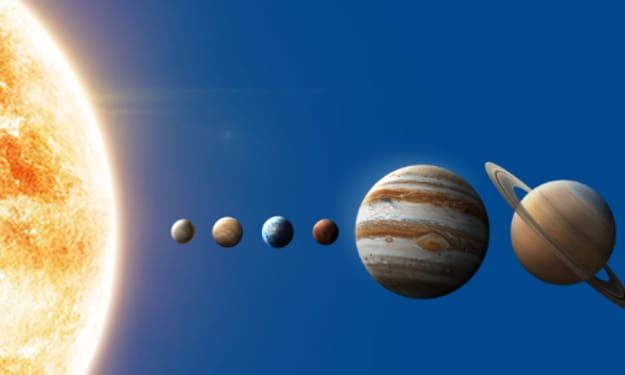
Double phenomena in the heavens Some people say in jest that the planets have aligned in their favor when life works the way they desire. Were you aware that there are seasons when things do line up in the heavens? There will be a planetary alignment AKA a planet parade, on February 28, 2026.
By Cheryl E Preston14 days ago in FYI



Comments
There are no comments for this story
Be the first to respond and start the conversation.