
Proto-Indo-Iranian - the language Sanskrit originated from
What do we know about this ancient language?

The Proto-Indo-Iranian language (also known as Proto-Indo-Iranic) serves as a fascinating chapter in the history of human communication. As the common ancestor of several major languages, including Sanskrit, it holds a significant place in linguistic studies. Understanding the origins, characteristics, and evolution of Proto-Indo-Iranian provides insights into the cultural and historical contexts that shaped the languages we know today.
The Origins of Proto-Indo-Iranian
Proto-Indo-Iranian is a reconstructed language, meaning it is not directly attested in any ancient texts but has been pieced together by linguists using comparative methods. It is believed to have been spoken around the 3rd millennium BCE in the region that now encompasses parts of Central Asia, including modern-day Afghanistan, Turkmenistan, and Iran.
This language is a branch of the larger Indo-European language family, which also includes languages such as Greek, Latin, and the Germanic and Slavic languages. The Proto-Indo-Iranian speakers were likely part of the early Indo-European migration, spreading their language and culture across vast regions.
Linguistic Characteristics
Proto-Indo-Iranian, like other proto-languages, is reconstructed using evidence from its descendant languages. Linguists compare similarities and differences among these languages to infer the features of their common ancestor. Here are some key linguistic characteristics of Proto-Indo-Iranian:
Phonology: Proto-Indo-Iranian had a complex system of sounds, including a series of stops (consonants produced by obstructing airflow) and nasals. It also featured a set of sibilants (hissing sounds), which later evolved differently in Sanskrit and Iranian languages. For instance, the Proto-Indo-Iranian word for "three" is *tri-, which became "trayas" in Sanskrit and "θri" in Avestan, an ancient Iranian language.
Morphology: The language had an intricate morphological structure, with nouns, verbs, and adjectives inflected for various cases, numbers, and genders. This inflectional system allowed for precise expression of grammatical relationships. The verb system, in particular, was highly developed, with various tenses, moods, and voices.
Syntax: Proto-Indo-Iranian likely had a flexible word order, with Subject-Object-Verb (SOV) being the most common structure. However, due to the inflectional nature of the language, word order could vary for emphasis or stylistic reasons.
Vocabulary: The vocabulary of Proto-Indo-Iranian included terms for family relationships, natural elements, animals, and basic actions. Many of these terms have recognizable descendants in both Sanskrit and Iranian languages. For example, the Proto-Indo-Iranian word for "mother" is *matér-, which became "matṛ" in Sanskrit and "mātar" in Avestan.
Cultural Context and Spread
The Proto-Indo-Iranian speakers were likely a nomadic or semi-nomadic people who engaged in pastoralism, agriculture, and trade. Their language spread through migrations, conquests, and cultural exchanges, giving rise to various dialects and eventually distinct languages.
One of the most significant offshoots of Proto-Indo-Iranian is Sanskrit, which emerged in the Indian subcontinent. The Rigveda, one of the oldest texts in Sanskrit, provides evidence of the early stages of the language and its development from Proto-Indo-Iranian.
Sanskrit: A Direct Descendant
Sanskrit, a classical language of ancient India, is one of the most well-preserved and studied descendants of Proto-Indo-Iranian. It played a crucial role in the religious, literary, and scholarly traditions of India. The process of linguistic evolution from Proto-Indo-Iranian to Sanskrit involved several stages, including Proto-Indo-Aryan, an intermediary phase.
Vedic Sanskrit: The earliest form of Sanskrit, known as Vedic Sanskrit, is found in the Rigveda, dating back to around 1500-1200 BCE. Vedic Sanskrit retains many features of Proto-Indo-Iranian, including its phonological and morphological characteristics.
Classical Sanskrit: By around 500 BCE, Classical Sanskrit had emerged, standardized by the grammarian Panini in his seminal work, the Ashtadhyayi. Classical Sanskrit saw some phonological changes and further development of its grammar, but it remained remarkably close to its Vedic predecessor.
Iranian Languages: Another Branch
While Sanskrit evolved in the Indian subcontinent, the other branch of Proto-Indo-Iranian gave rise to the Iranian languages. These languages spread across the Iranian plateau and Central Asia. Some of the early Iranian languages include:
Avestan: The language of the sacred texts of Zoroastrianism, Avestan, preserves many features of Proto-Indo-Iranian and provides valuable insights into the early stages of the Iranian branch.
Old Persian: The language of the Achaemenid Empire, Old Persian, is attested in inscriptions and royal decrees. It shows the evolution of Proto-Indo-Iranian features in the context of the Iranian plateau.
Middle Persian and Modern Iranian Languages: Over time, Old Persian evolved into Middle Persian, the language of the Sassanian Empire. Modern Iranian languages, such as Farsi (Persian), Kurdish, and Pashto, are direct descendants of these ancient languages.
Conclusion
Proto-Indo-Iranian, the ancestor of Sanskrit and the Iranian languages, serves as a crucial link in the history of human language. Its complex phonology, morphology, and syntax, along with its rich vocabulary, laid the foundation for the development of some of the world's most influential languages. Understanding Proto-Indo-Iranian not only sheds light on the linguistic
About the Creator
M. R.
Just a random guy with a lot of interests, including writing and experimenting with AI.
A Planetary Alignment will coincide with Mercury Retrograde
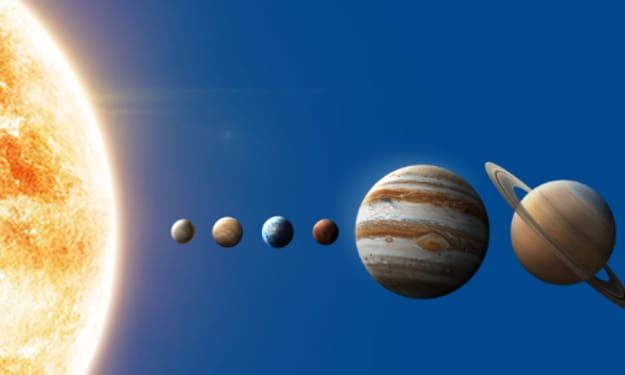
Double phenomena in the heavens Some people say in jest that the planets have aligned in their favor when life works the way they desire. Were you aware that there are seasons when things do line up in the heavens? There will be a planetary alignment AKA a planet parade, on February 28, 2026.
By Cheryl E Preston16 days ago in FYI



Comments
There are no comments for this story
Be the first to respond and start the conversation.