
The Key Differences of Cable Assemblies And Wire Harnesses
Unraveling the Distinctions: Cable Assemblies vs. Wire Harnesses

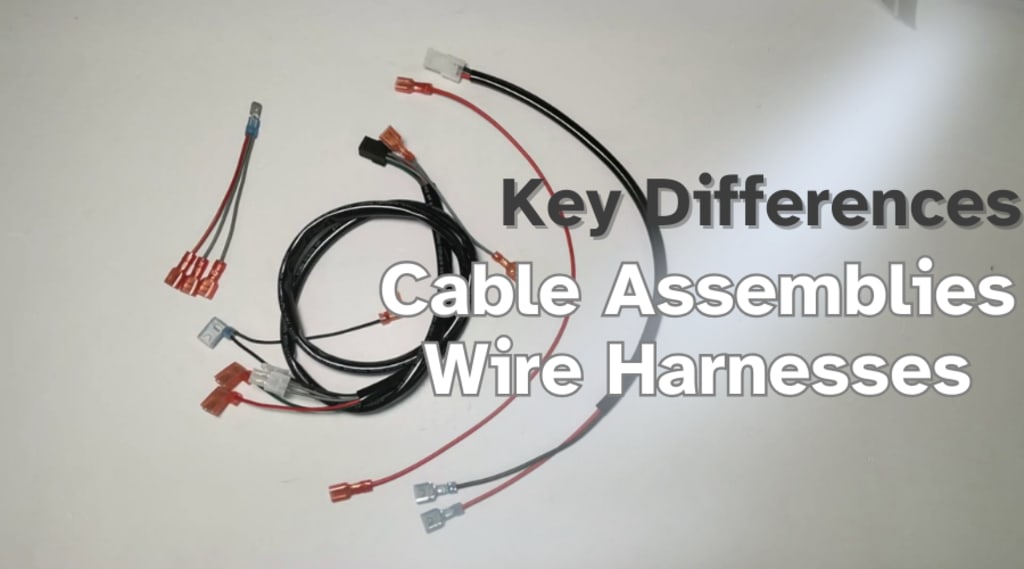
People frequently use the terminologies wire harnesses and cable assemblies for each other. This is because most consider that these two terminologies refer to the same commodity. Nevertheless, both these terminologies refer to different items. Wire harnesses and cable assemblies are like each other only as far as their usage is concerned. They both transmit signals or conduct electrical energy from one point to another. Moreover, the essential function is also alike- to organize and safeguard wires. Nevertheless, businesses use wire harnesses and cable assemblies to meet different objectives.
How do cables and wires differ from each other?
People frequently need clarification on two basic terminologies. Briefly, wire is an electric conductor’s single strand. It is usually bare but sometimes seems twisted. There are specific wires which consist of numerous strands for more flexibility. Nevertheless, there is always an electrical contact between these strands. Therefore, it plays the role of one conductor. Also, wires featuring a light-colored polyvinyl chloride layer or insulating coating are available.
Contrary to that, cables are bundles of at least two wires. It comprises numerous individually insulated wires inside a protective sheath. These insulated conductors run bonded, parallel, or twisted together into a single casing. The number of wires in a cable ranges from two to a hundred, sometimes even more significant. Usually, protective coverings would cover the wires in cables. Cables have armoring inner and external sheaths to provide optimal protection. Generally, most cables comprise a grounding wire, a neutral wire, and a positive wire. Makers employ materials like copper or aluminum to produce cables and wires.
What are cable assemblies and wire harnesses?
Wire harnesses are protective sheaths and sleeves that cover a bundle of cables or wires. These harnesses can combine many cables in a very organized manner and connect them using laces, tapes, ties, or a combination of these three products. Wire harnesses ensure that wires are arranged in a way that does not let them interfere with the electrical systems. It also ensures that cables stay apart to circumvent unneeded circuit coupling or interaction. Wire harnesses provide the space’s maximum utilization in limited areas.
Cable assemblies are groupings of wires covered by an additional protective sheath or sleeve. These wires could either be braided or stranded. Instances of cable assemblies encompass antenna cables, ethernet, and power. The cable assembly’s function is to ensure that cables and wires are organized. Nevertheless, there is a significant difference in the substances utilized in these two commodities.
Read this article: Overview of Cable Wire Harness
Differences in the composition of wire harnesses and cable assemblies
The substance of both commodities’ covers is alike but differs in toughness. Wire harnesses will feature a protective sheath composed of thermoset or thermoplastic material. That is sufficient to safeguard the wires from corrosion or shock. The cables and wires feature a necessary insulation of rubber or plastic covering them. Nevertheless, these cables and wires usually feature low resistance. People can utilize gauges to measure these wires. With an increase in this indicator’s capacity, the magnitude of this indicator will decrease.
Meanwhile, cable assemblies offer added endurance and strength to their cables and wires. It features a stress-resistant coating and employs a more potent substance for added safety; covers function as insulators and protective shields. Makers use shrink-wrapped thermoplastic or thermoplastic rubber to produce this cover. Moreover, the cable assemblies consist of many fillers like Kevlar or nylon. Apart from that, it would also have terminations and connections inside it. Makers custom-design cable assemblies according to their specific environment of use. They usually manually produce them because of their complicated nature. Today, makers have made cable assemblies available in various colors, sizes, and shapes.
Differences in the use of cable assemblies and wire harnesses
Cable and wire harnesses are essential to many machines and devices today. Many household tools or products employ wire harnesses. These encompass gadgets like refrigerators, computers, and televisions. This is because many of these commodities already feature a protective shell. That eradicates the need for extra safety from cable and wire harnesses.
Moreover, wire harnesses are also present in many vehicles. Cable assemblies are for use in extreme climatic conditions. Manufacturers have designed them to deal with extreme temperature variations. They make and offer cable assemblies with a range of off-the-shelf solutions and high customization and design flexibility. Whereas these features might increase the price of cable assemblies, businesses can earn a return on investment rapidly through lifespan, reliability, and performance.
Heavy industries usually utilize cable assemblies for their production procedure. They use them to protect their technicians from electrical and health hazards—industries like construction, security, aerospace, military, and medical widely use cable assemblies. Also, manufacturers can more easily route cable assemblies than wire harnesses because of their greater accessibility to routing. Therefore, they are very suitable for transferring data at high speeds.
Many products and machines employ a broad collection of cables and wires. If people expand these wires, they can cover huge distances. Thus, securing and binding them together becomes significant for every product. Manufacturers need to do that to optimize the utilization of wires and safeguard the wires from shock or damage. Therefore, cable assemblies and wire harnesses play a significant role in our everyday lives.
Differences in the cost of cable assemblies and wire harnesses
The wire harnesses are cost-efficient solutions to organize electrical wires and cables better. It does not emphasize offering added safety to its cables and wires. Therefore, wire harnesses are less costly than cable assemblies. Moreover, wire harnesses usually feature a smaller volume than cable assemblies. That tells us that they need a lesser amount of effort and material. That also plays a crucial role in decreasing the cost of wire harnesses. Nevertheless, suppliers sell cable assemblies at a reasonable price because of the extra safety they provide. Thus, businesses must validate the price of cable assemblies and wire harnesses before selecting these commodities.
Are businesses looking for outdoor or indoor usage?
Businesses must understand the application area before selecting wire harnesses and cable assemblies. Wire harnesses can only offer minimal safety to the wires. These harnesses fail to safeguard wires from friction with each other or extremely low and high temperatures. The objective of wire harnesses is to organize cables and wires effectively. Therefore, businesses should use wire harnesses in indoor environments.
Contrary to them, the cable assemblies are the ideal choice for use in the outdoor environment. They resist external factors like moisture, dust, and heat. Aside from that, cable assemblies also safeguard the cables and wires from rusting, friction, and compression. Businesses can select cable assemblies of every shape or size to meet their needs.
Conclusion
Wire harnesses and cable assemblies are like each other as far as their functions are concerned. Nevertheless, their environment and purpose of utilization are entirely different. Businesses can use these products to organize cables and wires in their projects. But they must select between both these according to their particular requirements. Companies require a cheap solution to manage their electrical system. Nevertheless, they should opt for cable assemblies if they prioritize premium quality safety. Choosing a wire harness or cable assembly will surely provide a successful result.
About the Creator
Steven Sparrow ST
Content Creator and a full time blogger.
Keep reading
More stories from Steven Sparrow ST and writers in FYI and other communities.
Common Mistakes to Avoid in DIY Cable Wire Harness Assembly
A wire harness is an organized collection of wires bound together. Electrical tapes, straps, and wire lacing bind the wires together. It is an electrical system designed to supply electricity to any application. Therefore, the cable wire harness design is always according to the application's structure. A Cable wire harness is used in a lot of gadgets and machines. The following industries involve heavy use of wire harnesses in their products
By Steven Sparrow ST2 years ago in Journal


Comments
There are no comments for this story
Be the first to respond and start the conversation.