
The History of Rubik’s Cube
How a Hungarian Puzzle Became the World’s Greatest Brain Teaser

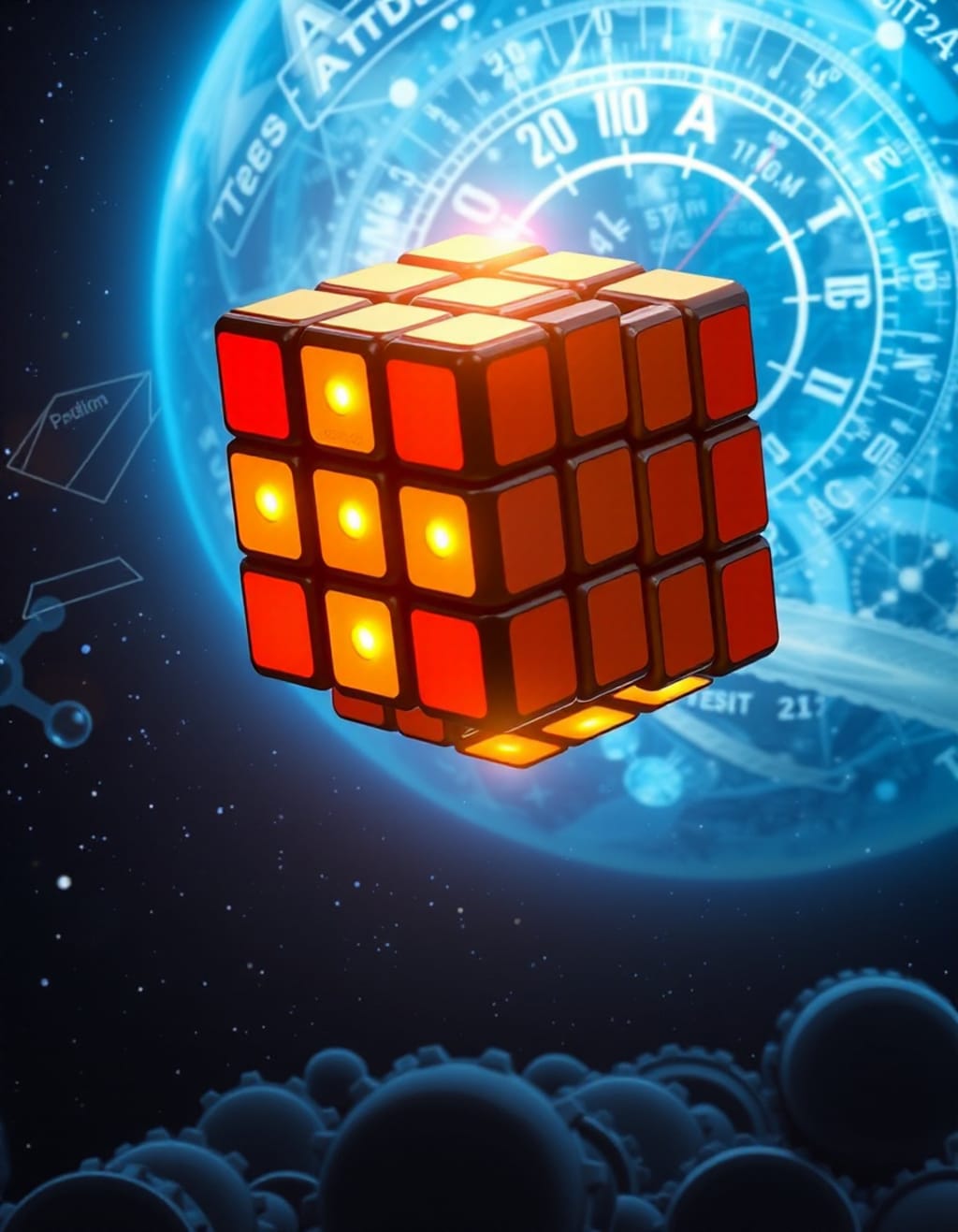
The story of the Rubik’s Cube is not just a tale of colorful blocks and dexterous fingers—it's a saga of invention, education, cultural revolution, obsession, and genius. Born out of a Hungarian mind amid communist rule, the cube would go on to become one of the world’s most iconic toys and most challenging puzzles.
Let’s twist and turn our way through the timeline of the most famous cube in history.
1. The Birth of the Cube: Budapest, 1974
In 1974, a Hungarian architect and professor named Ernő Rubik created a simple wooden model designed to help his students understand three-dimensional geometry. Initially, the object was not intended to be a toy. It was a teaching tool—a working model to demonstrate spatial relationships and movement in architecture.
Rubik called his invention the “Magic Cube” (Bűvös Kocka). At first glance, it looked ordinary—six sides, each a solid color. But when twisted, the real complexity emerged: the faces scrambled, and solving it became an intellectual Everest.
He realized he had accidentally invented something much greater than a classroom demonstration. He couldn’t solve it himself at first. It took him a full month to bring all the colors back in order.
That was the moment he knew he was onto something extraordinary.
2. From Budapest to the World: A Puzzle Goes Global
Rubik patented the Magic Cube in Hungary in 1975. Under the country’s socialist economy, exporting products was challenging. But fate stepped in through a toy marketer named Tom Kremer, a Hungarian-born British entrepreneur. He recognized the cube’s potential and introduced it to the international market after licensing it through Ideal Toy Corporation in 1979.
In 1980, the Rubik’s Cube—now renamed—was officially launched in the West.
It was a sensation.
By 1982, over 100 million cubes had been sold. It became more than a toy; it was a cultural icon. Children, teens, scientists, mathematicians, and artists were drawn to it. Books were written about solving it. TV shows featured it. And the first Rubik’s Cube World Championship was held in Budapest in 1982.
3. The Puzzle That Changed the Brain
What made the cube so addictive?
The Rubik’s Cube is essentially a mathematical object. It has:
43 quintillion (43,252,003,274,489,856,000) possible combinations
Only 1 correct solution
It challenges the brain in visual-spatial reasoning, memory, pattern recognition, and logical thinking. The joy of solving it lies not just in solving it—but learning the patterns, the logic, and mastering something that seems chaotic.
Psychologists later confirmed that engaging with puzzles like the Rubik’s Cube strengthens cognitive abilities and slows mental aging.
4. The Fall… and the Resurrection
Like most cultural phenomena, the cube saw a decline in the late 1980s. Sales dropped, and attention shifted toward electronic toys and video games. For over a decade, the cube faded into the background—a nostalgic relic of the 1980s.
But just as quickly, the internet and the rise of speedcubing brought it roaring back.
Online communities, YouTube tutorials, and global tournaments helped revive interest. In the early 2000s, a new generation discovered the cube—not just as a toy, but as a sport.
Speedcubing, the art of solving the Rubik’s Cube as fast as possible, became an international sensation. Records dropped from minutes to seconds.
As of 2024, the world record for a 3x3 cube is 3.13 seconds, held by Max Park of the USA.
5. Rubik’s Legacy: From Classroom Tool to Museum Exhibit
Ernő Rubik never imagined his invention would become an icon. But today, the Rubik’s Cube is:
Displayed in the Museum of Modern Art (MoMA) in New York
Studied in universities for mathematics, psychology, and design
Featured in Hollywood films and pop culture references
Sold over 450 million units (making it the best-selling puzzle toy of all time)
The cube also inspired inventions like Rubik’s Revenge (4x4), Professor’s Cube (5x5), and modern digital cubes with lights and sensors.
Educationally, it’s been used to teach group theory, algorithms, and even AI development, with robots solving it in under 1 second.
6. How the Cube Transcended Generations
The cube has persisted because it is simple to learn but hard to master. It speaks a universal language—one of challenge, creativity, and logic.
It doesn’t require batteries, screens, or instructions.
It requires only patience and curiosity.
In a world of short attention spans, the cube rewards the persistent mind. It has become a rite of passage for many, a conversation starter, and a bonding activity across cultures and generations.
7. The Science Behind the Solve
Behind every solution is mathematics—particularly a field called Group Theory. Each twist of the cube is part of a larger permutation.
Solving methods include:
Beginner’s Layer Method
Fridrich Method (CFOP)
Roux Method
ZZ Method
These are not just moves—they’re algorithms, logical sequences, and memory exercises.
The fastest solvers don’t just use their hands—they use their memory, intuition, and real-time decision-making skills.
8. Pop Culture and the Cube
You’ve seen the cube in:
The Pursuit of Happyness – where Will Smith impresses a CEO by solving it in a cab
Stranger Things – as a nostalgic reference
Sheldon Cooper’s desk in The Big Bang Theory
YouTube Channels with millions of views showing cube art, records, and techniques
The Rubik’s Cube is not just a puzzle—it’s a symbol of intelligence, a badge of geek pride, and a canvas for creativity.
9. Ernő Rubik’s Thoughts
In interviews, Ernő Rubik has always emphasized curiosity over competition. He said:
“The Cube is not a game, it is not a toy. It is a piece of art. A symbol. A tool that teaches perseverance, logic, and humility.”
Rubik continues to work in education and innovation, encouraging young people to embrace play, design, and thought.
10. The Future of the Cube
Today’s cube is smarter. It has apps, Bluetooth connectivity, and built-in sensors that analyze your moves. It can now:
Help teach coding
Train memory through AI
Compete in robotic speed challenges
Be used for therapy and neurodevelopmental training
Yet its core appeal remains the same: a simple, colorful block that challenges the human brain to do the impossible—bring order out of chaos.
Final Twist: The Cube’s Hidden Meaning
The Rubik’s Cube is more than a puzzle.
It is a metaphor.
Each side represents a piece of life—love, work, family, learning, failure, growth.
You scramble them every day. But with patience and logic, you can bring them back together. Not because life is perfect—but because you’ve learned to solve it.
Closing Quote:
“Like life itself, the Rubik’s Cube doesn’t come with answers—only possibilities.”
— Anonymous
About the Creator
rayyan
🌟 Love stories that stir the soul? ✨
Subscribe now for exclusive tales, early access, and hidden gems delivered straight to your inbox! 💌
Join the journey—one click, endless imagination. 🚀📚 #SubscribeNow
Top 10 Luxury Travel Experiences Around the World for 2026
Luxury travel in 2026 is no longer just about opulence; it’s about immersive, transformative experiences that combine comfort, adventure, and cultural depth. For seasoned travellers seeking something beyond ordinary vacations, the world offers a rich tapestry of unique journeys—from private islands to cultural explorations with personal guides. Below, we explore ten luxury travel experiences that promise exclusivity, personalization, and unforgettable memories.
By All 4 Season3 days ago in FYI


Comments (1)
The Rubik's Cube's origin as a teaching tool is fascinating. I remember struggling to solve it as a kid. It's amazing how it became a global phenomenon from those humble beginnings.