
The History of Flying - Part Two of Three
Mythical Flying Creatures

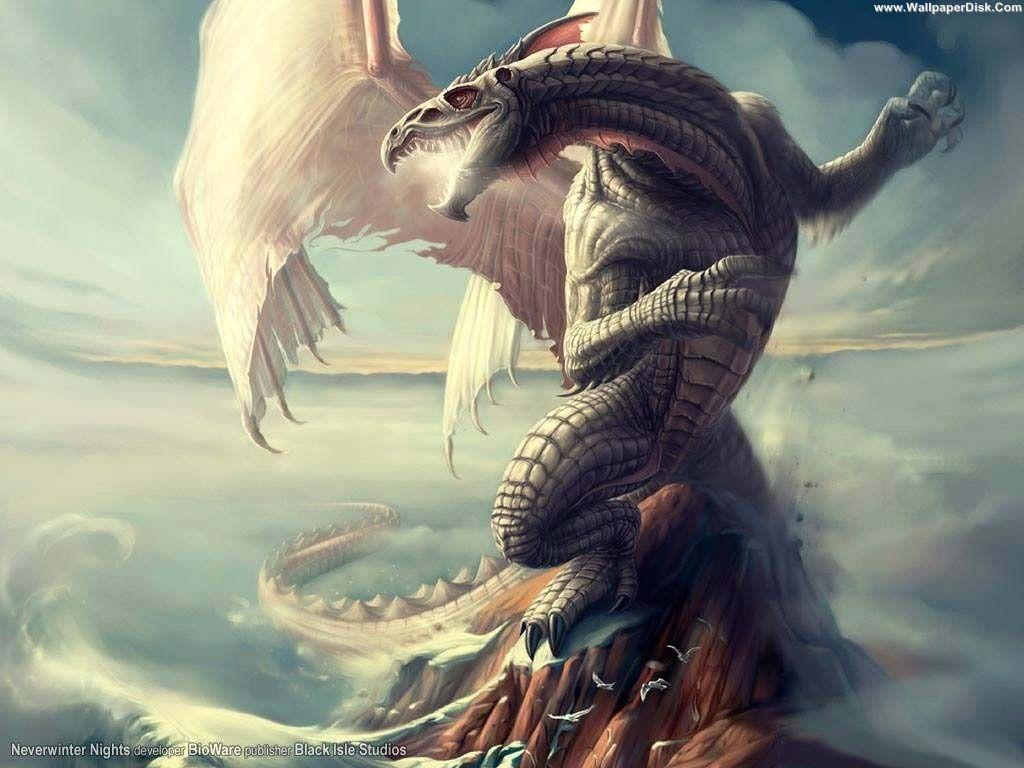
As long as there have been stories, there have been characters and creatures of flight. Many continue to capture people’s imaginations in modern stories, movies, and songs. Part two of this series focuses on mythical flying beings. Whether or not they are real is up to each reader to decide.
Part One: The Natural World of Flight
Part Three: Flying Creations
For this section of the series, I have chosen to present the data in alphabetical order, as chronology is difficult to determine for most of these mythical creatures.
Angels
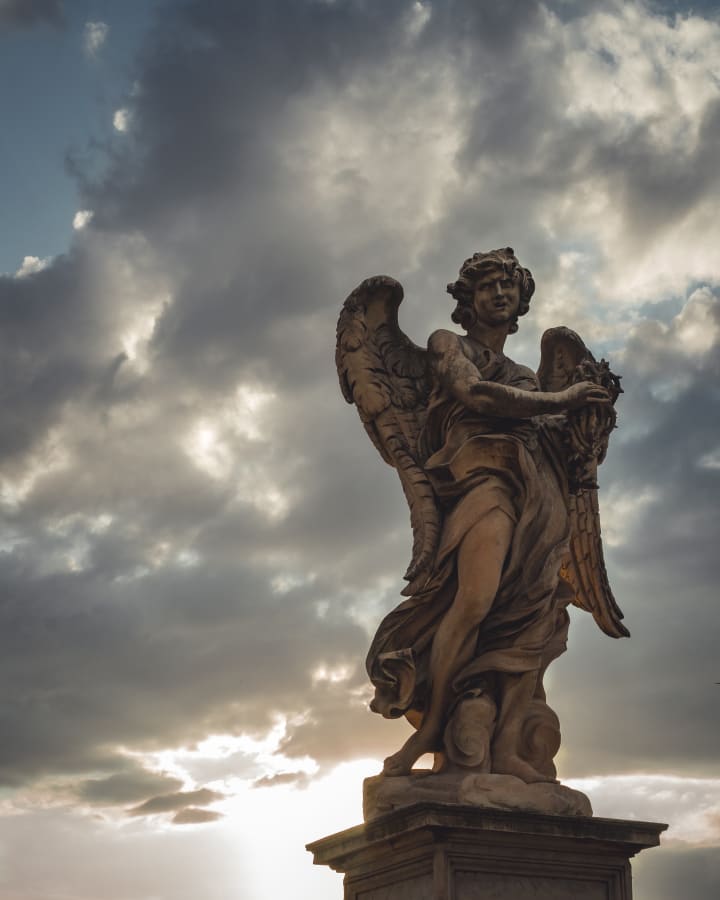
Most people think of angels as coming from the Bible, which is mostly true. The word “angelos” in Greek means messenger. Angels have nine hierarchical ranks. They are, from highest to lowest: seraphim, cherubim, thrones, dominions, virtues, powers, principalities, archangels, and angels. Seraphim are said in Isaiah, chapter 6, to have six wings. With two, they covered their eyes, with two they flew, and with two they covered their feet. It is unclear whether they were hiding their feet and eyes for their own protection or for humans.
Fallen angels have also been cited in the Bible, including Satin. This suggests that angels have free will.
Some people who aren’t religious believe in guardian angels. This often happens following a near-death experience.
Dragons
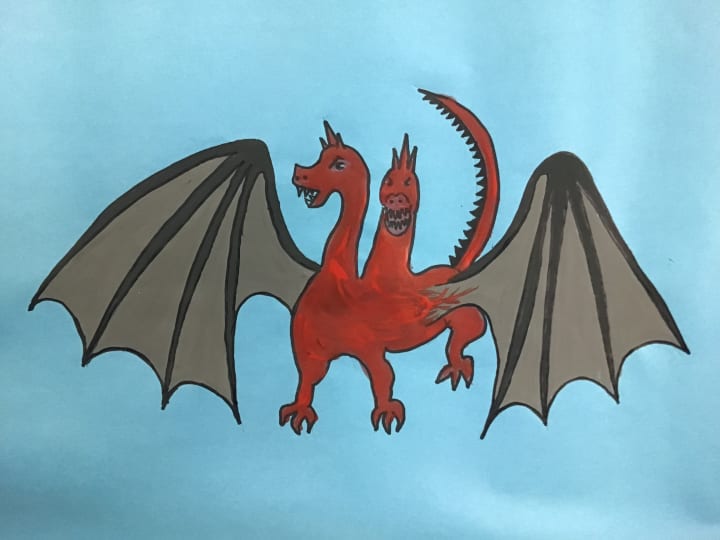
These fearsome creatures appear in almost every culture in some form. They can be dated back as far as approximately 4000 BC. They are particularly revered in Chinese culture. Their habitats range from caves and forests, to the center of the earth and the middle of the ocean. Often, dragons are said to protect a treasure. If a knight (or other hero) can vanquish or trick the dragon, the treasure is theirs.
Some people believe that dinosaur bones and fossils are evidence that dragons existed. They may demonstrate the means by which stories of dragons began.
Not all dragons are/were flying creatures. Most in more modern movies are, such as the ones in the “How to Train Your Dragon” and “Dragonheart” movies. The rise of computer animation and modern computer graphics production have been responsible for more realistic-looking portrayals of dragons.
Fairies

The old French word faerie means enchanted. The tooth fairy and Tinkerbell are perhaps the most well-known of all fairies. If you want to read a cute tooth fairy story, try this one by Courtney Capone.
Early fairies didn’t have wings. Many were feared more than revered. They lived in nature, sometimes with animals that had human characteristics.
Scottish author, James Barrie, lost a brother when he was six to an ice-skating accident. His mother consoled him by telling him stories. He went on to write the tale of Peter Pan. Fairytale stories and art became very popular, as they remain today.
Gargoyles

Originally an architectural feature most prominent in the Middle Ages, gargoyles were carved of stone and positioned on the corners of buildings and monuments. Their purpose was to keep damaging rainwater from collecting. The word gargoyle is French in origin. It comes from the words gargouille, meaning ‘throat’, and gargariser, meaning ‘to gurgle’. The grotesque creatures often appear to be spewing water from the mouth during and after rains.
The most common type of gargoyle is called a Strix or Syrga. It is a human/bird hybrid, popular in Notre Dame.
The oldest gargoyle, at 13,000 years old, is in modern day Turkey.
Ghosts
In folklore, ghosts are spirits or souls of the dead who can appear to the living. Like fairies, not all ghosts fly, and they can be either good or evil. Movies have had a wide range of ghosts as well. Some are all white. Some wear the clothing they died in. Most are from the horror genre, but some are comedic, such as ones in Ghostbusters, Beetlejuice, Scrooged, and Casper, the Friendly Ghost.
Whether we love to be frightened by them or to laugh at them, or believe we have seen real ones, it is safe to say that ghosts will be around for a very long time.
Griffins
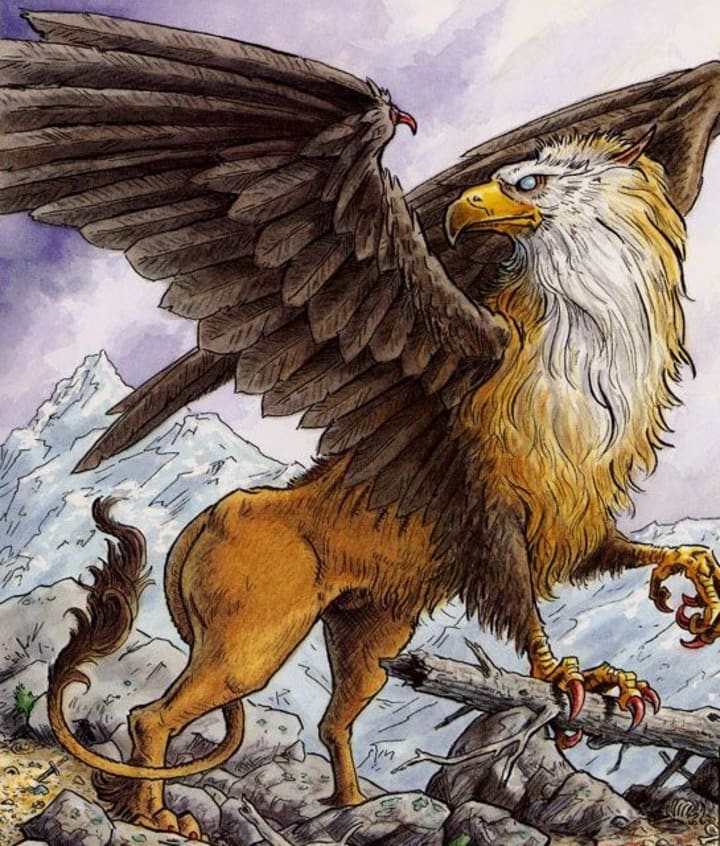
Dating back to the fourth millennium BC, griffins are portrayed with the head and wings of an eagle, and the body, tail, and hind legs of a lion. This combination king of birds and king of beasts was seen as powerful and majestic. In early times, they were considered protectors from evil. Now, they can still be seen as mascots and in literature.
Pegasus

From Greek mythology, Pegasus was born of Poseidon and a severed neck of Medusa. He is a winged horse and became popular on coins and pottery of the time. Pegasus is credited with creating springs by stomping his hooves, most notably the Hippocrene spring on Mt. Helicon.
Phoenix
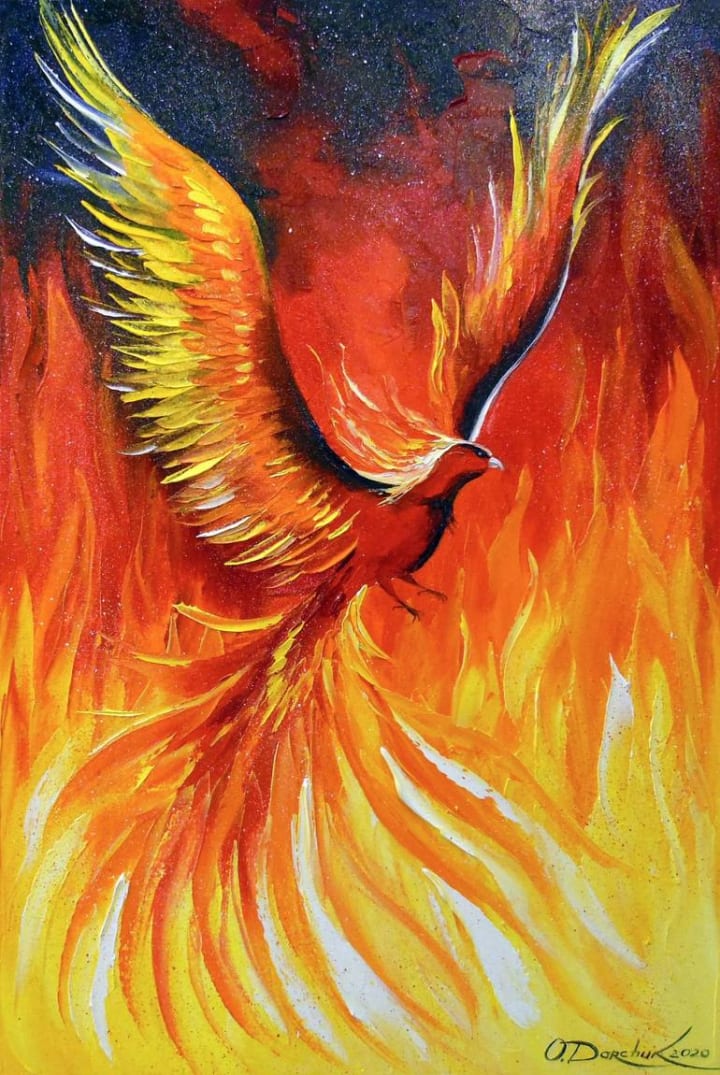
In many cultures and religions, we find that creation, resurrection and new beginnings are also associated with a mythological creature called the Phoenix. The Phoenix, born from the ashes of its predecessor every 500 years, is a great representation of renewal.
Phoenix is yet another creature from Greek mythology, but the Native Americans have their Thunderbird, the Slavics have their Firebird folklore, the Egyptians have Bennu, the Chinese call theirs Feng Huang, the Japanese, Hō-ō, and many others have their own versions.
The Phoenix represents growing through adversity, transformation, and overcoming obstacles.
Unicorns
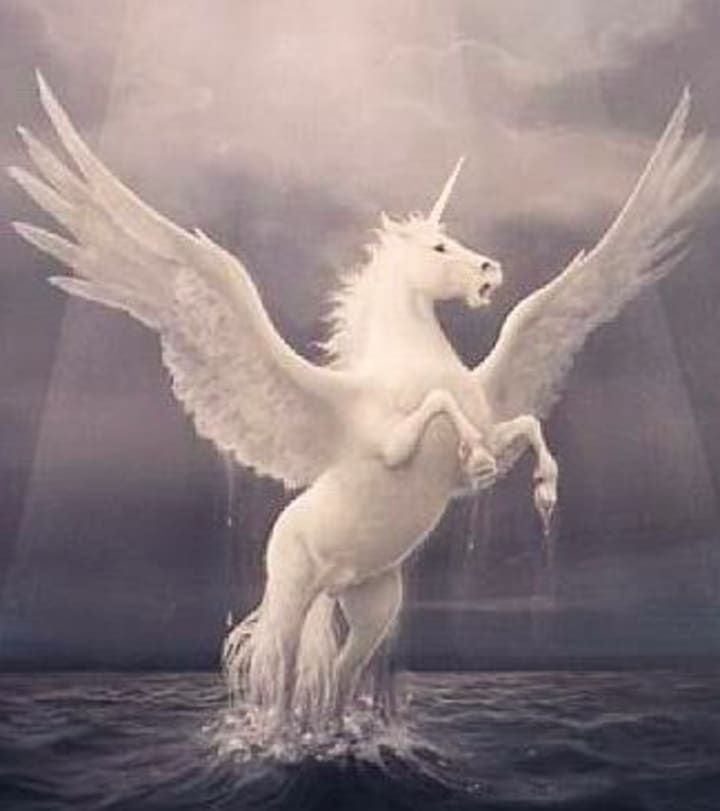
Not all unicorns fly, but the fact that some do makes them a valid inclusion in this article. A flying unicorn is called a unisus or alicorn.
Unicorns actually appeared in early versions of the Bible, but the original Greek merely mentioned an animal with one horn, capable of prancing. Although they have one horn, clearly, this doesn’t describe a rhinoceros. Perhaps it was a one-horned deer of some kind. In any case, the majestic unicorn has been stricken from most modern versions of the Bible.
Regardless of whether you “believe in” any or all of these mythical creatures, they are entertaining and likely to stick around. It’s fascinating that humans have come up with so many creatures in cultures around the globe which have taken to the skies. Perhaps it’s because we’ve always wanted to do the same. I hope you enjoy the last in this series, which will address human flying creations.
Online Resources:
https://www.nationalgeographic.com/science/article/111223-christmas-angels-evolution-science-history-christianity
http://www.draconika.com/history.php
https://fiveminutehistory.com/the-history-of-fairies/
https://www.ancient-origins.net/artifacts-other-artifacts/gargoyles-0012253
https://en.wikipedia.org/wiki/Ghost#:~:text=History%201%20Classical%20Antiquity.%20Ghosts%20appeared%20in%20Homer,of%20western%20culture.%20...%205%20Scientific%20view.%20
https://www.ancient-origins.net/myths-legends/ancient-origins-legendary-griffin-001693
https://www.worldhistory.org/Pegasus/
https://scribalo.com/en/scribablog/reinvention-seen-from-the-myth-the-phoenix/
https://www.biblestudy.org/bible-study-by-topic/mythical-animals-in-the-bible/unicorn.html
About the Creator
Julie Lacksonen
Julie has been a music teacher at a public school in Arizona since 1987. She enjoys writing, reading, walking, swimming, and spending time with family.
Keep reading
More stories from Julie Lacksonen and writers in FYI and other communities.



Comments
There are no comments for this story
Be the first to respond and start the conversation.