
The Global Rice Market: Sowing Seeds of Stability and Growth through 2033
How technology, trade, and tradition sustain one of the world’s oldest staple crops


Overview: The Backbone of Global Food Security
Rice, one of humanity’s oldest cultivated crops, remains a lifeline for billions worldwide. As per Renub Research, the Global Rice Market is expected to reach US$ 378.41 billion by 2033, growing from US$ 305.14 billion in 2024, at a CAGR of 2.42% (2025–2033).
This steady growth stems from population expansion, changing dietary habits, rising urbanization, and global trade agreements that enable rice to move seamlessly across borders. With over 120 countries cultivating rice, and China and India accounting for nearly 50% of global production, the grain continues to serve as the primary dietary staple for over half of the world’s population.
According to FAOSTAT, the total global rice cultivation area reached nearly 165 million hectares in 2022, with India alone harvesting more than 48 million hectares annually—making it the single largest producer.
From steaming bowls in Asia to risottos in Europe and rice-based snacks in America, this humble grain powers both economies and nutrition alike.
The Driving Forces Behind Rice Market Growth
1. Government Programs and Agricultural Regulations
Government policies have a profound influence on the rice industry. Across Asia, subsidies, incentives, and research investments play a central role in maintaining price stability, boosting yields, and ensuring food security.
Many rice-producing nations — including India, Thailand, Vietnam, and Indonesia — implement price support systems and export quotas that stabilize farmer incomes and secure domestic supplies.
For instance, in February 2024, India’s Food Ministry launched “Bharat Rice” at a subsidized price of Rs 29 (USD 0.35) per kilogram, a move aimed at countering retail price inflation and ensuring affordable access to staple food for low-income households.
Governments are also investing in R&D programs to develop high-yield, disease-resistant, and climate-resilient rice varieties. Such initiatives align with global goals for sustainable agriculture and food self-reliance.
2. Rising Demand for Convenience Foods Made with Rice
The modern lifestyle has redefined how consumers approach mealtime. Busy urban populations increasingly turn to ready-to-eat and instant rice-based products, including microwaveable rice pouches, frozen rice bowls, and instant rice noodles.
Rice-based snacks and chips are also gaining popularity among health-conscious consumers due to their gluten-free and low-fat profile. Food manufacturers have responded with innovative flavor profiles and packaging formats that appeal to both global and local tastes.
The trend extends beyond traditional consumption — rice is finding new life in beverages, desserts, and even plant-based milk products. As global consumers continue prioritizing convenience and nutrition, rice’s versatility keeps it relevant in the modern diet.
3. Expanding Export Opportunities
Globalization and international trade agreements have unlocked new export avenues for rice-producing nations. By reducing tariffs and easing trade barriers, these agreements have enabled smoother cross-border flows of various rice types — long-grain, medium-grain, and short-grain, catering to diverse regional preferences.
Countries like India, Thailand, and Vietnam dominate the global export market, supplying aromatic varieties such as Basmati and Jasmine rice to markets in the Middle East, Europe, and North America.
Strict quality control and certification standards have improved consumer confidence in imported rice, boosting its demand in developed economies that lack local production.
Key Challenges Facing the Rice Industry
1. Supply and Demand Imbalances
The rice market often experiences fluctuations in supply due to weather disruptions, pest infestations, or disease outbreaks. Droughts or floods in major producing regions can sharply reduce yields, leading to price spikes and food insecurity. Conversely, overproduction can cause market oversaturation, harming farmer incomes.
Such volatility underscores the importance of technological advancements and climate-smart farming techniques to maintain consistent output amid changing environmental conditions.
2. Price Volatility
Global rice prices are vulnerable to shifts in government policy, currency fluctuations, and geopolitical tensions. Export bans or sudden policy changes in key producing countries can send ripples across the global market.
Speculative trading and macroeconomic factors like inflation or recession further amplify volatility, complicating financial planning for both producers and consumers.
Ensuring long-term market stability therefore requires transparent trade policies, resilient supply chains, and sustainable farming incentives.
Regional Spotlights: Key Markets Shaping the Future of Rice
United States Rice Market
In the U.S., rice is increasingly being adopted as a staple ingredient across diverse cuisines. USDA data shows that the United States produced 9.89 million metric tons of rice in 2023, marking a 36% increase from 2022. The harvested area rose 32% year-over-year to 1.15 million hectares, driven by improved cultivation techniques and favorable growing conditions.
American consumers’ growing health awareness has boosted demand for brown, black, and wild rice, while the foodservice industry — including quick-service restaurants and catering services — has integrated rice-based dishes into mainstream menus.
Moreover, technological innovation in farming and supportive federal policies have encouraged domestic production, helping the U.S. strengthen its position as both a producer and exporter.
India Rice Market
India remains the powerhouse of global rice production and a leading exporter. Rising domestic consumption and global export demand continue to fuel its market growth.
The Ministry of Statistics & Programme Implementation estimates that India’s population will reach 1.52 billion by 2036, ensuring sustained demand for rice as a dietary staple.
Beyond traditional white rice, Indian consumers are embracing value-added and processed rice products, such as rice flour, ready-to-eat meals, and snacks.
In December 2024, LT Foods Ltd. launched DAAWAT® Jasmine Thai Rice for the Indian market — a premium, non-GMO product aimed at urban consumers interested in global cuisines.
Additionally, Diageo India, in partnership with the Centre for Sustainable Agriculture, launched a regenerative farming project in Telangana (November 2024) supporting 220 farmers across 500 hectares to reduce water usage and carbon emissions — aligning sustainability with profitability.
Germany Rice Market
Germany’s rice market relies heavily on imports, primarily from Asia. While rice is not a domestic staple, consumption is steady, driven by multicultural influences and growing health awareness.
Long-grain rice and premium processed products are particularly popular. EU trade policies, environmental considerations, and shifting consumer habits play key roles in shaping market behavior in Germany.
United Arab Emirates Rice Market
In the UAE, rice consumption is deeply embedded in daily life and culinary traditions. However, the country depends almost entirely on imports from India, Pakistan, and Thailand.
The UAE’s growing expatriate population sustains strong demand for Basmati and premium rice varieties. However, water scarcity, climate limitations, and global trade dynamics continue to influence domestic availability and pricing.
Efforts to ensure food security have led to initiatives promoting strategic grain reserves and supply diversification to withstand potential disruptions.
Market Segmentation Overview
Product Type: Regular and Aromatic
Type: Red Rice, Arborio Rice, Black Rice, Brown Rice, Parboiled Rice, Sushi Rice, and Others
Grain Size: Long Grain, Medium Grain, Short Grain
Distribution Channel: Offline and Online
Application: Food, Feed, and Industrial Uses
Country Coverage (25 Viewpoints):
United States, Canada, Germany, France, India, China, Japan, Thailand, Malaysia, Indonesia, Saudi Arabia, UAE, and more.
Company Analysis Includes:
KRBL Limited | LT Foods Ltd | Kohinoor Foods | Thai Wah | Archer Daniels Midland | Tate & Lyle | General Mills | MGP Limited
Final Thoughts: The Future of Rice Lies in Innovation and Sustainability
From ancient paddy fields to modern smart farms, rice continues to symbolize resilience, adaptability, and cultural unity. The global market’s future will depend heavily on sustainable production, climate resilience, and technological integration — ensuring that this vital grain continues to feed generations to come.
As Renub Research’s projections suggest, steady market growth through 2033 will not only strengthen global trade but also enhance food security in a rapidly changing world. The challenge — and opportunity — lies in balancing tradition with innovation to make rice cultivation smarter, greener, and more inclusive.
About the Creator
jaiklin Fanandish
Jaiklin Fanandish, a passionate storyteller with 10 years of experience, crafts engaging narratives that blend creativity, emotion, and imagination to inspire and connect with readers worldwide.
Keep reading
More stories from jaiklin Fanandish and writers in FYI and other communities.
United States Glass Drinkware Market Size and Forecast 2025–2033
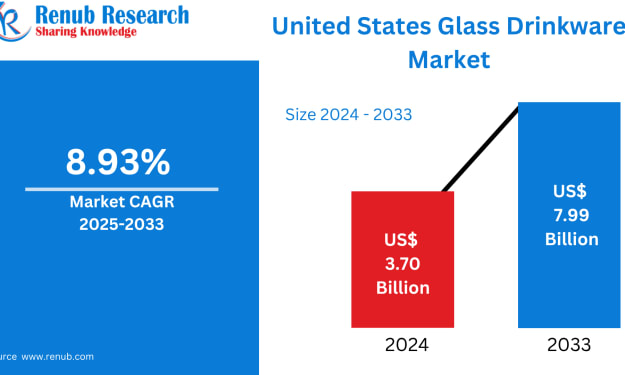
United States Glass Drinkware Market The United States Glass Drinkware Market is expected to reach US$ 7.99 billion by 2033, rising from US$ 3.7 billion in 2024, at a CAGR of 8.93% from 2025 to 2033. Growing consumer awareness of sustainability and reusable materials, the expansion of the hospitality and beverage industries, and the desire for high-end, fashionable glassware in both homes and foodservice settings are the main factors propelling the U.S. glass drinkware industry.
By jaiklin Fanandish9 days ago in FYI


Comments
There are no comments for this story
Be the first to respond and start the conversation.