
The Future of Wearables: Exploring the Advancements in Smart Clothing Technology
Smart Clothing Technologies That'll Blow Your Mind – Step Into The Future Of Wearables


Smart clothing is an exciting new development in the world of wearable technology. Unlike traditional wearable devices, such as smartwatches or fitness trackers, smart clothing integrates technology directly into the fabric of the garment.
This means that the technology is less obtrusive, more comfortable to wear, and can provide a wider range of functionality. In this article, we will explore the latest advancements in smart clothing technology, its benefits and challenges, and what the future holds for this exciting new field.
What is Smart Clothing?
Smart clothing, also known as e-textiles or electronic textiles, is a type of wearable technology that integrates electronics directly into textiles. This allows the garment to be used as a platform for various functions such as monitoring vital signs, tracking physical activity, and even controlling the temperature of the garment.
Smart clothing can be made from a variety of materials, including natural fibers such as cotton or wool, or synthetic fibers such as polyester or nylon. The key is that the fibers are interwoven with electronic components such as sensors, microprocessors, and power sources.
How Does Smart Clothing Work?
Smart clothing works by using conductive materials such as silver, copper, or carbon to create circuits within the fabric. These circuits can then be used to transmit data, power electronic components, and even control the garment's functionality.
One example of smart clothing technology is the use of biometric sensors to monitor vital signs such as heart rate, breathing rate, and body temperature. These sensors can be integrated into the fabric of the garment, allowing for continuous monitoring without the need for additional devices.
Another example of smart clothing technology is the use of heating or cooling elements to control the temperature of the garment. This is particularly useful for outdoor activities where the temperature can fluctuate, such as skiing or hiking.
Types of Smart Clothing
There are several types of smart clothing, each with its own unique features and applications. Some of the most common types of smart clothing include:
Smart Shirts - These are shirts that have integrated sensors to monitor various health metrics such as heart rate, breathing rate, and body temperature.
Smart Socks - These are socks that use pressure sensors to monitor gait and prevent injuries such as blisters.
Smart Bras - These are bras that have integrated sensors to monitor heart rate and breathing rate during exercise.
Smart Jackets - These are jackets that use heating or cooling elements to regulate temperature and provide comfort in various weather conditions.
The Benefits of Smart Clothing
Smart clothing has many potential benefits, ranging from health and fitness applications to military and law enforcement applications. Some of the most significant benefits include:
Health and Fitness Applications
Smart clothing can be used to monitor various health metrics, including heart rate, breathing rate, and body temperature. This can be particularly useful for athletes or individuals with medical conditions that require continuous monitoring.
In addition, smart clothing can be used to track physical activity, such as steps taken or calories burned, making it an ideal tool for individuals looking to improve their fitness levels.
Military and Law Enforcement Applications
Smart clothing can be used in military and law enforcement applications to monitor the physical condition of soldiers or officers. For example, sensors integrated into a soldier's uniform could provide real-time data on their vital signs and alert medics to any potential health issues.
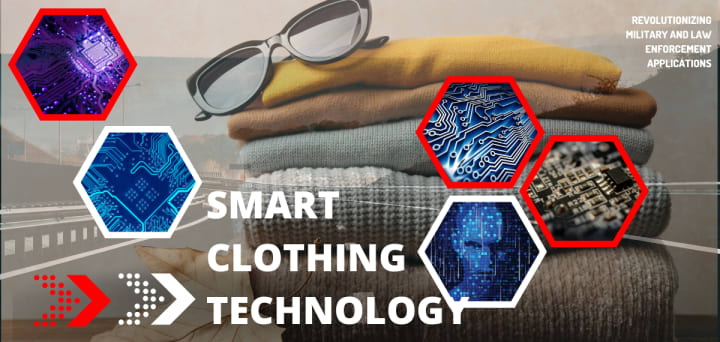
Smart Clothing Technologies Revolutionizing Military and Law Enforcement Applications
Smart clothing has gained significant attention in the military and law enforcement sectors due to its potential to enhance the performance and safety of personnel. Here are some examples and references:
Intelligent Textiles Limited:
Intelligent Textiles Limited is a UK-based company that specializes in the design and production of smart textiles for the defense and security sector. The company has developed a range of smart clothing solutions for military and law enforcement applications, including the Integrated Power and Data System (IPDS) and the Body Worn Antenna System (BWAS).
The IPDS is a lightweight and flexible power and data network that can be integrated into soldiers' uniforms, providing them with reliable and secure power and data transfer for communication and other mission-critical applications. The BWAS is a body-worn antenna system that enables soldiers to communicate with each other and with command and control centers, even in challenging environments such as inside buildings or underground.
Hexoskin:
Hexoskin is a Canadian company that produces smart clothing for various applications, including sports and fitness, healthcare, and military and law enforcement. The company's products include a range of shirts and vests that are equipped with sensors to monitor vital signs such as heart rate, breathing rate, and movement. These sensors can provide real-time data to military personnel and law enforcement officers, enabling them to monitor their physical and mental health during training and operations. Hexoskin's products have been used by the Canadian Armed Forces and other military organizations around the world.
Smart Textiles and Wearables for Military and Security Applications (STWM):
STWM is a European research project that aims to develop smart textiles and wearables for military and security applications. The project involves a consortium of companies, universities, and research organizations from across Europe. The project's focus is on developing innovative solutions for the military and law enforcement sectors, such as smart uniforms, protective clothing, and body-worn sensors. The project is funded by the European Union's Horizon 2020 research and innovation program.
Tactical Assault Light Operator Suit (TALOS):
TALOS is a project funded by the United States Department of Defense that aims to develop a high-tech suit for special operations forces. The suit is designed to provide soldiers with enhanced protection, situational awareness, and mobility. It includes a range of advanced technologies, including smart fabrics, exoskeletons, and integrated sensors. The TALOS project involves a collaboration between the Department of Defense, academia, and industry partners.
Future Soldier Initiative (FSI):
FSI is a project led by the Israeli Defense Forces (IDF) that aims to develop smart clothing and equipment for soldiers. The project includes the development of a range of technologies, including smart uniforms, helmets, and weapons. The smart clothing and equipment will be equipped with sensors and other advanced technologies to provide soldiers with enhanced situational awareness, communication, and protection. The FSI project involves a collaboration between the IDF and Israeli industry partners.
References:
https://www.sciencedirect.com/topics/engineering/intelligent-textile
https://cordis.europa.eu/article/id/94710-from-wireless-to-wearable-technology
https://technicaltextile.net/articles/smart-and-intelligent-textiles-2486
5 Wearables Technology Devices That are Redefining Futuristic Solutions
About the Creator
Dany Goldraij
I love marketing , promoting new ideas and new products. I care about healthy life , fitness and dogs.
Keep reading
More stories from Dany Goldraij and writers in FYI and other communities.
The Top 5 Wearables Technology Devices That Are Shaping the Future
The current trend of wearables technology has had major implications for the future. How will the constant stream of data from devices like fitness trackers, smart watches and highly specialized apparel transform our lives and how we interact with our environment?
By Dany Goldraij3 years ago in FYI


Comments
There are no comments for this story
Be the first to respond and start the conversation.