
'The Father of Vitamins'
A Brief History of the Vitamin


Vitamins and minerals are micronutrients that are required by the body to maintain normal functions. The knowledge that consumption of certain foods to maintain health or cure diseases was known long before vitamins were discovered.
Ancient Egyptians learned that eating living would combat night blindness (called Nyctalopia, a vitamin A deficiency). Nineteenth-century sailors experienced outbreaks of scurvy during their long voyages. Caused by a lack of vitamin C, symptoms of scurvy include poor wound healing, bleeding gums, severe pain, and, in extreme cases, death.
In 1747, Scottish surgeon James Lind discovered that the consumption of citrus fruits prevented scurvy. Adopted by the Royal Navy in 1753, limes and lemons were included in the sailor’s diet, earning them the nickname ‘Limeys.’
But not everyone was convinced. At the dawn of the twentieth century, some scientists still believed that food consisted of only three nutrients: proteins, carbohydrates, and fats. Poor sanitation and hygiene, it was thought, were to blame for most (if not all) of the known diseases.
However, there was enough evidence in history to support the theory of an unknown necessary ingredient in foods that maintained health. In the early decades of the 1900s, scientists began research to solve the mystery of the unknown nutrient essential to human well-being.
Christiaan Eijkman

In 1886, Dutch military physician Christiaan Eijkman (1858–1920) was a Dutch military physician was sent to the Dutch East Indies (now Indonesia) to study an outbreak of beriberi, a disease frequently seen in parts of the Orient that affected peripheral nerves that caused pain and paralysis.
Eijkman’s experiments included injecting blood from sick soldiers into laboratory chickens. The infected chickens also began to show symptoms of Beriberi.
Here fate played a hand.
Eijkman had been feeding his chickens white, or ‘polished’ rice, from leftover military rations. Rice is referred to as ‘polished’ when the hulls have been removed, increasing shelf life.
However, when military cooks refused to let their rice be fed to civilian animals, Eijkman was forced to switch their diets to rice that had intact hulls, or brown rice. Once consuming a diet of brown rice, the chickens quickly recovered.
Eijkman rightly theorized that while the polished rice lacked a dietary component, but mistakenly believed Beriberi was caused by either an unknown bacteria or the high levels of starch present in the white rice.
Today we know that polishing rice and grains rids them of vitamin B, necessary for the prevention of two of the era’s most common diseases: Pellagra (a niacin deficiency that causes sores and delusions), and Beriberi (which damages nerves and leads to paralysis, caused by a deficiency of B1, or thiamine).
Although wrong about the bacteria or starch, Eijkman’s theory that polished rice lacked an essential dietary component was the first step in the process of discovering what we call today vitamins.
Gerrit Grijns

When Eijkman fell ill and returned to Europe, another Dutch researcher, Gerrit Grijns (1865–1944) was sent to the Dutch East Indies to continue Eijkman’s Beriberi research.
Grijns was the first to link Beriberi to the lack of husks on machine-processed rice. His theory that the lack of what he called ‘protective substances’ in food led to certain diseases became the starting point for the modern understanding of what we today call vitamins and their importance in maintaining health.
‘There occur in various natural foods, substances which cannot be absent without serious injury to the peripheral nervous system…these substances are easily disintegrates…which show that they are complex substances and cannot be replaced by simple chemical compounds.’ — Gerrit Grijns
Grijns, along with Eijkman, was credited as the co-founders of the vitamin B1 (thiamine). He was nominated with Eijkman for the Nobel Prize for Medicine in 1926 and 1927 but never won.
In 1940, Grijns was awarded the Swammerdam Medal, with the inscription naming him as the ‘Founder and Father of the Current Science of Foodstuffs.’
Sir Frederick Hopkins

In the early 1900s, British doctor and researcher Frederick Hopkins (1861–1947) continued the search for vitamins. He noted that mice stopped growing if fed only carbohydrates, proteins, fats, and mineral salts, but no milk.
Hopkins hypothesized that certain foods contained what he called ‘additional elements’ that were necessary for the healthy functions of the human body.
Hopkins was co-winner of the 1929 Nobel Prize with Eijkman. He also received a knighthood, the Order of Merit, the Royal Medal of the Royal Society of London, and the Copley Medal.
‘The Father of Vitamins’
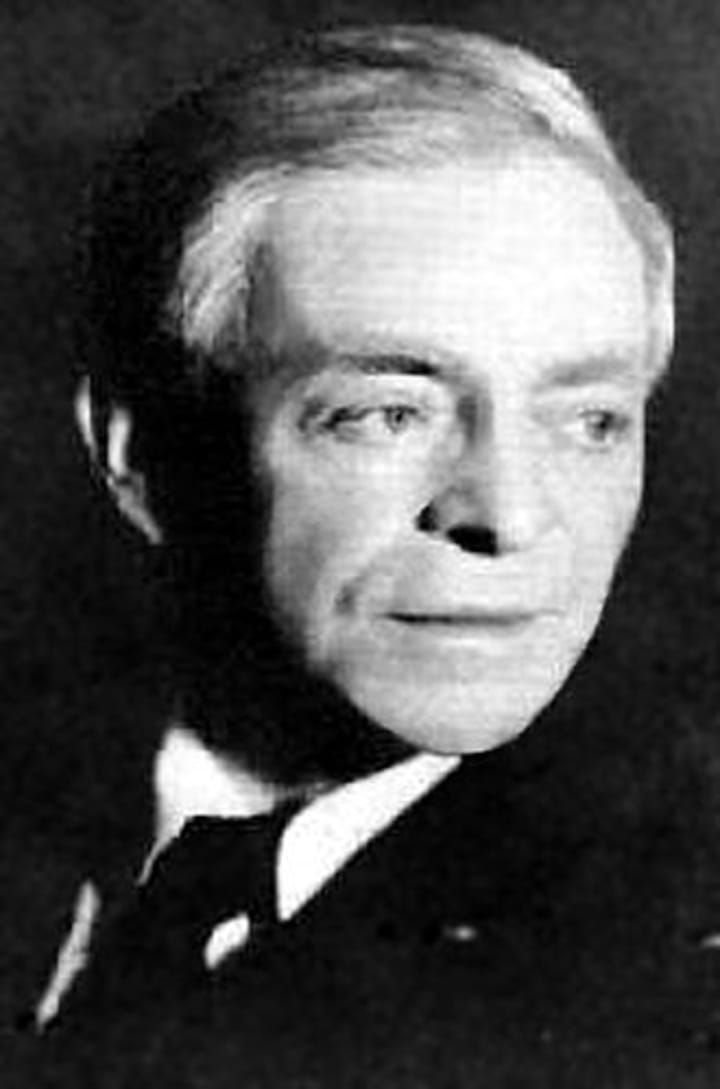
Kazimierz (anglicized to Casimir) Funk (1888–1967) was a Polish-born American biochemist who is credited with forming the concepts of what we today call vitamins.
Continuing the research of Eijkman, in 1911 he experimented with two groups of pigeons. In one group, he fed rice with the coating on, the other with the hull removed. The pigeons with the coating removed contracted Beriberi; the others remained healthy, leading him to correctly believe that the rice hull coating prevented Beriberi. He called the concentrated nutrients in the rice hull ‘vitamine’ from the Latin ‘vita’ meaning vitality (or life) and ‘amines’ meaning a chemical compound that contains nitrogen.
Even though he never isolated a pure vitamin, Funk’s research advanced medicine’s understanding of nutrition and the way people look at food, earning him the title ‘the Father of the Vitamin.’
Conclusion
The ‘E’ of Funk’s ‘vitamine’ was deleted in the 1920s when it was discovered that amines were not always present in vitamins.
Scientists have since identified thirteen vitamins that are essential for normal cell function, growth, and development.
Vitamins are classified as either fat or water-soluble. Fat-soluble vitamins (such as A, D, E, and K) are those that dissolve in fat and are retained by the body. Non-soluble vitamins (for example, C, B6, and B12) have to dissolve in water before being absorbed; therefore, the body cannot store them over a long period of time.
Most people got vitamins only through the foods they ate until the 1930s when commercially made supplements came on the market.
The US government began fortifying foods with nutrients to prevent deficiencies. In the 1920s, iodine was added to salt to prevent goiter. The 1930s saw the addition of vitamin D to milk. Grains had vitamin B introduced 1940s to combat pellagra, and folic acid in the 1990s to prevent birth defects.
If you liked this article, check out my Medium publication The History Around Us: The Fascinating Origins of Ordinary Things.
About the Creator
Randall G Griffin
I am Pop-Pop, dad, husband, coffee-addict, and for 25 years a technical writer. My goal is to write something that somebody would want to read.
Keep reading
More stories from Randall G Griffin and writers in FYI and other communities.
Strategic Sourcing for Hard to Find FSC 5310 & 5305 Fasteners
In aerospace and defense supply chains, even the smallest hardware components play a crucial role in maintaining system integrity and operational safety. Fasteners classified under Federal Supply Class (FSC) 5310 and 5305 are among the most widely used hardware components across aircraft structures, mechanical assemblies, and defense equipment. These parts include washers, screws, bolts, and other securing hardware that ensure structural stability and precise assembly of complex systems.
By Beckett Dowhan5 days ago in FYI


Comments
There are no comments for this story
Be the first to respond and start the conversation.