
The Fascinating Story of Yap Island’s Rai Stones: How Stone Coins Shaped a Society
Yapese culture

Introduction to Micronesia and the Federated States of Micronesia
In the heart of the Pacific Ocean lies the Federated States of Micronesia, a nation made up of thousands of small islands. Among these islands is Yap, a speck in the vast ocean that is home to one of the most unique forms of currency in the world: the Rai Stones. These massive, circular discs made of limestone have been used as a form of money on Yap Island for centuries, and their story is nothing short of fascinating. From their origins as a currency used for trade and social status to their enduring significance in Yapese culture today, the Rai Stones have truly shaped the society of this small island in the Pacific.
Join me on a journey through the history of Yap Island’s currency, as we explore the origins and evolution of these remarkable stone coins, and discover the impact they have had on the culture and economy of this remarkable corner of the world.
What are Rai Stones?
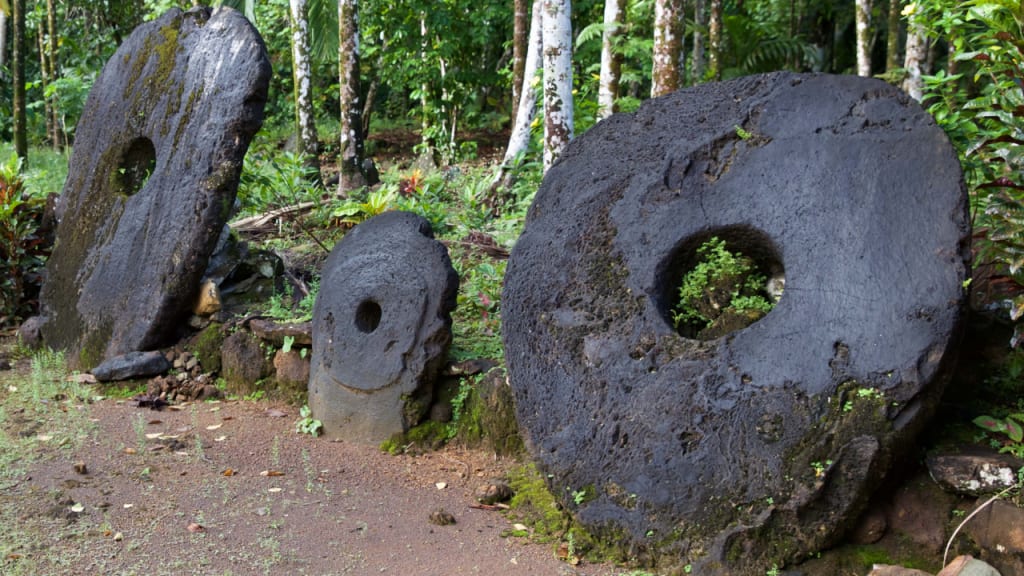
Rai Stones are massive, circular limestone discs that have been used as a form of currency on Yap Island for centuries. They are unique in their size and weight, with some of the largest Rai Stones weighing up to four tons. These stone coins come in various sizes, with the largest being the most valuable. Rai Stones are not mined on Yap Island but are instead imported from neighboring islands. They are valued not only for their size and weight but also for their history and the stories associated with them.
Rai Stones are considered to be a symbol of wealth and prestige on Yap Island and have played a significant role in shaping the culture and economy of the island.
History of Rai Stones and their significance in Yap Island’s Culture
The history of Rai Stones on Yap Island dates back centuries. According to legend, the stones were first brought to the island by a group of seafarers from Palau. These seafarers brought the stones with them as a symbol of wealth and prestige, and they quickly became an important part of Yapese culture.
The significance of Rai Stones continued to grow over time, and they were used as a form of currency for trade and as a means of settling disputes. They were also used as a way to demonstrate social status and to mark important events such as weddings and funerals. Today, they remain an essential part of Yapese culture and are still used in traditional ceremonies and as a symbol of wealth.
How did Rai Stones become a form of currency?
Rai Stones became a form of currency on Yap Island due to their rarity and value. Because Yap Island is relatively small and lacks many natural resources, Rai Stones were highly prized and were used as a means of trade. They were also used as a way to settle disputes, as the stones’ value could be agreed upon by both parties.
Rai Stones became the island’s primary form of currency and were used in all types of transactions. The Yapese people also developed a complex system of ownership and transfer of the stones, which allowed for secure transactions between individuals.
The production and transportation of Rai Stones
Rai Stones are not produced on Yap Island but are instead imported from neighboring islands. The production of Rai Stones is a labor-intensive process that involves carving large limestone discs from quarries. The stones are then transported to Yap Island using traditional canoes and rafts, a process that can take several months. Once the stones arrive on Yap Island, they are stored in communal meeting houses and are used in transactions between individuals. The production and transportation of Rai Stones are considered to be essential skills and are passed down from generation to generation.
The Value of Rai Stones and their role in Society
Rai Stones are highly valued on Yap Island and are considered to be a symbol of wealth and prestige. The value of the stones is determined by their size, weight, and history. The largest and most ancient Rai Stones are the most valuable and are often used in traditional ceremonies and as a symbol of wealth. Rai Stones also play an important role in Yapese society as a means of trade, settling disputes, and marking important events. The stones have been used for centuries and continue to be an essential part of Yapese culture today.
Challenges faced by Yap Island due to Rai Stones
While Rai Stones have played an essential role in Yapese culture, they have also posed several challenges for the island. One of the primary challenges is the difficulty of transporting the stones too and from neighboring islands. This process can take several months and can be dangerous due to rough severe material.
The decline of Rai Stones as a currency
As Yap Island became more connected to the outside world, the use of Rai Stones as a currency declined. The introduction of modern currency by Western colonizers, as well as the increased use of paper money, led to a decrease in the use of Rai Stones as a means of exchange. The stones are still used in traditional ceremonies and as a symbol of wealth on the island, but their use as currency has dwindled. Today, Rai Stones are mostly considered a cultural artifacts, and their value is primarily symbolic rather than financial.
The legacy of Rai Stones Despite their decline as a currency
Rai Stones continue to play a significant role in Yapese culture. They are considered a symbol of wealth and prestige and are used in traditional ceremonies and as a means of demonstrating social status. The stones also serve as a reminder of the island’s rich cultural history and the importance of traditional customs and values. Today, Rai Stones are an important part of Yap Island’s cultural heritage and are recognized as such by the international community.
The lessons we can learn from the story of Rai Stones
The story of Rai Stones provides several important lessons about the nature of money and the role of culture in shaping economic systems. The use of Rai Stones as a currency on Yap Island demonstrates that money is not just a physical object but is also imbued with cultural and social significance. The stones’ continued use in traditional ceremonies and as a symbol of wealth and status also shows the lasting impact of cultural practices and beliefs on economic systems.
Final Thoughts
The story of Rai Stones provides a fascinating insight into the nature of money, culture, and economic systems. The stones’ unique history and significance on Yap Island demonstrate the lasting impact of cultural practices and beliefs on economic systems. The decline of Rai Stones as a currency also shows the importance of adaptability and flexibility in economic systems. As Yap Island became more connected to the outside world, the islanders had to adjust to new forms of currency and exchange. This process highlights the need for economic systems to be able to adapt to changing circumstances and incorporate new ideas and practices. Overall, the story of Rai Stones serves as a reminder of the rich and complex histories that underlie our economic systems and the need to understand the cultural and social contexts in which they operate.
Sources:
The Story of Rai: Yap Island Stone Money by James Sinclair, Cultural Survival Quarterly.
Yapese Stone Money: Myth, Symbol, and History by William A. Elison, Pacific Science.
Rai Stones of Yap by Frank H. McClung, Jr., Journal of the Polynesian Society.
* The original article is also published on the author`s medium.com account*
About the Creator
Keep reading
More stories from Carla Alexa Nunes and writers in FYI and other communities.
Culture as Currency
As a society, we often talk about the importance of education, hard work, and networking when it comes to achieving success. However, another crucial factor is often overlooked — cultural capital. Cultural capital refers to the knowledge, skills, and cultural experiences that individuals possess and can use to their advantage in society.
By Carla Alexa Nunes3 years ago in FYI
How FAA Safety Management Systems (SMS) Affect Parts Procurement
The aviation industry operates under strict safety and regulatory standards to ensure the reliability of aircraft operations. One of the most important frameworks guiding safety in the United States aviation sector is the Federal Aviation Administration’s Safety Management System (SMS). This system is designed to help aviation organizations identify risks, implement safety controls, and continuously improve operational practices. While SMS is often associated with flight operations and maintenance procedures, it also plays a critical role in aircraft parts procurement.
By Beckett Dowhan8 days ago in FYI


Comments
There are no comments for this story
Be the first to respond and start the conversation.