
The Fascinating Explanation for Insect Attraction to Lights
Uncovering the Surprising Science Behind One of the Most Puzzling Mysteries in Insect Behavior

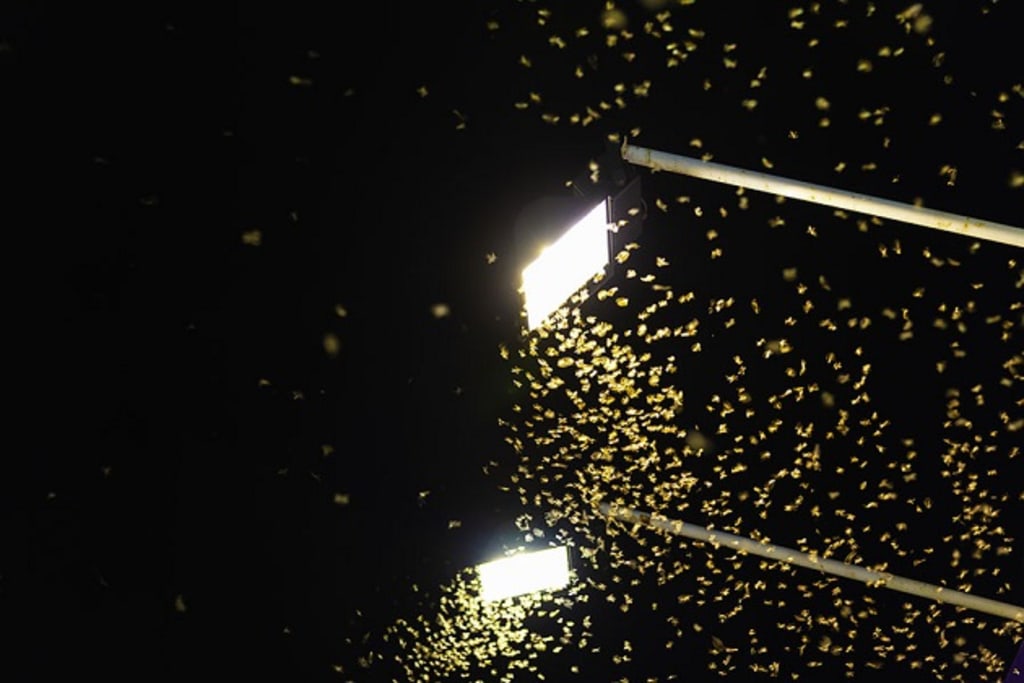
For centuries, people have been fascinated by the attraction that insects seem to have towards light. From moths circling around streetlights to swarms of insects gathering around porch lights, this phenomenon has puzzled scientists and laypeople alike. But new research has shed light on why insects are attracted to lights, and it turns out that it has to do with their navigational instincts.
The study, conducted by researchers from the University of Colorado Boulder and published in the journal Nature Ecology & Evolution, found that insects are attracted to light because they use the sky as a compass to navigate, and artificial lights can disrupt this navigational system.
According to the researchers, many insects use the polarization of light in the sky to determine their location and direction. This is particularly important for insects that migrate or travel long distances, such as monarch butterflies or honeybees. By using the polarization of light, these insects are able to maintain a consistent heading, even in cloudy or overcast conditions.
However, when artificial lights are introduced into the environment, they can disrupt the polarization of light in the sky, causing confusion for insects that rely on this navigational system. This can cause insects to become disoriented and attracted to the light source, as they try to use it as a substitute for the natural polarization of light.
The researchers also found that the color and intensity of the light source can play a role in how attractive it is to insects. In general, insects are more attracted to blue and ultraviolet light, which mimics the natural light that they use to navigate. They are also more attracted to brighter light sources, which can be more disorienting for them.
While the phenomenon of insects being attracted to lights has long been observed, this new research provides a deeper understanding of the underlying mechanisms that drive this behavior. It also has important implications for the ways in which we can reduce the negative impact of artificial lights on insect populations.
One of the key takeaways from this research is that light pollution, which refers to the excess or misdirected artificial light in the environment, can have a significant impact on insect populations. This is particularly concerning given the vital role that insects play in ecosystems, including as pollinators and as a food source for other species.
To mitigate the impact of light pollution on insects, the researchers suggest a number of strategies. These include using lights with lower intensity and warmer colors, which are less attractive to insects, and turning off unnecessary lights during certain times of the night. In addition, they suggest that outdoor lighting should be directed downwards, rather than upwards or outwards, to reduce the amount of light pollution in the sky.
The findings of this study also have broader implications for our understanding of how humans impact the natural world. As we continue to expand our use of artificial light, it is essential that we take into account the potential impact on other species and the environment. By working to reduce light pollution and minimize its impact on insect populations, we can help ensure a healthier and more sustainable future for all.
In conclusion, the new research on why insects are attracted to lights provides a fascinating insight into the navigational instincts of these creatures. By disrupting their natural navigational system, artificial lights can cause confusion and disorientation, leading insects to become attracted to the light source. To mitigate the impact of light pollution on insect populations, it is important that we take steps to reduce unnecessary and excessive artificial lighting, and to use lighting that is less attractive to insects. By doing so, we can help protect these vital species and maintain healthy ecosystems for generations to come.
About the Creator
Keep reading
More stories from There is Something... and writers in FYI and other communities.
Electromagnetic and honeybees
For years, scientists have been concerned about the impact of electromagnetic fields (EMFs) on bees and other pollinators. Now, a new study has found that the EMFs generated by power lines can interfere with the ability of honeybees to navigate, potentially affecting their ability to forage and pollinate.
By There is Something...3 years ago in FYI
How FAA Safety Management Systems (SMS) Affect Parts Procurement
The aviation industry operates under strict safety and regulatory standards to ensure the reliability of aircraft operations. One of the most important frameworks guiding safety in the United States aviation sector is the Federal Aviation Administration’s Safety Management System (SMS). This system is designed to help aviation organizations identify risks, implement safety controls, and continuously improve operational practices. While SMS is often associated with flight operations and maintenance procedures, it also plays a critical role in aircraft parts procurement.
By Beckett Dowhan4 days ago in FYI



Comments
There are no comments for this story
Be the first to respond and start the conversation.