
The Evolution of Timekeeping: A Journey Through the History of Clocks
From Sundials to Atomic Clocks and Beyond, Tracing the Fascinating Development of Timekeeping Technology


Timekeeping has been an essential aspect of human civilization since the beginning of recorded history. The concept of measuring and managing time has been crucial for agriculture, trade, religion, and many other aspects of daily life. The earliest timekeeping devices were simple astronomical instruments that used the movement of the sun and stars to mark the passage of time. However, as societies became more complex, the need for more accurate and reliable timekeeping devices grew. This need led to the development of the clock, one of the most significant inventions in human history. Over the centuries, clocks have evolved from simple water clocks and sundials to highly sophisticated mechanical and electronic timepieces that are an essential part of modern life. In this article, we will explore the fascinating history of clocks, from their earliest beginnings to the present day. We will look at the many innovations and technological advancements that have shaped the development of clocks, as well as the cultural, social, and economic impact of these remarkable devices.
Early Forms of Timekeeping
The earliest forms of timekeeping were based on natural phenomena, such as the movement of the sun across the sky. One of the earliest devices used for measuring time was the sundial, which used the position of the sun to determine the time of day. Sundials were first used in ancient Egypt and later spread to Greece and Rome. They were simple devices consisting of a straight or curved surface (called a gnomon) that cast a shadow onto a surface marked with hours.

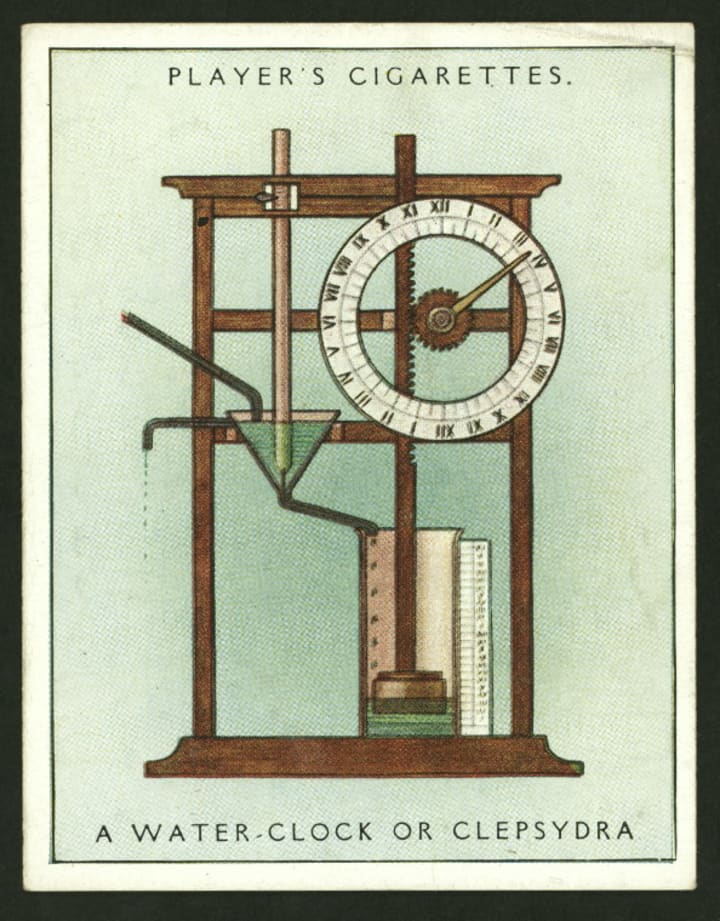
Another early form of timekeeping was the water clock, also known as a clepsydra. Water clocks were first used in ancient Egypt and were later developed by the Greeks and Romans. They were made up of a container filled with water that flowed through a small hole in the bottom into a second container below. The rate at which the water flowed could be controlled by adjusting the size of the hole or the level of the water in the upper container. By measuring the amount of water that had flowed from one container to another, people could determine the passage of time.
The hourglass, or sand clock, was another early form of timekeeping. It consisted of two glass bulbs connected by a narrow neck that allowed sand to flow from one bulb to the other. The time it took for the sand to flow from one bulb to the other was a measure of time. Hourglasses were used extensively by sailors to time their watches and to determine longitude at sea.

In addition to these early devices, people also used other natural phenomena to measure time. For example, the stars and the moon provided a reliable means of measuring time at night, and the seasons provided a means of measuring time over longer periods. These early forms of timekeeping laid the foundation for the development of more accurate and sophisticated timepieces in later centuries.
Mechanical Clocks
The invention of mechanical clocks marked a significant turning point in the history of timekeeping. These clocks used a system of gears and weights to keep track of time and were much more accurate and reliable than any previous timekeeping device.
The first mechanical clocks appeared in Europe during the 13th century and were initially large and expensive devices that were only found in churches and other public buildings. One of the earliest known mechanical clocks is the Salisbury Cathedral clock, which was built in England in 1386 and is still in working order today.
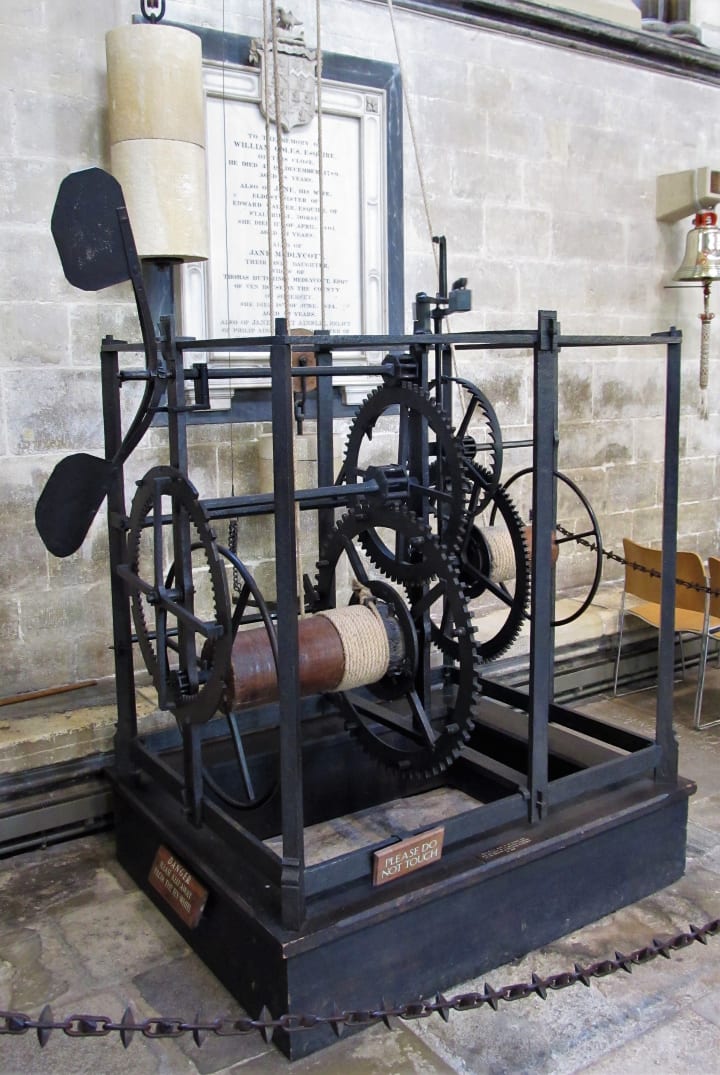
Over time, mechanical clocks became smaller and more affordable, and by the 16th century they were common in wealthy households and public buildings throughout Europe. They often featured ornate designs and intricate mechanisms and were regarded as status symbols as well as functional timekeeping devices.
One of the most important innovations in mechanical clock design was the introduction of the pendulum in the 17th century. This device used the natural swing of a weighted object to regulate the movement of the clock's gears, resulting in much greater accuracy and consistency in timekeeping.

By the 18th century, mechanical clocks had become highly sophisticated and accurate devices, capable of measuring time to within a few seconds per day. They remained the most common form of timekeeping technology until the invention of the quartz crystal clock in the 20th century.
Quartz Clocks
Quartz clocks, also known as crystal clocks, were developed in the 1920s and 1930s and were first introduced to the market in the 1960s. These clocks use a small piece of quartz crystal as their timekeeping element.

Quartz clocks work by using a small battery-powered electronic oscillator to vibrate the quartz crystal at a precise frequency, typically 32,768 times per second. The quartz crystal acts as a resonator, and the vibration causes the clock to keep time accurately. The oscillation of the quartz crystal generates a signal that is sent through a circuit to a digital display or a set of hands on an analog display.
The advantage of quartz clocks is that they are extremely accurate and can keep time to within a few seconds per year. They are also relatively inexpensive to produce and maintain compared to mechanical clocks. Quartz clocks are widely used in homes, businesses, and public places as wall clocks, desk clocks, and wristwatches.
Another benefit of quartz clocks is that they are not affected by changes in temperature, humidity, or atmospheric pressure, which can cause mechanical clocks to lose or gain time. This makes them ideal for use in a variety of environments, including outdoor settings.
Today, quartz clocks are ubiquitous and can be found in a wide range of styles, sizes, and price points. From the simplest digital alarm clocks to the most intricate and ornate analog wall clocks, quartz technology has made accurate timekeeping accessible to everyone.
Atomic Clocks
The development of atomic clocks marked a significant milestone in the history of timekeeping. These clocks are based on the principle of atomic resonance, which refers to the vibration or oscillation of atoms at a specific frequency. The first atomic clock, the ammonia maser clock, was developed in 1949 by scientists at the National Bureau of Standards in the United States.
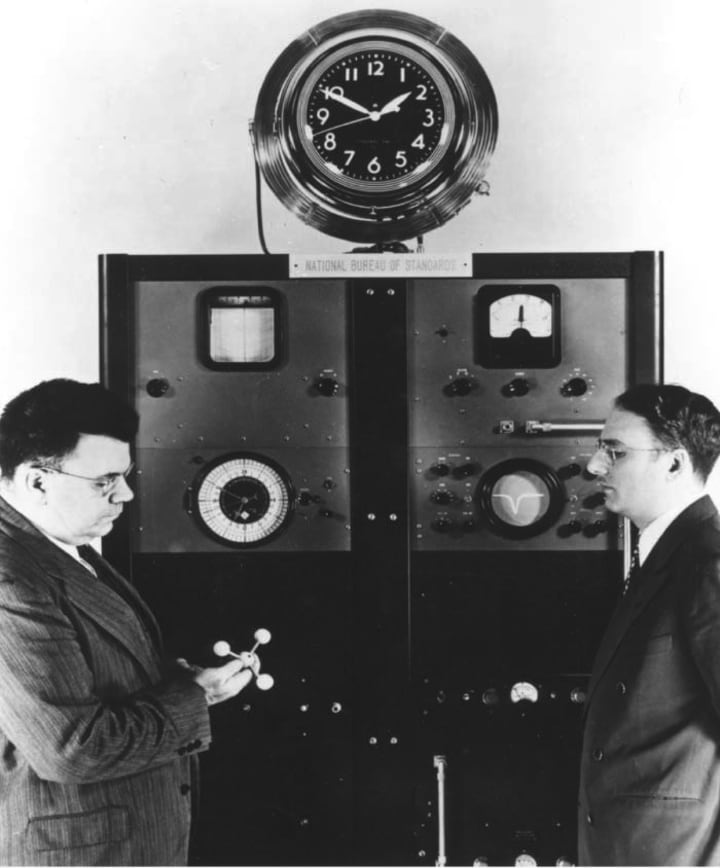
Atomic clocks are incredibly accurate and are used as the primary time standard by the International System of Units (SI). The accuracy of these clocks is due to the fact that the frequency of atomic oscillation is incredibly stable and consistent. For example, the most common type of atomic clock, the cesium atomic clock, measures the vibrations of cesium atoms to determine time. These clocks are so precise that they can keep time accurately to within one second in millions of years.
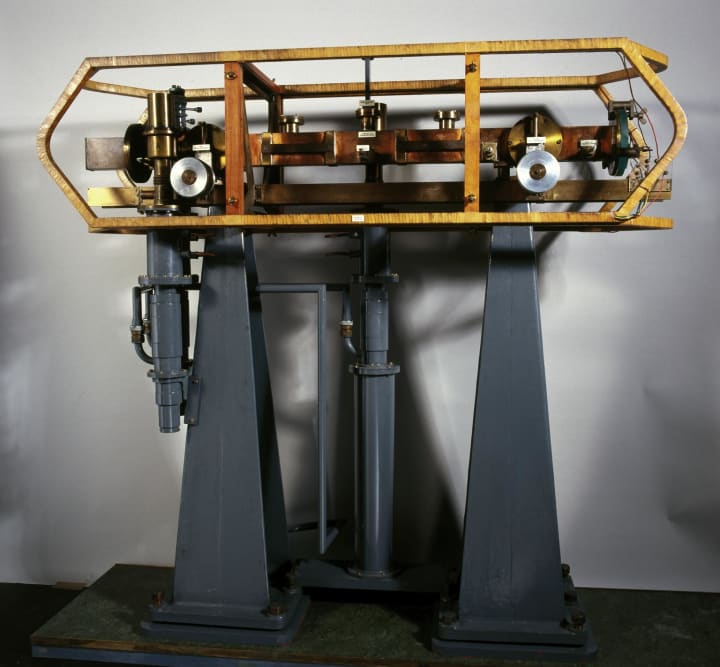
Atomic clocks are widely used in scientific research, navigation, telecommunications, and other fields where highly accurate timekeeping is essential. They are also used to synchronize global time standards, ensuring that timekeeping is consistent and uniform worldwide.
In addition to cesium atomic clocks, there are other types of atomic clocks that use different atoms such as hydrogen, rubidium, and ytterbium. These clocks are even more accurate than cesium atomic clocks and are used in specialized applications where the highest level of precision is required.
Overall, the development of atomic clocks represents a significant achievement in the history of timekeeping. These clocks have revolutionized the way we measure time and have paved the way for many technological advances that rely on accurate and precise timekeeping.
Modern Clocks
In today's world, clocks have evolved to become more than just time-telling devices. With the advancement of technology, we now have access to a wide range of clocks that not only tell the time but also offer unique features and designs.
One of the most popular modern clock designs is the digital clock. Unlike analog clocks, digital clocks display the time in a numeric format. They are easy to read and can be found in a variety of settings such as alarm clocks, wall clocks, and even car dashboards.

Smartwatches are another popular clock option in the modern era. These watches offer a range of features beyond time-telling, including fitness tracking, messaging, phone calls, and more. They are especially popular among athletes and fitness enthusiasts who use them to track their workouts and monitor their progress.

Another innovative clock design is the projection clock, which uses a projector to display the time on a wall or ceiling. This is a unique and futuristic design that adds a touch of creativity to any room.
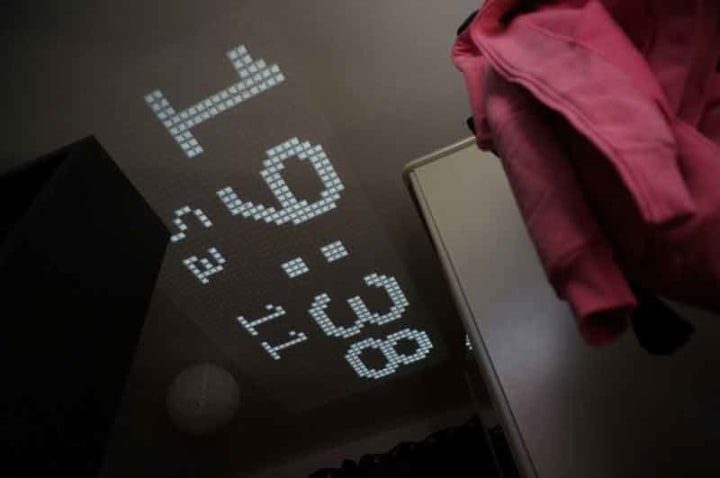
Clocks are not just limited to telling time, as they can also serve as statement pieces in a room. For example, there are clocks designed to look like works of art or even pieces of furniture. These clocks can add a unique touch to any home or office.
Finally, atomic clocks are still relevant in the modern era. These clocks are incredibly accurate, using the vibrations of atoms to measure time. They are used in a variety of scientific fields, including astronomy and physics.
Overall, modern clocks have come a long way from their humble beginnings as simple sundials. With technology constantly advancing, we can expect even more innovative and unique clock designs to be developed in the future.
Conclusion
Throughout history, timekeeping has played a crucial role in the way societies have functioned. From the earliest forms of timekeeping using the sun and stars to the modern atomic clocks, humans have continuously sought better ways to measure time accurately.
Clocks have not only helped us keep track of time, but they have also helped us in various fields like astronomy, navigation, and science. The development of precise timekeeping was essential to the advancement of technology and the growth of industries that depend on accurate timekeeping, like transportation and communication.
As technology continues to advance, clock designs have become more innovative and unique. From the sleek, minimalist designs of modern digital clocks to the multifunctional features of smartwatches, clocks have evolved to meet the changing needs of society. They have become an integral part of our daily lives, keeping us on time for appointments, meetings, and other important events.
In conclusion, clocks have come a long way from their early beginnings as simple sundials. The evolution of timekeeping technology has had a profound impact on our society and has played a significant role in shaping the way we live our lives. While the history of clocks is fascinating, it is equally exciting to see how clock designs continue to evolve and adapt to the needs of modern society. Whether it is for practical purposes or decorative, clocks will continue to be an essential part of our daily lives for years to come.
About the Creator
Salim A. Hashimi
My passion for writing knows no bounds, from latest tech to history and whatever in between, I offer fresh, informative & entertaining insights. With every piece, I strive to deliver a well-written story that inspires, informs & entertains.
Keep reading
More stories from Salim A. Hashimi and writers in FYI and other communities.
Clean Ears, Happy Ears: A Comprehensive Guide to Using an Ear Wax Removal Tool
Do you suffer from blocked ears or excess earwax? If so, you're not alone. Many people struggle with earwax buildup and are unsure of the best way to clean their ears without causing damage. Fortunately, there's a safe, hygienic, and cost-effective solution: the Ear Wax Removal Tool Manual Ear Irrigation Flushing System. In this article, we'll explore the benefits of using an ear wax removal tool and provide you with all the information you need to use it correctly and safely.
By Salim A. Hashimi3 years ago in Longevity




Comments
There are no comments for this story
Be the first to respond and start the conversation.