
The Enigmatic Nature of Black Holes
Exploring Their Formation, Implications, and Mysteries

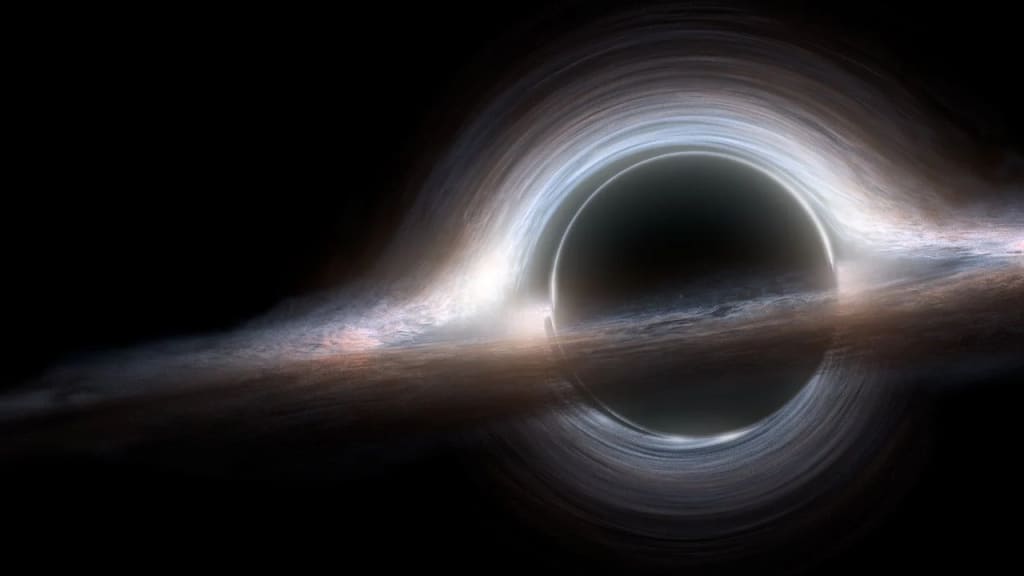
Black holes are some of the most mysterious and intriguing objects in the universe. These incredibly dense regions of space have fascinated scientists and researchers for decades, leading to many theories about their formation and behavior. In this article, we will delve into the details of how black holes are formed, the various types of black holes, and their significance in our understanding of the cosmos.
Black holes are formed from the collapse of massive stars. When a star runs out of fuel and can no longer produce enough energy to counteract the force of gravity, it will begin to collapse in on itself. As the star collapses, its core becomes denser and denser until it reaches a point where the gravitational force becomes so strong that not even light can escape its pull. This point of no return is known as the event horizon, and it marks the boundary of the black hole.
There are two types of black holes: stellar and supermassive. Stellar black holes are formed from the collapse of individual stars, while supermassive black holes are found at the centers of galaxies and are believed to have formed from the merging of multiple smaller black holes.
Stellar black holes can have a mass between three and twenty times that of the sun. Supermassive black holes, on the other hand, can have a mass millions or even billions of times greater than the sun. The supermassive black hole at the center of our Milky Way galaxy, for example, has a mass of approximately four million times that of the sun.
Black holes are invisible to the naked eye, as they do not emit any light. However, their presence can be detected by observing their effects on nearby matter. As matter is pulled into the black hole, it heats up and emits radiation, which can be detected by telescopes and other instruments.
One of the most fascinating aspects of black holes is their effect on the fabric of space and time. According to Einstein's theory of relativity, gravity is the result of the curvature of space and time. Black holes are so massive that they warp the fabric of space and time around them, causing them to distort in strange and unexpected ways.
Black holes also have a significant impact on the evolution of galaxies. The supermassive black holes at the centers of galaxies are believed to play a crucial role in regulating the growth of galaxies by controlling the flow of gas and other material
Black holes are some of the most mysterious and fascinating objects in the universe. They are formed from the collapse of massive stars and have a significant impact on the fabric of space and time. While much is still unknown about these enigmatic objects, their study has led to significant advancements in our understanding of the cosmos and the forces that shape it
Black holes continue to be a topic of intense study and research in the scientific community. One of the most exciting developments in recent years has been the discovery of gravitational waves, which were predicted by Einstein's theory of relativity and were finally detected in 2015. These waves are created when two massive objects, such as black holes, merge together, causing ripples in the fabric of space and time that can be detected by advanced instruments like the Laser Interferometer Gravitational-Wave Observatory (LIGO).
The study of black holes has also led to new insights into the nature of dark matter and dark energy, two mysterious components of the universe that make up the majority of its mass and energy. While black holes do not emit any light, they do have a significant gravitational pull, which can be used to study the distribution of dark matter and understand its role in the formation and evolution of galaxies.
One of the most exciting areas of current research is the study of intermediate-mass black holes, which are thought to have masses between 100 and 100,000 times that of the sun. These black holes are believed to be the missing link between stellar and supermassive black holes and could help us understand the evolution of galaxies in the early universe.
Another area of research is the study of black hole jets, powerful streams of particles that are emitted by some black holes. These jets can have a significant impact on the surrounding environment and are believed to play a crucial role in the formation of stars and galaxies.
The study of black holes is a fascinating and ever-evolving field of research that has the potential to reveal new insights into the nature of the universe. While much remains unknown about these enigmatic objects, their study has already led to significant advancements in our understanding of the cosmos and the forces that shape it. With new technologies and advanced instruments, we can expect even more exciting discoveries in the years to come.
One of the most intriguing aspects of black holes is the concept of the "information paradox." According to quantum mechanics, information cannot be destroyed, yet if matter falls into a black hole, it appears to be lost forever. This paradox has led to a great deal of debate and speculation among physicists, with some proposing that information may be preserved in the form of quantum correlations between the black hole and its surroundings.
Another area of research is the study of primordial black holes, which are thought to have formed shortly after the Big Bang. These black holes would be much smaller than stellar black holes, with masses ranging from just a few grams to tens of thousands of tons. While no definitive evidence for primordial black holes has been found yet, their existence could have significant implications for our understanding of the early universe.
The study of black holes has also led to new insights into the nature of time itself. According to Einstein's theory of relativity, time slows down in the presence of a strong gravitational field. This means that time would appear to pass more slowly for an observer near a black hole than for an observer far away. This effect, known as gravitational time dilation, has been observed in experiments and is an important factor to consider in the study of black holes.
Finally, the study of black holes has captured the public imagination like few other areas of science. From science fiction to popular culture, black holes have become a symbol of the unknown and the mysterious, inspiring awe and fascination in people around the world. The study of black holes will continue to be a source of wonder and inspiration for generations to come, as we seek to unlock the secrets of these enigmatic objects and understand the nature of the universe itself.
About the Creator
DRD
a asted life
Reader insights
Outstanding
Excellent work. Looking forward to reading more!
Top insights
Compelling and original writing
Creative use of language & vocab
Easy to read and follow
Well-structured & engaging content
Expert insights and opinions
Arguments were carefully researched and presented
Eye opening
Niche topic & fresh perspectives
On-point and relevant
Writing reflected the title & theme
Strategic Sourcing for Hard to Find FSC 5310 & 5305 Fasteners
In aerospace and defense supply chains, even the smallest hardware components play a crucial role in maintaining system integrity and operational safety. Fasteners classified under Federal Supply Class (FSC) 5310 and 5305 are among the most widely used hardware components across aircraft structures, mechanical assemblies, and defense equipment. These parts include washers, screws, bolts, and other securing hardware that ensure structural stability and precise assembly of complex systems.
By Beckett Dowhan4 days ago in FYI



Comments (1)
There's a fantastic documentary that briefly touches on black holes, featured on Netflix but surrounding the topic of infinity. If you're a fan of the physics and science behind black holes, I'd definitely recommend it! It's called to infinity. Something tells me you'd enjoy it!