
The Divine Thread of Fasting: Connecting Judaism, Christianity, and Islam
Exploring the Spiritual Significance of Fasting in Abrahamic Faiths
Fasting, in the context of Judaism, Christianity, and Islam, is a spiritual practice that involves the deliberate abstention from food and, in some cases, drink for a defined period. It is a universal act of devotion and self-discipline aimed at deepening one's connection with the divine, promoting self-reflection, and fostering humility and a sense of closeness to God. While specific fasting traditions and rules may vary among these religions, the core purpose remains the same – to engage in a period of abstinence and heightened spiritual awareness.
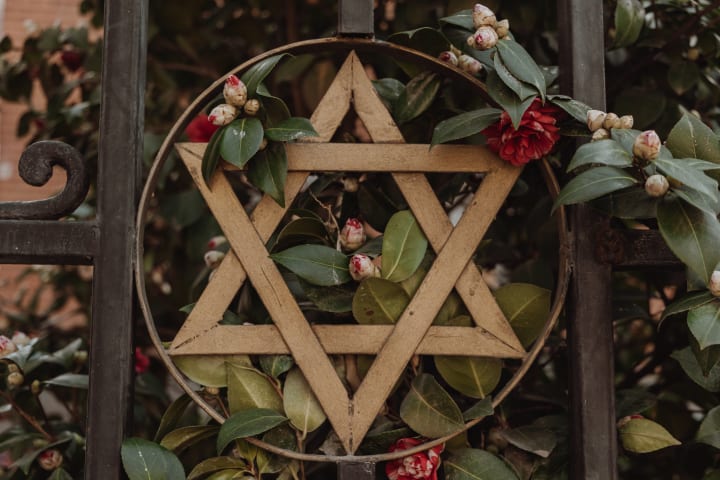
Judaism's Holy Scriptures mention fasting, just like Christianity and Islam do. The Jewish community observes a collective fast on the holy day of Yum Kippur, which is also connected to Prophet Moses' journey to Mount Sinai, when he was given the tablets containing the Ten Commandments. When the prophet Moses was waiting for the revelation atop Mount Sinai, he fasted for forty days and forty nights. The prophet Moses received the Torah after the fasting time. Yum Kippur and Tisha B'Av are the two main fasting days in the Jewish calendar. While Tisha B'Av is celebrated in the month of Av to remember the destruction of ancient temples and other Jewish tragedies, Yum Kippur is the sole specified fast in the Bible. The Jewish community abstains from eating, drinking, washing, and wearing leather during these two significant fasts.

The Christian faith places great importance on fasting, as demonstrated by the 40-day fast that the Prophet Jesus underwent before to receiving the Gospel. Additionally, he commanded his disciples to fast for forty days, therefore it was advised that they fast before Easter. Known as Lent, it is a forty-day time during which Christians focus on prayer and spiritual discipline. Sometimes known as Passiontide, the final week of Lent is observed as holy week. This time is set aside by Christians to consider Jesus' suffering and sacrifice. In keeping with the fasting tradition, early Christian missionaries would fast before departing on a preaching assignment.

Fasting in Islam, particularly during the month of Ramadan(which considered as a type an intermittent fasting) , involves a complete abstention from food, drink, and other physical needs from dawn (Fajr) until sunset (Maghrib). It is one of the Five Pillars of Islam and is observed as an act of worship and self-purification. Muslims fast to increase their spirituality, demonstrate self-control, and grow closer to Allah (God). It also includes additional acts of worship and increased prayer during this period.
After meditating and worshiping Allah (SWT) for a month in the cave of Hira, Prophet Muhammad (Peace Be upon him) was given the Divine word by Archangel Gabriel. For the prophets, fasting has served as a conduit to the spiritual realm and a way to speak with God. Particularly in Islam, fasting is strongly linked to spirituality. During a fast, one has the chance to praise Allah and express gratitude for His favors, which are sometimes taken for granted. In Islam, fasting is a significant ritual because Muslims use it as an opportunity to control their ego (nafs) and behavior in order to improve their manners and conform to Islamic morality. Muslims fast for the full month of Ramadan, which consists of 29 or 30 days from sunrise to sunset, as directed by the Holy Quran.

Whatever the differences between the Abrahamic faith's three monotheistic religions, fasting during Yum Kippur, Lent, and Ramadan is a religious practice associated with humility, prayer, and spirituality. The three religions all strive to bring people closer to God and help them build a solid relationship with Him through fasting. Fasting is a way to communicate with God, asking for forgiveness and to recall His generosity and kindness. While fasting during Ramadan is a spiritual practice, one of its primary characteristics is its connection to almsgiving (zakat), which serves as a constant reminder to Muslims of Allah Almighty's compassion and the need for them to practice charitable giving throughout the year. Muslim Aid is a faith-based charity that uses its well-known Ramadan guide, zakat distribution, and "Fast the Feeding" program to help people fulfill their religious obligations.
About the Creator
Keep reading
More stories from writers in FYI and other communities.
A Failed Artist, A Disillusioned Poet, An Underpaid Game Show Host
I took my son and niece to Gori, a small town in Georgia where Joseph Stalin was born. They talked me into visiting the Stalin's Museum, the largest in the post-Soviet space. I had resisted going there because I just can't stand the monster and know enough about him, or so I thought.
By Lana V Lynx26 days ago in FYI
The Rise of AI Agents at Work
For years, businesses have invested in software to speed things up. Tools to manage tasks. Tools to track progress. Tools to automate steps. Yet despite all this technology, work often still feels slow, fragmented, and dependent on human follow-ups.
By Wama Sompura5 days ago in FYI
A Love Forboding
The chipped stone slope caused unbearable footing. I slid, skirting on my heels. I cast my shield, relinquishing my guard to stay upright. Left with my double-edge and a prayer to the maker, I skated toward my objective. The earthly stubble gave way to solid ground. I found myself restored, a trail of dust in my wake.
By James U. Rizzia day ago in Fiction



Comments
There are no comments for this story
Be the first to respond and start the conversation.