
The Day Japan Taught the Wind to Bow
In the ruins of Hiroshima, a silent ritual was born — and the world learned the meaning of surrender without defeat.

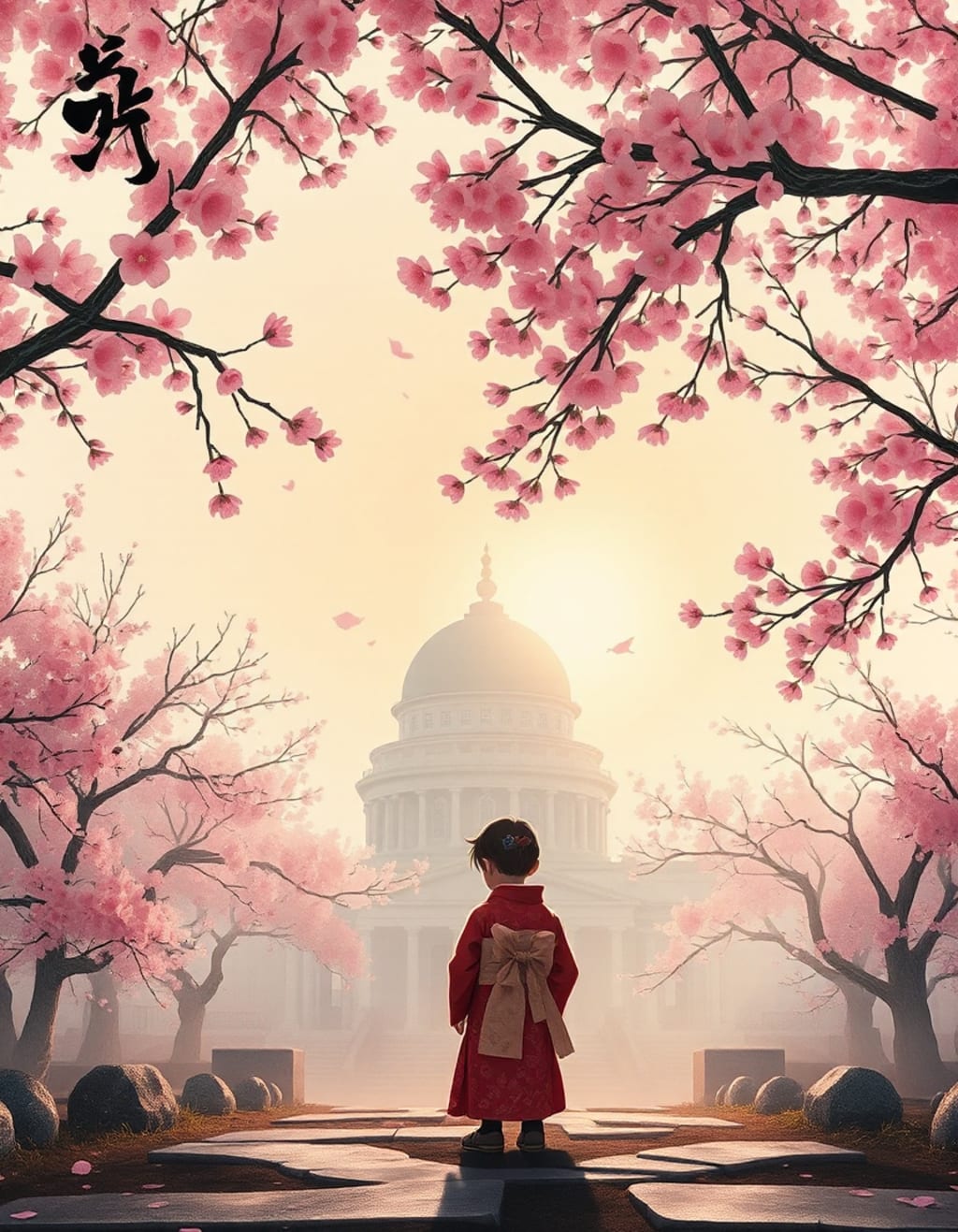
By the time the winds reached Hiroshima, they had forgotten how to bow.
But the people hadn’t.
Even when their bones burned.
Even when shadows of their children were etched permanently into stone walls.
Even when their ancestors vanished in the blink of atomic light.
They bowed.
Not in defeat.
But in discipline.
In reverence for what had been lost, and in quiet defiance of what could never be destroyed.
This is the story of a country that stood up by kneeling down — and taught the world something even empires had forgotten.
August 6, 1945 — 8:15 AM
Hiroshima never saw it coming.
A single flash — as if a second sun had erupted above their heads.
Temperature: 1 million degrees Celsius.
Everything organic within a 1-mile radius? Gone. Vaporized.
Everything else? Set ablaze or melted into twisted ghosts.
But numbers don’t carry the soul.
What carries it are the stories.
A girl named Sadako dropped her rice ball on the way to school and turned just in time to see her teacher disintegrate into dust.
A mother gave birth in a rubble-filled corner, using her own scorched clothing as a cradle.
A fireman found a clock that had stopped at the exact moment the world changed — its hands frozen at 8:15.
And in the silence that followed, Japan exhaled as if even breath had to be earned again.
After the Fire: The Ritual of Order
The world expected chaos. Riots. Anarchy. Total collapse.
But Japan did something strange.
They swept the streets.
Even when their homes had been burned into nothing but ash.
Even when the sky still rained black dust.
Children stood in lines.
Men cleared debris with bare hands.
Mothers planted flowers in radioactive soil.
To the West, it looked robotic. Mechanical.
But to Japan — it was spiritual.
“We cannot control what fell from the sky,” an old teacher said.
“But we can control how we stand on the ground.”
And so began a ritual that would mystify, humble, and eventually inspire the rest of the world.
The Bow: More Than a Gesture
To a Westerner, a bow seems like submission.
But in Japan, the bow — ojigi — is not about giving in.
It is:
A greeting
A goodbye
An apology
A thank-you
A shield made of silence
And a sword forged in humility
Even among the ruins, people bowed to each other. Not because they were weak. But because they remembered the shape of being human.
From Ruins to Rhythm
Within ten years, Japan transformed itself from nuclear wasteland to the world’s second-largest economy.
But here’s the secret: they didn’t just rebuild buildings.
They rebuilt values.
Kaizen — constant improvement
Shokunin — craftsmanship with soul
Wa — harmony in all things
Gaman — enduring the unbearable with dignity
In the West, people asked, “How did they do it?”
But the better question was:
Why didn’t they stop?
Sadako’s Cranes
Ten years after the bomb, Sadako — now 12 — lay dying in a Hiroshima hospital from radiation-induced leukemia.
She believed the legend: fold 1,000 origami cranes, and you’d be granted a wish.
So, with trembling hands, she folded.
One by one. Even when her fingers bled.
She died after completing 644.
Her friends folded the rest.
Today, there are millions of paper cranes sent to Hiroshima Peace Park from around the world — symbols of the girl who taught the planet how to hope with folded paper.
When the Wind Returned
In 2011, a tsunami hit Japan’s northeast coast. Entire towns were swallowed. Nuclear reactors failed. Thousands died.
But footage stunned the world.
Elderly survivors in emergency shelters, patiently queuing for water.
Children bowing to relief workers.
Workers risking death to cool reactors, bowing on live TV before walking into radiation zones.
The world asked again: “Why do they bow?”
But now, they understood.
Because the bow is the opposite of collapse.
It’s not falling down.
It’s choosing to lower yourself with grace — so that dignity never has to rise from ashes again.
What the World Learned
Japan never retaliated.
Never built nuclear weapons in response.
Never screamed for revenge.
Instead, they invested in education, technology, arts, and rituals of care.
They taught robotics to serve the elderly.
They turned silence into music — with haiku, with tea, with bonsai.
They made cleanliness a national value.
And their subways ran on time while other countries ran on excuses.
In a world obsessed with power, Japan mastered something rarer:
Grace under extinction.
The Day the Wind Learned to Bow
It wasn’t a date.
It wasn’t an anniversary.
It was a transformation.
In every child folding a crane.
In every worker sweeping a sidewalk after a typhoon.
In every bowed head in mourning or thanks.
The wind that once roared through Hiroshima now whispers through its peace memorial.
And if you listen closely, you can almost hear it:
“I remember now. I bow too.”
About the Creator
rayyan
🌟 Love stories that stir the soul? ✨
Subscribe now for exclusive tales, early access, and hidden gems delivered straight to your inbox! 💌
Join the journey—one click, endless imagination. 🚀📚 #SubscribeNow



Comments
There are no comments for this story
Be the first to respond and start the conversation.