
Blood and Snow: The Crimson Worm
Nature is a fascinating subject. There are so many intricate aspects that maintains our interests. Our quests for knowledge of the occurrences in the animal kingdom can go on for a lifetime. At every turn there is some discovery about the cycle of life in every species. These interesting facts fill us with awe in the way they work to connect the balance of the animal kingdom.
As an avid fan of nature documentaries, I have watched a plethora of animal wildlife and nature documentaries. It began with the undersea world documentaries to the plethora of national geographic documentaries. I’ve been in love with this great unveiling of the undiscovered elements and stunning animal footage. The facts that are brought out in the open are a force to be reckoned with by mankind.
Of all the documentaries that I’ve seen, one of the most appealing in life in the animal kingdom is that of the crimson worm. It seems this worm is born to die. Research shows no significant contribution to nature. The underlying worth to the animal kingdom, seems to be a mystery. Here is the cycle of the life of the crimson worm.
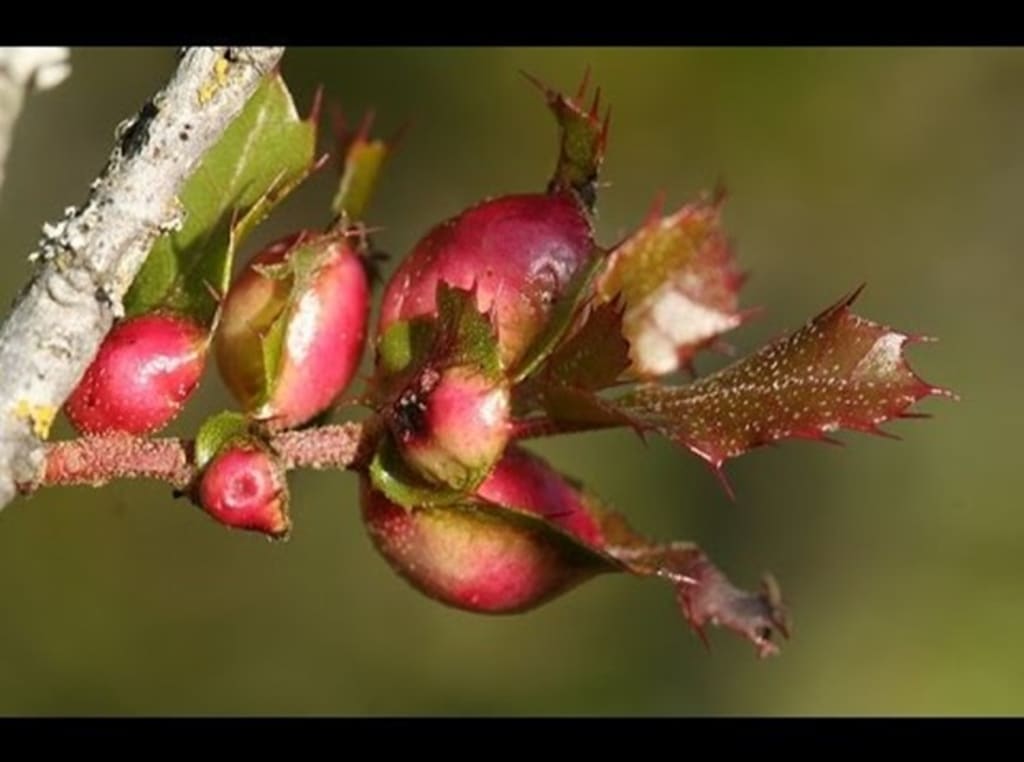
The crimson worm [coccus ilicis] is a very special worm that looks more like a grub than a worm. When it is time for the female or mother crimson worm to have babies (which she does only one time in her life), she finds the trunk of a tree, a wooden fencepost, or a stick. The mother crimson worm then attaches her body to that wood and makes a hard crimson shell. She is so strongly and permanently stuck to the wood that the shell can never be removed without tearing her body completely apart and killing her.
The mother crimson worm then lays her eggs under her body and the protective shell. When the baby worms (or larvae) hatch, they stay under the shell. Not only does the mother’s body give protection for her babies, but it also provides them with food – the babies feed on the living body of the mother!
After just a few days, when the young worms grow to the point that they are able to take care of themselves, the mother crimson worm dies. As the mother crimson worm dies, she oozes a crimson or scarlet red dye which not only stains the wood she is attached to, but also her young crimson worms. They are colored scarlet red for the rest of their lives. After three days, the dead mother crimson worm’s body loses its crimson color and turns into a white wax which falls to the ground like snow.
But this crimson worm whose life seems so insignificant to the animal world, has a broad spectrum of use for mankind. The brilliant beautiful red dye from the crimson worm has been used from biblical times even until now. In the early spring, when the females filled with red eggs and became pea-shaped, the red dye was squeezed out of them and used in many capacities.
The worm’s body and shell, while still red and attached to the tree, were scraped off and used to make what is called “Royal Red Dye.” The waxy material is used to make a high-quality shellac that is used in the Middle East as a wood preserver. The remains of the crimson worm are also used in a medicine that helps in regulating the human heart.
So there we have it. What is this worm’s purpose in the animal kingdom? It’s a mystery to me. But just as nothing in nature goes to waste, the crimson worm will continue to run its cycle and be a catalyst to help mankind.
Marian Cain
About the Creator
Keep reading
More stories from writers in FYI and other communities.
The Visionary Behind Modern Chhattisgarh
When Chhattisgarh was carved out as a separate state on 1 November 2000, the announcement marked only the beginning of a far more demanding journey. Creating a new state is not merely a political decision; it is an administrative test of the highest order. Systems must be built, institutions must be established, and continuity of governance must be ensured often under intense time pressure and public scrutiny.
By Muddasar Rasheed4 days ago in FYI
Rachel Reviews: The Spiral Archive by Pieter Hendrik
It's difficult for me to know where to start with a review of this book as it was, for me, an entirely unique experience and one that I'll probably never have again. I don't want that to be interpreted as unenjoyable but it has left me scratching my head a little and ruminating on its content, its themes and its characters.
By Rachel Deeminga day ago in BookClub
A Dart at Dusk
Seconds ago, the sullen sun set on the two of us… my exuberant furry companion and me. A fresh breeze embraces us, delivering welcome relief from the day’s oppressive heat. His typical stumbling and staggering along — apace with a sloth — has turned into trip-trapping, high-stepping, almost skipping along.
By Angie the Archivist 📚🪶6 days ago in Petlife




Comments
There are no comments for this story
Be the first to respond and start the conversation.