
The Amazing Alan Turing Who Won the War and Was Branded a Criminal
The father of modern computing.

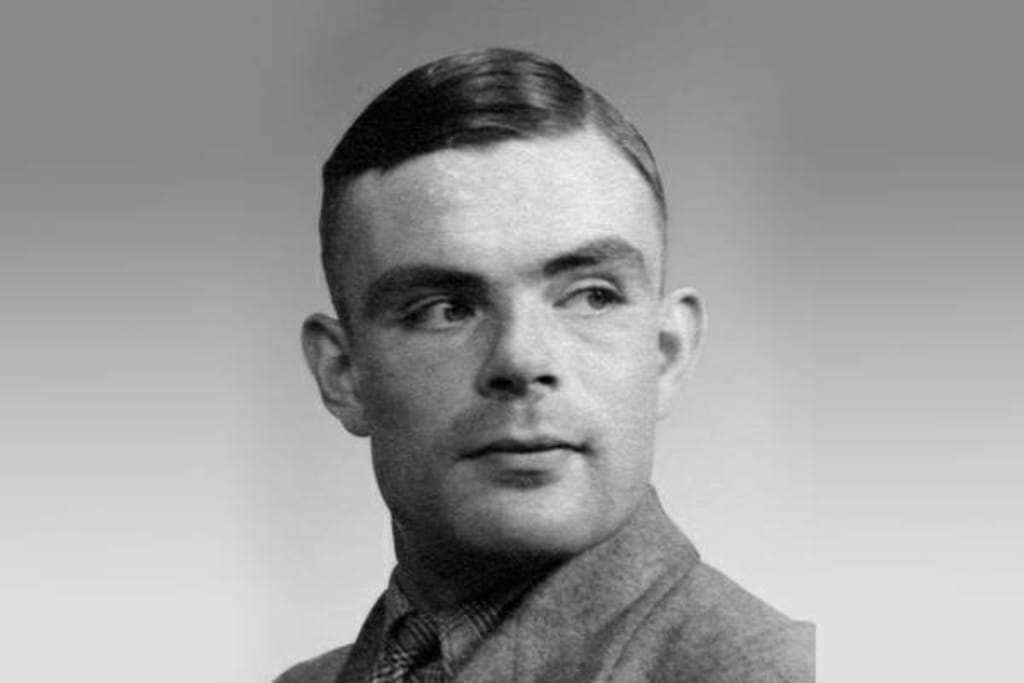
Alan Turing is a name that was made famous by Benedict Cumberbatch in the 2014 film The Imitation Game. He is responsible for engineering the Enigma machine, which decoded secret messages from Germany during World War Two. His team were responsible for helping win the war and saving thousands of lives. However, Turing was tried as a criminal in later life and subsequently lost his government clearance.
Early Life
Alan Mathison Turing was born on 23rd June 1912 to an ordinary family. His father was a civil servant.
In 1932, he went to Cambridge University to study mathematics, where he published a paper on computable numbers. This paper would lead to considerable advancements in the science of computing. On the success of this, in 1936, he was granted a place in Princeton to study his PhD in mathematical logic.
He spent much of his time researching the decision method and argued that mathematics could not be reduced to a formal system of calculations that humans could carry out. Instead, the theory led to the invention of the Turing machine, which modern digital computers have essences of even now. Turing surmised that any calculation a human could do, the Turing machine could.
The War Years
In 1938, he returned to the UK and took up a fellowship at Kings College, Cambridge. It was here that he joined the government code and cyphers school. At the outbreak of war in 1939, the government moved this school to the wartime headquarters at Bletchley Park.
Along with his team, Turing was instrumental in designing a machine that could decode the communications of Germany. By 1942, the team were decoding up to forty thousand messages a month. The government used the messages to design wat strategy and ultimately win the war. At the end of the war, Turing was made an OBE for his work.
After the War
His genius did not stop there. In 1945 he went to work for the National Physical Laboratory, where he created the first electronic computer. His design is the first to contain an example of an electronic stored program that many of us use now.
In 1951, he was elected a fellow of the Royal Society of London, one of the highest honours you can receive. However, this accolade would not last long.
Fall from Grace
January 1952, Turing, who was thirty-nine, met nineteen-year-old Arnold Murray and started a relationship with him. When his home was robbed, Murray admitted that he had a connection with the thief. Turing contacted the police, during their investigation, he admitted to a romantic relationship with Murray.
Gay relationships during these years were not permitted and were illegal. Both were tried and convicted of gross indecency. Turing, who pleaded guilty, was given the choice of imprisonment or probation. One of the conditions of his probation was that he would undergo hormone replacement therapy. He agreed to the treatment; as a result, he was rendered impotent and grew breast tissue.
The Aftermath
As a result of his conviction, he lost his security clearance and was never allowed to work in government intelligence again. Two years later, he was found dead in bed from cyanide poisoning, beside him was a half-eaten apple. It was ruled a suicide; references were made between his method of death and his favourite fairy tale, Sleeping Beauty.
Others, however, have questioned this ruling, as, despite the horrific ordeal he had been put through with hormone replacement, he appeared in good spirits. Some suggest he accidentally died from cyanide poisoning, ingesting the fumes from a tiny lab he has in his room. Conspiracy theories even exist that the secret service murdered him.
Honours Again
This great man who had helped save thousands from death, in the end, was treated like a criminal for being gay. In 2013, after enormous pressure from many, the Queen granted Turing a royal pardon, his face being placed on the new £50.
Turing will always be remembered for his contributions not only to the war but also to mathematics, logic, and philosophy. He is also one of the founding fathers of computer science and artificial intelligence. He was a leading early exponent of the hypothesis that the human brain is a digital computing machine in large part and a true war hero
If you enjoyed this article, please subscribe to my writing, share it and give it a heart. As a writer tips and pledges mean a great deal to me, so a massive thank you if you send one.
About the Creator
Sam H Arnold
Fiction and parenting writer exploring the dynamics of family life, supporting children with additional needs. I also delve into the darker narratives that shape our world, specialising in history and crime.
Reader insights
Outstanding
Excellent work. Looking forward to reading more!
Top insights
Easy to read and follow
Well-structured & engaging content
Expert insights and opinions
Arguments were carefully researched and presented
Heartfelt and relatable
The story invoked strong personal emotions
On-point and relevant
Writing reflected the title & theme
Keep reading
More stories from Sam H Arnold and writers in FYI and other communities.
The World War Two Ship that Could Destroy my Home
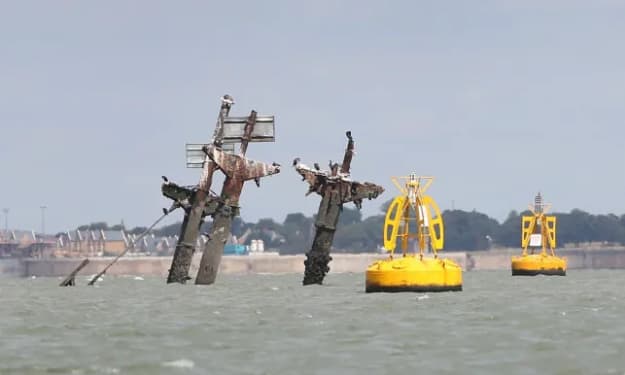
Twenty-one miles from my house, just off the coast, lies a shipwreck. Not unusual, you might think, as I live near the beach, but what is uncommon about this wreck is it could destroy the area I live in, in a matter of moments. This is because the SS Richard Montgomery, Monty for short, contains 1400 tonnes of explosives.
By Sam H Arnold4 years ago in FYI
The Deepest Hole on Earth: Why We Stopped Digging Toward Hell
You know that colorful diagram of the Earth’s layers you’ve been staring at since third grade? The one with the crust, mantle, and core that looks like a giant jawbreaker? Well, here’s a reality check: we aren’t actually 100% sure that’s how it works.
By Areeba Umair7 days ago in FYI


Comments (1)
So well put together Sam! x