
That time a bear joined the Polish Army
The life of Wojtek the bear
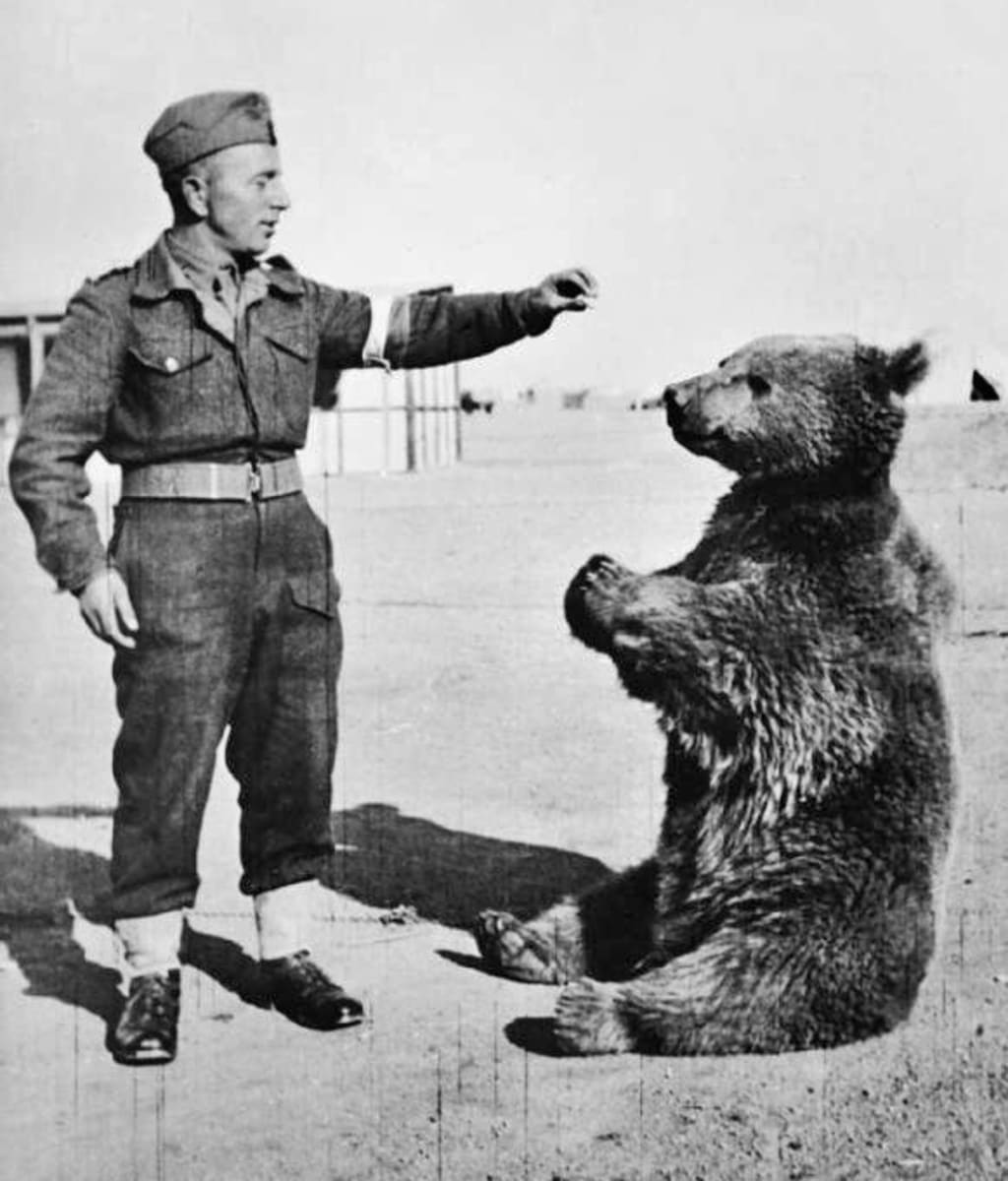
Wars bring about loss, sadness, and chaos. During times of war, people naturally look for ways to lift their spirits—this was especially true during the dark days of World War II. A little-known Polish Army unit found hope in a comrade named Wojtek. This remarkable trooper made life-long connections with the soldiers he served alongside, and now his name carries so much fame, more than one movie has been made about his life. Wojtek, however, was unlike any other solider in the war: he was a 500-pound Syrian Black Bear.
How does a bear from the Middle East wind up in the ranks of Polish soldiers? In 1942, the Nazi-led forces had the upper hand in the European theater of World War II. In order to get more troops to turn the tide of the war, Western Allied forces negotiated with a USSR to release prisoners of war from their infamous gulags. Of these released prisoners was a group of the Polish Company’s Artillery Division in the Polish 2nd Corps. On their route from the Soviet interior to Allied-controlled lands, they stopped throughout the Middle East, including a railway station in Hamadan, Iran. This is where a small, orphaned bear cub won the heart of the Polish commander’s granddaughter. The soldiers were on board with the idea, and they affectionately named the cub Wojtek.
Wojtek, which means “happy warrior” in Polish, had to be bottle-fed with used vodka bottles during the journey from Iran to Egypt. The young bear grew very rapidly in both body and mind. He entertained the 2nd Corps by playfully wrestling with the men and chasing after the oranges they used for grenade practice. Wojtek demonstrated his intelligence by learning tricks like holding terrified new recruits by their boots and pretending to eat them. He also figured out how to turn on shower heads to cool off, which sometimes caused water shortages for the unit in the arid Middle East. Being Polish soldiers, they not only fed Wojtek fruit and honey, but also beer and unlit cigarettes. When the 2nd Corps traveled, it was not uncommon to see the bear resting on the crane of the tow truck-like vehicle the men drove. Soon Wojtek stood at over six feet tall and weighed over 500 pounds. This size came in handy when, one night, a local thief entered the camp and was confronted by the intimidating bear, who easily scared the man off. The grateful soldiers rewarded Wojtek with his favorite prize—more beer. When the Polish 2nd Corps were deployed along the Italian battlefront, however, Wojtek’s enormous size started to become an issue (with the commanding officers?).
Not wanting to abandon their beloved animal celebrity, the men devised an unorthodox solution: enlist Wojtek into the army. Surprisingly, this plan worked! Rather than being paid, though, Private Wojtek was given double rations. Wojtek would copy the other men’s actions, from saluting superiors to marching, and even shared a tent with his two appointed caregivers. Eventually, the Polish 2nd Corps joined the joint Allied assault on the well-fortified Winter Line, held by Italian and German forces. It was during this time that Wojtek’s most notable battle occurred at Monte Cassino. Observing his fellow soldiers hauling boxes of ammunition, Wojtek to action and began carrying empty ammo crates along with them. This strange sight was remembered fondly by his fellow troops after the battle. The unit honored Wojtek by changing their insignia to a bear carrying an artillery shell and promoting Wojtek to Corporal. This morale boost helped the men contribute to the Allied victory. But while the Nazis were defeated in 1945, the Western Allies faced the emerging threat of the USSR, and the Cold War ensued.
The Polish troops had a dilemma on their hands. They were afraid that if they brought Wojtek back to their Soviet controlled homeland, he might be used as a Communist symbol. These Poles, who endured brutal times in harsh Soviet gulags, had to find a more suitable home for Wojtek. Fortunately, many Poles were able flee to Scotland, including the Polish 2nd Corps. They were stationed outside a small airport until 1947 and attracted a great deal of attention from the locals. Wojtek was even awarded honorary membership to the Polish-Scottish Association for his ability to bring the two sides closer. After his service ended, Wojtek was placed in a zoo in Edinburgh, Scotland, where he lived out the rest of his life. The bear received many visits and treats from the people he served with in the 2nd Corps, and curious tourists were baffled by his affable nature. Wojtek passed away in 1963 at the age of 21. His story, though, would not be forgotten. A film called “Wojtek: The Bear That Went to War” came out in 2011 and a statute of Wojtek was erected in Edinburgh in 2015. Not bad for a creature that can’t even speak.
The story of Wojtek proves that trying times can bring out the best of both beast and man. From the orphaned cub in Iran to the retired war hero residing in Scotland, Wojtek’s life proves that a star can come from anywhere. Wojtek deserves to be remembered, not only for his unusual story, but also for how he aided and gave hope to countless people during some of the darkest days in human history.
About the Creator
Keep reading
More stories from writers in FYI and other communities.


Comments
There are no comments for this story
Be the first to respond and start the conversation.