
Thanjavur Brihadeeswarar Temple
The Beauty and Architecture of Tanjore Big temple
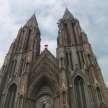

The Thanjavur Brihadeeswarar Temple, also known as the Thanjavur Big Temple, is a magnificent architectural masterpiece that has stood the test of time for over 1000 years. This temple is located in the city of Thanjavur, in the southern Indian state of Tamil Nadu. It is considered to be one of the finest examples of the Chola Dynasty's architectural prowess.
History:
The Tanjore Brihadeeshwarar Temple was built by the Chola dynasty ruler, Raja Raja Chola I, in the 11th century AD. It is believed that the temple was constructed to celebrate the king's victory over the Pandyas, a rival dynasty. The temple was built in the Dravidian architectural style, which is characterized by its intricate carvings, towering gopurams (ornate gateways), and mandapas (pillared halls).
Architecture:
The temple's most striking feature is its towering vimana (tower), which stands at a height of 216 feet and is topped by a massive kalasam (copper finial). The vimana is made of granite stones, and its base measures 95 feet by 55 feet. The walls of the vimana are adorned with intricate carvings of deities, mythical creatures, and scenes from Hindu mythology.
The temple also has several other notable features, such as the Nandi Mandapam, which houses a massive statue of Nandi (the bull, who is Lord Shiva's vehicle), carved out of a single stone. There are also several smaller shrines dedicated to various deities, such as Lord Ganesha, Lord Murugan, and Goddess Durga.
The temple's gopurams are also noteworthy, with the main gopuram standing at a height of 66 meters (216 feet) and being one of the tallest in India. The gopurams are adorned with intricate carvings and sculptures, depicting various deities and scenes from Hindu mythology.
Significance:
The Tanjore Brihadeeshwarar Temple is not only a marvel of architecture but is also of great religious significance. The temple is dedicated to Lord Shiva, who is one of the most revered deities in Hinduism. The temple's main lingam (an iconic representation of Lord Shiva) is believed to have been consecrated by Raja Raja Chola I himself. The temple is also an important pilgrimage site for devotees of Lord Shiva, who come from all over the world to offer their prayers and seek his blessings.
In 1987, the Tanjore Brihadeeshwarar Temple was declared a UNESCO World Heritage Site, recognizing its cultural and historical significance.
In conclusion, the Tanjore Brihadeeshwarar Temple is not only a remarkable example of Indian temple architecture but also a significant religious site. Its towering vimana, intricate carvings, and rich history make it a must-visit destination for anyone interested in Hindu culture and spirituality.
Location:
The Tanjore Brihadeeshwarar Temple, also known as the Peruvudaiyar Kovil, is located in the city of Thanjavur in Tamil Nadu, India. Thanjavur is a historical city that is renowned for its rich cultural and artistic heritage, and the temple is one of its most iconic landmarks.
The city is well-connected to other major cities in India through a network of Indian Railways, Tamil Nadu bus services, and National Highways 67, 45C, 226, and 226 Extn. The nearest airport with regular services is Tiruchirappalli International Airport (IATA: TRZ), which is about 55 kilometers (34 miles) away.
Despite being located inland, the city and the temple are situated at the start of the Kaveri River delta, giving them access to the Bay of Bengal and, through it, the Indian Ocean. The temple and the city have a long history of irrigation and agriculture, with the Tamil people having completed the first major irrigation network in the 11th century to facilitate agriculture, movement of goods, and control water flow through the urban center.
Preservation and Restoration:
As a world heritage monument, the Tanjore Brihadeeshwarar Temple and its premises come under the purview of the Archaeological Survey of India (ASI), which is responsible for ensuring the safety, preservation, and restoration of the monument. The ASI falls under the Ministry of Culture of the Government of India.
The surrounding facilities of the temple have been upgraded to create an ambience worthy of the grandeur of this ancient marvel. This includes the installation of lighting, signage, and facilities for devotees and visitors. The lighting of the monument has been designed to enhance the natural color of the stone and the sculptural forms adorning all corners of the temple.
The restoration of the temple has been undertaken by the Archaeological Survey of India. The ASI commissioned Sheila Sri Prakash, an Indian architect and designer, to lead the design of the restoration. Her team has used traditional techniques and materials to restore the temple to its former glory. The restoration work has been carried out with great care and attention to detail, and the temple now stands as a shining example of India's rich cultural and architectural heritage.
The walls of the Tanjore Brihadeeshwarar Temple are adorned with numerous inscriptions in Tamil and Grantha scripts. These inscriptions date back more than 1000 years, and many of them begin with customary Sanskrit and Tamil language historical introduction to the king who authorized it.
The majority of the inscriptions discuss gifts made to the temple or temple personnel, with some of them mentioning the residents of the city. The temple complex has sixty-four inscriptions of Rajaraja Chola I, twenty-nine inscriptions of Rajendra Chola I, one each of Vikrama Chola, Kulottunga I, and Rajamahendra (Rajendra II), three of a probable Pandyan king, and two of Nayaka rulers, namely Achyutappa Nayaka and Mallapa Nayaka.
These inscriptions offer a unique glimpse into the history of the temple and the kings who were responsible for its construction and maintenance. They are also an invaluable resource for historians and archaeologists who are interested in understanding the social and cultural context of the period in which the temple was built.
Every stone of Peruvudaiyār Kōvil speaks volumes. One needs several visits to this The Great Living Chola Temple to fully appreciate and understand the small and big secrets. Brihadeeswarar Temple, being the largest Shiva Temple of the world is the pride of Tamil Nadu and India.
Do share this detailed guide with your friends and family. This is the most comprehensive guide to secrets and mysteries of Sri Brihadeeswarar Temple ever.
thankyou , i will back with another historical contents
About the Creator
Lokeshwari Muthuselvam
I'm a girl who inspired by many historical stories. searching for more to learn about our historys
Hakunamatata !!! Read-think-search-establish-share:)
Keep reading
More stories from Lokeshwari Muthuselvam and writers in FYI and other communities.
Europe Commercial Greenhouse Market Size and Forecast 2025–2033
The Europe Commercial Greenhouse Market is set for dynamic expansion over the coming decade, reflecting the region’s accelerating transition toward sustainable, technology-driven agriculture. According to Renub Research, the market is projected to reach US$ 22.67 billion by 2033, rising from US$ 11.5 billion in 2024, at a robust CAGR of 7.83% during 2025–2033. This growth is being driven by increasing demand for year-round crop production, the rapid adoption of Controlled Environment Agriculture (CEA), and a strong policy push toward climate-resilient and resource-efficient farming.
By Renub Research6 days ago in FYI




Comments
There are no comments for this story
Be the first to respond and start the conversation.