Science
Science
Space Shenanigans: Time Travel and Relativity for the Chronologically Confused. AI-Generated.
Welcome, my wonderfully weird wanderers of the world wide web, to a mind-bending journey through the cosmic carnival that is time travel and relativity. Grab your popcorn, because this is going to be like binge-watching the entire Marvel Cinematic Universe in one sitting—if the Infinity Stones were actual scientific theories and Thanos was an over-caffeinated physicist named Albert Einstein. Buckle up, buttercups, because things are about to get weirder than a David Lynch movie marathon.
By ScienceStyled2 years ago in FYI
6 underground attractions that attract the most tourists in the world
Most people feel scared when going deep underground - a pitch-black land, filled with mysteries that even scientists have not been able to discover. Even for brave people, being underground can easily make people feel suffocated and repressed.
By Ken Daklak2 years ago in FYI
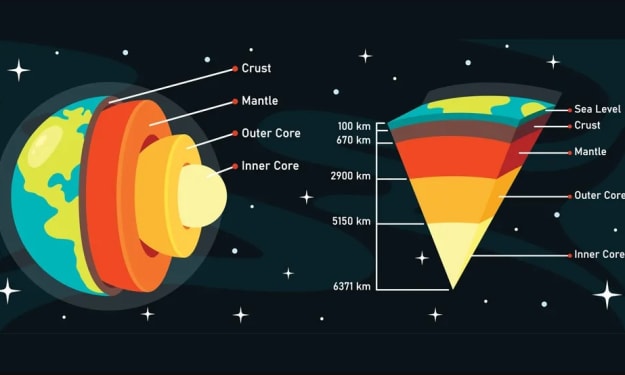
The Journey to the Earth's Core
What's the most exotic destination you've ever been to? Hawaii? Australia? Hoboken, New Jersey? Well, today, I'm setting off on a journey that's way more unusual than that—down to the Earth's core. And I'm inviting you to join me—are you ready? Ah, come on, it'll be fun. Let's go!
By Bayu Setyawan2 years ago in FYI
Earth's Disaster History
Between 774 and 775, Earth experienced a colossal radiation burst, evidenced by extremely high levels of radioactive carbon and beryllium found in tree rings from that period. This unprecedented event has puzzled scientists for years. The leading theory attributes this radiation spike to a solar flare, although some speculate it could have been a massive supernova. However, astronomer Phil Plait points out that such a supernova must be less than a thousand light-years away and exceptionally bright. Yet, there are no historical records of such an event.
By Bayu Setyawan2 years ago in FYI
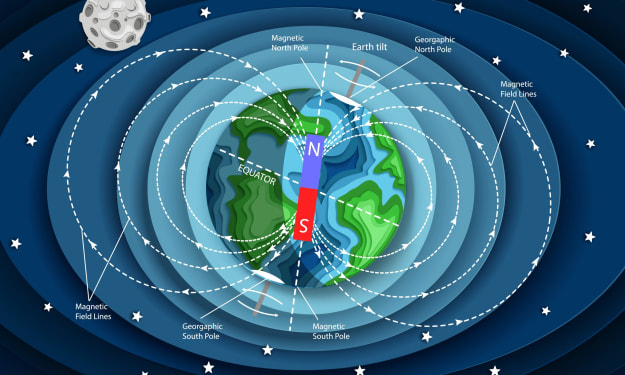
Earth's Poles
Solar eclipses are mesmerizing events where the Moon and the Sun align perfectly, creating a stunning display in our sky. Despite the Sun being about 400 times larger than the Moon, they appear the same size from Earth because the Moon is approximately 400 times closer to us. However, this celestial coincidence won't last forever. The Moon is gradually drifting away from Earth at a rate of about 1.5 inches per year. Due to this movement, the Moon will eventually be too far away to completely block out the Sun, meaning solar eclipses will no longer occur. NASA estimates that the last solar eclipse will happen in roughly 600 million years. While we won't be around to witness this final eclipse, it’s fascinating to think about the cosmic changes our planet will undergo.
By Bayu Setyawan2 years ago in FYI
How Hair Follicle Alcohol Tests Work: Understanding the Science Behind It
Introduction In today's world, where alcohol consumption can have significant personal and professional consequences, understanding the various methods of alcohol detection is crucial. Among these methods, hair follicle alcohol testing stands out for its unique approach and extended detection window. But how does it work? What makes it different from other testing methods?
By US Health Testing2 years ago in FYI