Historical
Culturally Appropriate: Steal These Traditions to Improve Your Life
Christmas in Japan: when is appropriation merely appreciation? The world knows no greater evil than a White girl in a cheongsam-inspired prom dress or a non-Dutch person in Dutch braids (also known as Boxer braids and often worn by people who aren’t pugilists). I, too, have been the victim of cultural appropriation while in Japan during the holiday season, forced to endure “Christmas” sponge cakes smothered with strawberries, fried chicken vendors on every street corner, and what appeared to be the conflation of the good Colonel with Jolly Old Saint Nick. (Japanese people eat KFC to celebrate Christmas — go figure!)
By Angela Volkov5 years ago in FYI
Jean-Henri Riesener, cabinet-maker to French kings
Jean-Henri Riesener was one of the finest cabinet-makers of his age, which, unfortunately for him, coincided with the French Revolution. The opulence that he played a major role in creating was fine for the court of King Louis XVI and Marie Antoinette, but when his aristocratic customers lost their heads, or at least their fortunes, his own fortune went downhill with theirs and he eventually died in poverty.
By John Welford5 years ago in FYI
LANDS AND PEOPLES:
KAZAKHS traditionally lived as nomads. To this day, some Kazakh herders move their animals to different pastures according to the season. They spend the summer in cooler highland grazing lands. Then, as the snowy winter approaches, they bring their flocks down to the warmer lowlands. A traditional Kazakh meal should always include meat and is usually not spicy. Among Kazakhs’ favorite drinks are koumiss, which is made from mare’s milk and is said to provide many health benefits, and rich, slightly sour shubat, made from camel’s milk. The yurt—the traditional portable house of nomads—has become a symbol of man living in harmony with nature. Shepherds still favor the yurt, and urban Kazakhs often use them for special events. Yurts also serve as comfortable tourist accommodations. The interior of a yurt can be a showplace for Kazakh women’s diverse embroidering, weaving, and carpet-making skills. A yurt is a round, tentlike structure that has decorative reed mats lining its walls. Its outer layers are sheets of felt made from sheep’s wool. Yurts are lightweight and easy to assemble, yet sturdy and comfortable during hot summers and cold winters. The Kirghiz call the yurt a gray house; the Kazakhs, a felt house; and the Mongolians, a ger, meaning “home.” Yurts may be grayish-brown or bright white, depending on the color of the wool used. Kirghiz and Kazakh yurts are often decorated with local designs of wool dyed in bright colors that depict a ram’s horn. In the past, beautiful blankets and felt floor coverings were a reflection of a family’s wealth and prestige.
By Raquel Recinos5 years ago in FYI
Titanic Secrets
1.30 seconds to respond Post Frederick Fleet included no optics inside the stage , depending just on his visual perception to recognize any deterrents. At the point when he called the scaffold to declare "Icy mass, directly ahead!," First Officer William Murdoch faltered 30 seconds prior to providing the request "hard a starboard," a 2011 investigation of the day's occasions found. There was around brief's time between Fleet's notice and impact, and his deferral demonstrated deadly to the boat.
By Sakthi murugan5 years ago in FYI
Roots 2021
Roots 2021 (A modern study of Humanity and Slavery) I ask that you keep an open mind while reading this book. It may make you angry,and that’s ok. Hopefully though, it awakens your Pineal Gland, (third eye). It’s going to be an awesome trip, and well worth your time to read. I pinky-promise.
By Steven Porter5 years ago in FYI
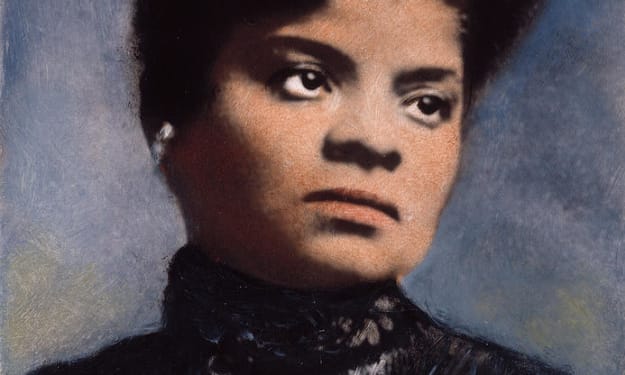
Ida B. Wells: An Underappreciated Revolutionary
In 2019, transgender journalist Lewis Wallace will release a companion podcast to his upcoming book, The View from Somewhere. The podcast “features journalists from marginalized and oppressed communities who have pushed back on the ‘objective’ framework, or attempted new ways of thinking about and practicing journalism.” Among the journalists included in the podcast are Andrew Kopkind, Marlon Riggs, and the subject of this paper, Ida B. Wells. The description of a journalist who pushes back on an objective framework to spread word about an issue they think is important is appropriate for Ida, who used her power of the pen and paper to write about African-American issues in the South, particularly lynching laws surrounding African-Americans.
By Jamie Lammers5 years ago in FYI
The Chess Language
The world is on the chessboard today. Demographics of the chess world prove that there are millions or even billions of chess players all around the world. A very large proportion of our Indian population can play chess. Although the numbers are not yet humongous, there is an increasing number of chess players emerging from the middle ground of the Indian public.
By South Mumbai Chess Academy5 years ago in FYI
The Houdini Act; 18 facts about Harry Houdini a great magician and a complete entertainer.
We have seen many magicians and love been entertained by them. The kids particularly love the magic tricks of the magicians during their birthdays or even during some get-together. If you search the dictionary for the word Houdini act the meaning given is “sudden disappearance, typically so as to escape from someone or something.”
By DEEPAK SETHI5 years ago in FYI
I’m a Cemetery Enthusiast
The first time I recall being in a cemetery was in the summer of 1963 when I was 5 years old. We were burying uncle Jim who was the brother of my great grandmother’s late husband. It was about 3:00 in the afternoon and the sky was cloudy and thunder was rolling. The ground had rich red clay like mud that felt to me like quicksand. Since that day I’ve been in my home church family cemetery hundreds of times. Whenever I visited whether for a body being committed the ground or another reason my siblings, cousins and I would go on a trip down memory lane.
By Cheryl E Preston5 years ago in FYI
Inside the Unique, Historical , Friendly and No-Longer-Around Eatery At Disneyland
Introduction Aunt Jemima's Pancake House (also known as Aunt Jemima's Kitchen) was a classic family-style eatery that was situated in Frontierland during the 1950's. In other words, it was located in Disneyland and was inspired by old-fashioned American history. In fact, the restaurant revealed a lot of American history. It was one of the most controversial attractions at the park and had a shocking past both inside and outside of the amusement park.
By Talia Devora5 years ago in FYI