Historical
The Story of Conjoined Twins Chang & Eng
Chang and Eng Bunker were sons born to Nok and Ti-eye in Meklong, Siam (now Thailand) in 1811. Their father was born in China and worked as a fisherman, while their mother raised them and their seven other siblings. They were just normal boys who played with their brothers and sisters along the riverbank, swam, and steered their father’s boat; except that they were stuck together. They were what we know now as conjoined twins.
By Kassondra O'Hara4 years ago in FYI
Words That Meant Something Different Before the Internet
Today, technology is an integral part of everybody's daily activities. There are hundreds of concepts, terms, and terminologies that mean something entirely different now than they did before the internet. During this age of computers, smartphones, and other modern-day forms of communication, one must know what those terms mean now as well as what they used to mean.
By Margaret Minnicks4 years ago in FYI
Jim Crow in the USSR
We are all colonized.— marginalia in a library copy of Dominance Without Hegemony by Ranajit Guha, Indian historian The reader of Langston Hughes’s writings on the Soviet experiment is bound to be confused. In the 1930s, during the peak of Stalinist repression, Hughes produced volumes praising the Soviet Union, particularly the Central Asian republics of Uzbekistan and Turkmenistan where, as he writes in the second volume of his autobiography, I Wonder as I Wander (1956), “the majority of the [Soviet Union’s] colored citizens lived” (123).
By Rebecca Ruth Gould4 years ago in FYI
The Doryphoros
The Doryphoros (Spear Bearer) (Fig.1) is a sculpture designed by the Greek Polykleitos’s, an artist originally from Argos or Sicyon, who worked in bronze in the classical style around 450-440 BCE. Although it bears elements of Greek aesthetics it is a Roman copy of a bronze sculpture that has been melted down and lost. This complicates the nature of the statue and where it relates to art and art history, whether it can be considered a Greek statue if it is a Roman copy and interpretation. To fully understand and analyze the sculpture, viewers must consider the differences between the original piece and the copy, the accuracy of the copies and the Roman influence on them, and comparisons between the Doryphoros and other sculptures that are copies.
By Scarlett Callohan4 years ago in FYI
Monsters on the Edge
During the Medieval Ages people often used images to illustrate the contrast between good vs. evil, especially in religious contexts. Some of these images include a collection of creatures of mythological origins that are coined the “monstrous races”, a term that has recently been considered problematic. These monsters are often seen on the edges or borders of maps and Romanesque churches. They are used as a symbol for the unknown edge of the world which can include existing cultures and people, and act as a counterpoint for the center of the known Christian world. When viewing the creatures in this context it is important to consider whether race is a proper term to use when talking about the monsters or whether a different phrase should be utilized.
By Scarlett Callohan4 years ago in FYI
Eugenics in the United States
During the Progressive Era, between 1896 to 1927, there was an increase in the interest in eugenics within the United States. During this time people strove to try to solve various societal problems including poverty, health issues, and immigration. Eugenic enthusiasts attempted to link these social and economic problems to individuals deemed “undesirable”. This segregation between “normal” people and “undesirables” included anyone associated with society’s problems and were often looked at as the cause of them. They were considered mentally deficient or “feeble-minded”.
By Scarlett Callohan4 years ago in FYI
The Lost Tribes
Through-out the ages there have always been unanswered questions that have mystified, perplexed and confounded man. So many of these unanswered questions have to do with lost civilizations. The Mayans, the Aztecs and even the people of Atlantis have all contributed to histories unsolved mysteries as to what happened. It is on that scale that many historians and biblical scholars have been searching for over a thousand years to understand what really happened to the lost tribes of Israel.
By Dr. Williams4 years ago in FYI
The Unsinkable Ship
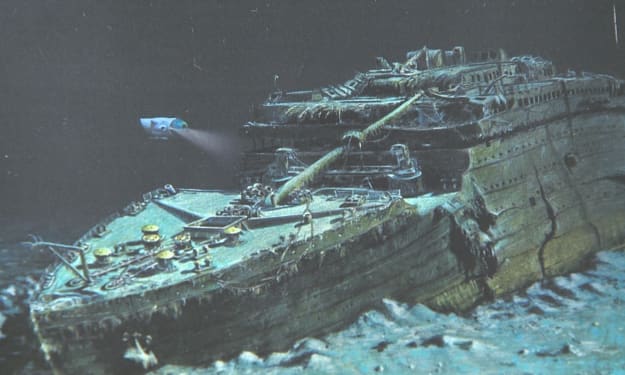
My grandmother was born in 1911 and she remembered people talking about this when she was 5 years of age. “She” was one of the largest and most opulent ships of the time, being (approximately) 882.5ft (269m) long and roughly 92.5ft (28.2m) wide. “She” cost $7.5 million to build ($183.4million in today’s money) and “Her'' top speed was 23 knots or 25 mph which is faster than many ships today which go at 20 knots or 23 mph. “She” was built to have 64 lifeboats on board but carried only 20! “She” was the RMS Titanic.
By Ruth Elizabeth Stiff4 years ago in FYI
Where Was the Wild West?
Countless books, movies and TV shows made the “Wild West” legendary, but much of that legend did not take place in the West. It was Midwestern Kansas where the legend began. Those sagas about fast-draw gunslingers, intrepid lawmen, saloon girls, gamblers and outlaws were drawn (and exaggerated) from actual events that took place in the 1870s and 1880s in Kansas cow towns, like Abilene and Dodge City.
By Edward Farber4 years ago in FYI
What Are Chinese Kung Fu (Martial Arts) and Its History, Development, Styles?
Chinese Kung Fu is also known as karate. While also popular among people like Gong Fu or Wushu. Kung Fu or karate is a course of martial arts that originated in China a long time ago. Martial arts or Kung Fu is becoming more and more beautiful as a sport in the world. Kung Fu stands for a representative of Chinese culture around the world.
By Rosan Pandey4 years ago in FYI
Gratian, Emperor of Rome
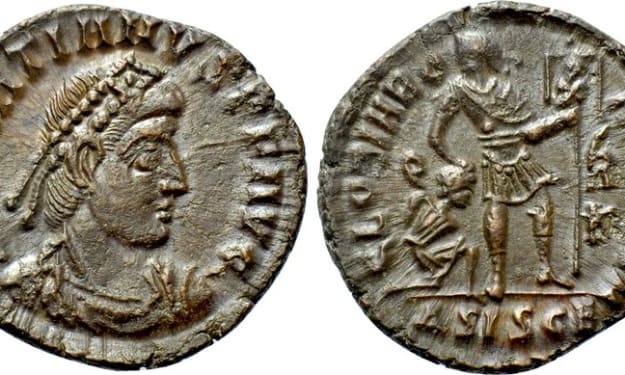
During the later history of the Roman Empire the top job became too much for one man to handle, with the result that the Empire was governed at various times by two or more Emperors. Gratian, who reigned from 375 to 383, was one of many such joint Emperors.
By John Welford4 years ago in FYI