Historical
Imperial China's Dynasties
Chinese archaeologists recently unearthed what may be evidence supporting the existence of one of the Chinese empire’s 4,000-year-old creation myths. The Xia dynasty was the first of many ancient Chinese ruling houses, thought to exist from around 2070 B.C.E. until 1600 B.C.E. Yet the actual existence of this dynasty and culture has been debated. Many researchers have seen the Xia dynasty as a semi-mythical period of rule, invented by the later Zhou dynasty to justify their overthrow of the Shang dynasty, who allegedly overthrew the Xia dynasty.
By praveen kumar 4 years ago in FYI
How would the world be different without the discoveries of Albert Einstein?
It was not until 1915 that Einstein demonstrated his incomparable ingenuity in publishing his general theory of relativism. It was during this time that Einstein wrote his first scientific work, investigating the nature of aether and the magnetic field. He began to build on his ideas of building a new science, cosmology, which stated that the universe was powerful, not static, and could grow and become harmonious.
By Cs Sapkota4 years ago in FYI
Reason for Greece to become the huge philosophical hub in ancient times
About 800 BC, the ancient Greek city-states, along with many maritime forces, began searching for land resources in Greece. Fertile land competition has become a hallmark of Greek history, creating many social and political tensions within the city.
By Laxmi Thapa4 years ago in FYI
Most devastating Impacts of British rule in India
The first famine in Bengal in 1770 is estimated to have claimed the lives of a third of the local population (ten million people), although recent estimates indicate that the figure was close to two million [32]. The effects of the famine were due to the incomes of East Indian companies from Bengal, which dropped from 173,300 PS1770-71. The rise in business taxes coincided with an increase in hunger, but not because of the British Empire. The Maharashtra drought is one of the most well-known measures to prevent famine under British rule.
By Shreya Poudel4 years ago in FYI
The Unsinkable Mary Patten
One hundred and seventy-five years ago a pregnant teenager took command of her husband’s ship and made history. Nineteen-year-old Mary Patten did it all for 56 days whilst fighting off a mutiny, nursing her seriously ill husband and battling stormy seas.
By Dawn Nelson4 years ago in FYI
History Of Jammu & Kashmir
The Treaty handed over the control of the Kashmir State to the Dogra ruler of Jammu who had earlier annexed Ladakh. Thus a new State comprising three distinct religions of Jammu, Kashmir and Ladakh was formed with Maharaja Gulab Singh as its founder ruler. The feudal dispensation in the State, however, was too harsh for the people to live under and towards the end of a hundred years of this rule when their Indian brethren were fighting for independence from the British under the inspiring leadership of Mahatma Gandhi and Pandit Jawahar Lal Nehru, the Kashmiris led by a towering personality, the Sher-I-Kashmir Sheikh Mohammad Abdullah, rose against the autocracy. The autocratic rule came down heavily on the people’s freedom movement. However, the people laid their lives in the cause of freedom and to uphold the ideals of secularism, equality, democracy and brotherhood.
By manjeet kumar 4 years ago in FYI
Marilyn Monroe- the real name, life in orphanages, abused as a child, married at 16, plastic surgery, 3 lost pregnancies
Real name Norma Jeane Mortenson, was born on June 1, 1926, in Los Angeles, her mother was Gladys Pearl Monroe Baker Eley, a film editor at a film studio, and her father, as far as is known, Charles Stanley Gifford, a salesman, although on her birth certificate, was passed to her father the name of the Norwegian Martin Edward Mortensen.
By Maria Ostasevici 4 years ago in FYI
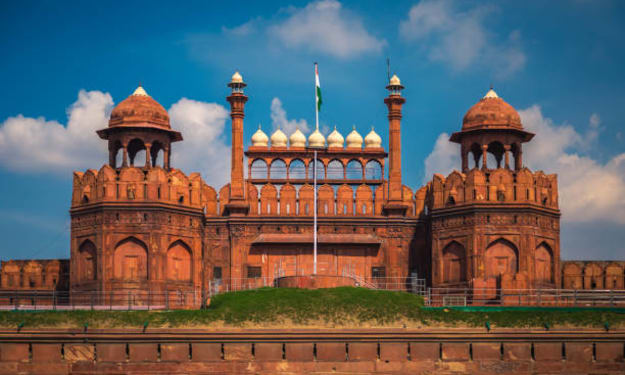
Red Fort Delhi
Built on the banks of river Yamuna, the fortress-palace was designed by architect Ustad Ahmad Lahauri. It took 8 years and 10 months to build the magnificent fort. The fort served as the royal residence of the Mughal emperors from 1648 to 1857. It took over the honor of royal residence from the famous Agra Fort when Shah Jahan decided to shift his capital from Agra to Delhi. The Red Fort derives its name from the red-sandstone walls, which make the fort almost impregnable. The fort, which is located at Old Delhi, is one of the massive and prominent structures of India and is a fine example of Mughal architecture. It is often considered as the pinnacle of Mughal creativity. In modern times, the fort is of importance to the people of India as the Indian Prime Minister delivers his Independence Day speech from the fort, every year on August 15. In 2007, it was declared as UNESCO World Heritage Site.
By manjeet kumar 4 years ago in FYI