
Supersonic Speed
The XB1 Precedes X-59 QueSST in Quiet Supersonic Speed


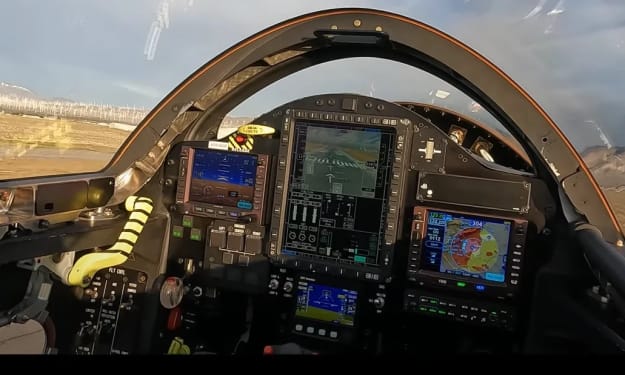
The race to revolutionize supersonic flight in a quieter, more sustainable way is heating up—and it appears that Boom Supersonic's XB-1 demonstrator has taken the lead. While NASA’s much-anticipated X-59 QueSST (Quiet SuperSonic Technology) has captured global attention for its ambitious noise-reduction goals, it is Boom’s XB-1 that has already broken ground—literally and figuratively—by becoming the first independently developed supersonic jet to fly with a focus on quieter operations.
In a field where every decibel counts and the future of commercial supersonic travel hinges on acoustic compliance, XB-1’s head start in real-world testing places Boom Supersonic in an advantageous position. Here’s a deeper look into why XB-1 has outpaced the X-59 in quiet supersonic flight and what it means for the future of aviation.
XB-1 Takes Flight First
On March 22, 2024, Boom Supersonic’s XB-1 demonstrator completed its inaugural test flight at the Mojave Air & Space Port in California. This marked a historic moment—the return of supersonic flight development in the private sector after Concorde’s retirement two decades ago. More importantly, it proved that private industry could move quickly and efficiently to test new technologies in a competitive space.
Although the XB-1 is a subscale prototype, it is crucial for validating Boom’s future commercial jet, Overture, which aims to operate supersonically over water with significantly reduced noise. While XB-1 is not specifically designed to eliminate the sonic boom over land (like the X-59), it incorporates design features—such as refined aerodynamics and engine placement—to minimize acoustic impact and improve efficiency.
X-59: Ambition Without Altitude (Yet)
NASA’s X-59 QueSST, developed in collaboration with Lockheed Martin Skunk Works, is undeniably groundbreaking. It is specifically engineered to fly at Mach 1.4 while producing a “sonic thump” instead of a traditional sonic boom—a technological feat that could change FAA regulations and reopen overland supersonic flight routes.
However, as of April 2025, the X-59 has yet to fly. Despite undergoing successful ground and engine tests in 2024 and early 2025—including afterburner trials and cruise control evaluations—it remains earthbound, with its first flight expected later in 2025.
While NASA’s X-59 is targeting long-term regulatory reform through government-funded research, its delayed schedule highlights the logistical and bureaucratic hurdles that even a well-supported agency must face. XB-1’s earlier debut gives Boom a narrative and operational advantage, potentially allowing it to secure greater investor confidence and public support.
Quiet Supersonic Flight: A Shared Goal, Different Paths
Both XB-1 and X-59 aim to solve the same overarching issue: the noise pollution caused by supersonic travel. However, their approaches are notably different.
X-59 is focused solely on noise. Its sleek fuselage, highly extended nose, and carefully engineered shape are optimized to demonstrate that sonic booms can be reduced to a tolerable "thump," making overland supersonic travel a regulatory possibility.
XB-1, meanwhile, is a stepping stone. While not designed to eliminate sonic booms, it is part of Boom's broader roadmap to deliver Overture—an airliner with net-zero carbon emissions and reduced sonic impact. XB-1 demonstrates critical technologies such as composite materials, advanced propulsion integration, and precision shaping to reduce drag and noise.
In essence, X-59 is a science experiment meant to influence policy, while XB-1 is a commercial prototype driving toward an actual product.
Why XB-1’s Early Flight Matters
Boom’s achievement in flying XB-1 first isn’t just about bragging rights. It allows the company to gather real-world performance data, iterate faster, and potentially bring Overture to market before the X-59’s findings are even published.
Moreover, XB-1's successful flight establishes credibility in a sector often marred by overpromises and delays. With increasing public and investor skepticism around ambitious aerospace projects, early execution builds trust. It also allows Boom to refine its next-generation noise-reduction technologies ahead of the regulatory curve, while NASA’s X-59 is still proving that quiet supersonic flight is even possible.
The Future of Supersonic is a Dual Track
Rather than viewing XB-1 and X-59 as competitors, it may be more accurate to see them as complementary efforts moving along two parallel tracks. NASA is laying the regulatory and technological groundwork, while Boom is racing toward commercialization.
Still, the fact remains: XB-1 has taken to the skies. And in the aviation world, getting off the ground first often means getting ahead in innovation, attention, and ultimately, adoption.
Conclusion
In the race to bring quiet supersonic travel to the masses, Boom’s XB-1 has taken an early lead, flying ahead of NASA’s ambitious X-59. While both aircraft serve different roles—one regulatory, the other commercial—their progress marks a new dawn for high-speed air travel.
With XB-1 proving that private companies can test and iterate faster, and the X-59 soon to demonstrate that the sky doesn’t have to roar, we are on the verge of a supersonic renaissance—one that might be faster and quieter than we ever imagined.
About the Creator
Horace Was
Essay Writer, Aviation and Technology Expert
Keep reading
More stories from Horace Was and writers in FYI and other communities.
XB1
History is about to be made! We’re in the Mojave Desert at Boom Supersonic’s test facility for a world-first event—will the XB-1 jet succeed in breaking the sound barrier for the very first time? Will this be the first step towards bringing back supersonic air travel since the Concorde was retired?
By Horace Was11 months ago in FYI
Why Fiber Optic Assemblies Are Essential in Aerospace Systems
Modern aircraft are more technologically advanced than ever before. From navigation systems and flight controls to in-flight entertainment and real-time diagnostics, today’s aerospace platforms rely heavily on fast and reliable data transmission. Traditional wiring systems, while effective in earlier generations of aircraft, are no longer sufficient to meet the increasing demand for bandwidth, speed, and signal clarity.
By Beckett Dowhan4 days ago in FYI


Comments
There are no comments for this story
Be the first to respond and start the conversation.