
Strange Animal Behavior That Stumps Scientists
They Don’t Always Act the Way We Think They Should


You have a pet, right? A dog, a cat, or maybe a hamster? If you do, how much do you really know about your furry or feathery friend?
We have certain animal behaviors we all kind of expect. Koalas will snooze all day, cats go nuts for laser pointers, and your dog might lick the toilet then come up and give you a big wet kiss. But sometimes, animals don’t act the way we expect them to. Not only that, some animal behaviors are just downright bizarre, and we honestly have no idea why they happen.
1. When Herbivores Decide to Go Carnivore
We’ve all learned the simple breakdown: carnivores eat meat, herbivores eat plants, and omnivores eat a bit of both. That always seems pretty clear. I mean, you’re not going to stress too much about letting your pet chicken hang out with a cow, right?
But maybe you should, because if you let your pet chicken hang out with a cow, your pet chicken might actually die.
According to a 2007 Reuters report, in a remote village in West Bengal, India, dozens of chickens went missing. Naturally, everyone suspected the neighborhood dogs. The mystery was finally solved when the chickens’ owner caught his cow wandering over to the coop at night and eating the birds. We’re not talking about a cow eating blended chicken mixed with grass. Nope. The cow literally ate the chickens alive, around 50 of them in a month.
Veterinarians theorized that the cow ate the chickens due to a lack of vital minerals, but locals believed the cow was actually a tiger reincarnated.
This isn’t an isolated incident. There are also reports of deer eating birds, hippos munching on crocodiles, and even an infamous 1945 incident where an elephant named Topsy at the Zurich Zoo actually ate an entire person, including their clothes, shoes, and purse.
So far, we don’t know for sure why animals we classify as herbivores will occasionally kill and dine on meat. Some researchers think they are looking to consume minerals their bodies need, but others believe they do it because, well, they can. That makes them kind of opportunistic killer meat-eaters, which is the scariest kind. If you’re near a lion, you’re cautious because you know it’s a predator. But if you’re around an elephant, you let your guard down because it’s massive, but it’s often shown as friendly. That elephant could literally walk up and gulp you whole.
2. Can Animals Predict Disasters?
It’s common knowledge that animal senses are often much better than ours, allowing them to predict certain weather phenomena. For example, before a rainstorm, birds fly low and get quiet, cows lie down, and ants build their nests up high.
But can animals predict more serious natural calamities like earthquakes or tsunamis?
Although researchers are hesitant to fully confirm it, a lot of evidence points to the fact that animals do sense major upcoming natural disasters, sometimes long before we have a clue.
The US Geological Survey notes that the earliest documented proof of this ability was in 373 BC, when, before an earthquake struck Greece, animals like rats, weasels, and snakes left their nests and headed for higher ground days before the event occurred.
According to National Geographic, hours before the tragic tsunami hit the coastlines of Sri Lanka and India, elephants were trumpeting and running for high ground. Dogs acted strangely and refused to go outside. Flamingos abandoned their low breeding grounds, and zoo animals retreated into their shelters and would not come out. Even though the tsunami slammed into a wildlife reserve, home to over 130 species of animals, the only victims seemed to be two water buffalo who were perhaps just too stubborn to run away.
3. The Moth and the Flame Mystery
We’ve all heard the old saying, “like a moth to a flame,” and we know that moths seem to have a strange, self-destructive tendency to dive straight into fire or any artificial light. What we don’t know is why.
Here are a few guesses:
- Internal Navigation Gone Wrong: Some entomologists believe that since moths and other insects evolved at a time when no artificial light existed, seeing a candle or bug zapper throws off their internal navigation system, attracting them to it. The problem is that while artificial lights are new, natural fires are not. Wouldn’t moths have gone extinct centuries ago?
- A Fatal Attraction: Another theory suggests that the infrared light from candles contains wavelengths that match the pheromones of female moths. Essentially, the male moths are accidentally killing themselves trying to mate with the light. This theory also has holes, as UV rays attract moths much more than infrared rays, and UV rays don’t contain those same wavelengths.
So, for now, we have no idea why this happens.
4. Group Animal Suicides
Suicide isn’t exclusively a human behavior; it happens to all sorts of animals.
One of the earliest documented cases of animal suicide, according to the London News, was back in 1845 when a seemingly depressed, prized dog repeatedly threw himself into a river and refused to swim. He was rescued and tied up, but when released, he jumped back in. The process was repeated many times until the dog finally achieved his goal.
Animal suicides are not rare and often occur in groups. According to USA Today, in 2005 in Istanbul, Turkey, shepherds watched helplessly as a sheep jumped off a cliff, followed by another and another, until about 1,500 sheep had made the same leap. The only reason just 450 sheep died was that the pile of dead sheep cushioned the fall of the others.
You probably hear in the news all the time about beached whales and dolphins. In 2008, for example, 26 dolphins beached themselves in the waters of Cornwall, England. Researchers deemed this a mass suicide because the dolphins didn’t just beach themselves; they all swallowed a massive amount of mud and debris that filled up their stomachs and lungs.
5. Cow Eating Habits
Did you know that cows eat in a really, really bizarre way? It’s not that they eat with their noses or something, but when cows eat, and this goes for every single cow on the planet, they only do it while facing either north or south.
And we have absolutely no clue why they do this.
So far, the best theory is that cows have a magnetic sense and can tell which way is north. Somehow, they just feel like aligning themselves while eating, facing either north or south. Maybe I’ve read one too many Far Side comics, but I can just picture this as some massive inside joke the cows are playing on us.
“Hey guys, it’s mealtime. Let’s mess with the humans by only facing north or south while we eat! That’ll teach them for stealing our milk and turning us into steaks.”
About the Creator
Areeba Umair
Writing stories that blend fiction and history, exploring the past with a touch of imagination.
Keep reading
More stories from Areeba Umair and writers in FYI and other communities.
Has Time Travel Already Happened?
When we think about time travel, our minds often jump to sci-fi movies or the hypothetical ‘butterfly effect’, the idea of what we might change in history if we could. But let’s pause for a moment and consider a more intriguing question: Is time travel currently possible, and have people already done it without realizing?
By Areeba Umairabout a month ago in FYI
A Failed Artist, A Disillusioned Poet, An Underpaid Game Show Host
I took my son and niece to Gori, a small town in Georgia where Joseph Stalin was born. They talked me into visiting the Stalin's Museum, the largest in the post-Soviet space. I had resisted going there because I just can't stand the monster and know enough about him, or so I thought.
By Lana V Lynx8 days ago in FYI
The Timeless Title: “Olu of Warri” – A Pre-Colonial Legacy Rooted in History, Affirmed by Colonial Recognition Before 1952
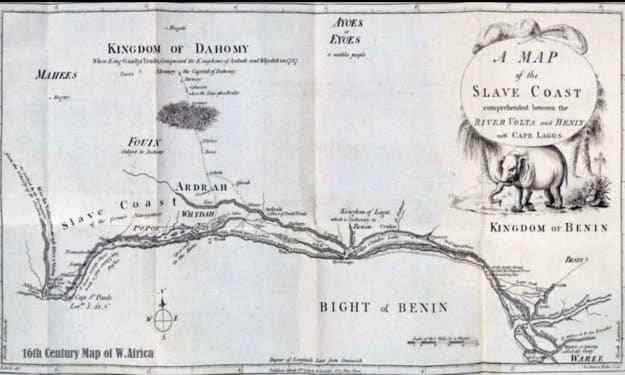
The title “Olu of Warri” stands as an enduring symbol of sovereignty, predating colonial rule by centuries and embodying the unbroken monarchy of the Warri Kingdom. Far from being a modern invention, this title traces its origins to the late 15th century, when Prince Ginuwa, son of the Oba of Benin, founded the kingdom in 1480 as “Iwere” – the ancestral homeland of the Itsekiri people. Historical records, maps, and accounts from European explorers unequivocally demonstrate that the monarch was consistently referred to as the Olu or King of Warri long before British colonial interference. The temporary shift to “Olu of Itsekiri” in the 1930s was a colonial administrative concession tied to the creation of Warri Province, but compelling evidence from colonial documents reveals that the British authorities had already recognized and supported the historical validity of “Olu of Warri” as early as 1936 – well before the formal restoration in 1952. Through persuasive evidence from Portuguese decrees, ancient maps, literary accounts, royal narratives, and declassified colonial dispatches, this article affirms that the “Olu of Warri” has always been the rightful designation, reflecting a kingdom’s sovereignty and its king’s dominion, with pre-1952 colonial endorsements underscoring its legitimacy.
By Omasanjuwa Ogharandukuna day ago in FYI
Day 4 of Quitting
If this is how sobriety feels, maybe it’s better to go through life a little buzzed… this, along with other hits like, I want to kill myself, I wish I was dead, and I’m going to throw myself off a bridge have been the only thoughts on rotation these past few days. I promise myself that if, in a month, I still feel like this (‘this’ meaning despondent, full of rage, and simultaneously numb) I can go back to smoking. Until mid-February though? Nicotine is off the table.
By sleepy drafts6 days ago in Longevity


Comments
There are no comments for this story
Be the first to respond and start the conversation.