
Spirit Houses in Thai beliefs
Things to know in a nutshell

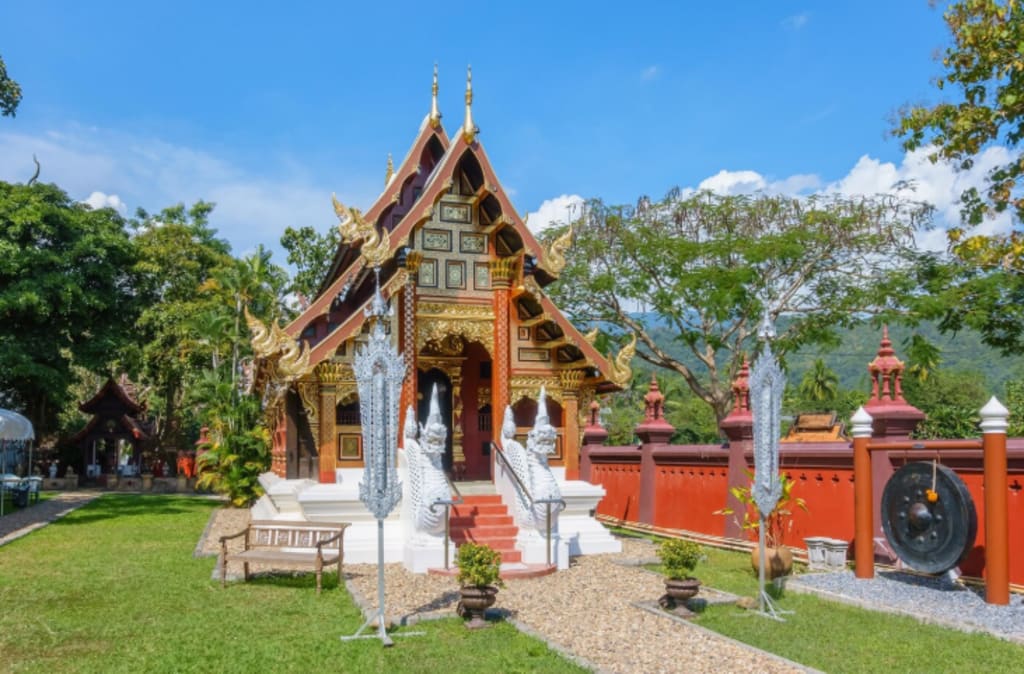
Wherever we go in the country, we are greeted by small buildings, usually placed on a single pillar, at the entrances of buildings, gas stations, shops, and hotels - one cannot avoid encountering religion. The millions of people who struggle and live far from the Western way of life rely on their gods and spiritual entities to endure their existence.
According to locals, these small temples serve as homes for ancestors and local spirits, who provide protection and bring harmony to everyday life. But why is it so important for the Thai people to build their own houses for the spirits?
In Thailand, it is common to encounter small, intricately crafted houses standing next to homes, businesses, or offices. These spirit houses (in Thai: san phra phum) are not only unique architectural elements of Thai culture, but also carry deep spiritual significance. Rooted in Thai beliefs and animist traditions, it is thought that every piece of land, tree, and building has its own spirit, which is present in daily life. It is believed that the construction of a house or building disrupts the peace of the local spirits, and by building a spirit house and offering sacrifices, people can appease these spirits to ensure protection and good fortune for the inhabitants. The spirit houses are built and set up before the construction of the building begins. According to their belief, this ensures a safe construction process. Spirit houses are not just decorative elements but also places for offerings, where fruits, flowers, drinks, and even miniature furniture and figurines are placed to allow the spirits to live comfortably nearby.
The installation of a spirit house requires a serious ritual, often involving expert priests or shamans. During the placement, astrological and spiritual factors are considered, such as ensuring that the house does not cast a shadow on the building, as this is considered bad luck. The ceremony includes burning incense and offering food in honor of the local spirits. The materials and decoration of the spirit house reflect the social status of its builder: while a simple house might be made of wood, wealthier families may have spirit houses crafted from marble or decorated with gilded elements. Spirit houses often take the form of pagodas or temples, with distinctive Thai architectural features like roofs adorned with horns and finely carved columns.
The spirit houses must always be more beautiful than the building itself. The larger the house, the proportionally larger the spirit house as well. In the evenings, they are often lit up and just like the house, the various spirits' dwellings are also cleaned.
Respect for spirit houses is an integral part of daily life for Thai people. In the mornings, fresh fruits, rice, water, and sometimes even coffee are placed in front of the spirit houses as a gesture of goodwill towards the spirits. Additionally, incense is burned and flower garlands are hung, symbolizing respect and harmony. During important family events, such as weddings or birthdays, families hold special ceremonies at the spirit houses to seek blessings from their ancestors. The celebrations associated with spirit houses are vibrant and joyful, with dancers, musicians, and even miniature plays to entertain the spirits, who are believed to enjoy festivities.
Despite Thailand's modernization, the tradition of spirit houses has not been lost, and they can still be found in urban environments. Spirit houses serve as a reminder of how traditions and connections with our ancestors can be preserved in an ever-changing world. These small houses, which honor the ancestors daily, have remained one of the most unique and profound elements of Thai culture.


Comments