
Snake Island: Dangerous place in the world
Snake Island: Dangerous place in the world
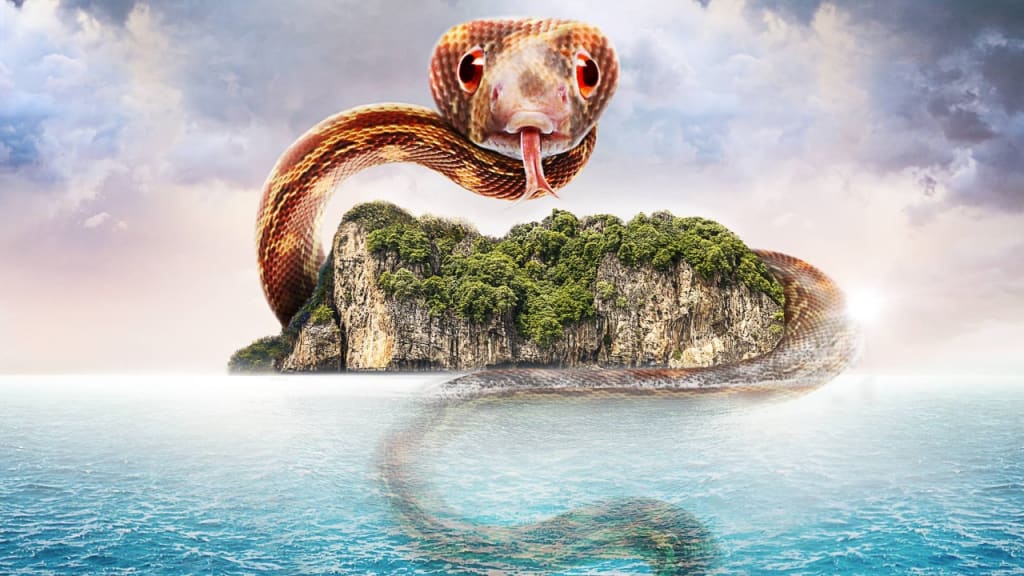
About half a million islands exist, one of which is Cue Mata Grande. It is known to be one of the most perilous travel destinations worldwide. We will inspect why it is so dangerous in this article. The island appears to be a fantastic resort, located in the Atlantic Ocean. However, it does not host any tourists. Situated just 35 kilometers off the shore of Brazil, south of Sao Paulo, humans are prohibited from entering the island due to the dangerous local snakes. The locals named the island 'snake' for good reason. The territory inhabits approximately 12,000 venomous snakes, averaging five snakes per square meter of the island's land. According to one theory, the island separated from Brazil about 11,000 years ago due to a significant rise in sea levels. The snakes that remained found themselves in isolation and struggled to find food, affecting their future descendants' aggressiveness. The migrating birds that used the island as a stopover became the snakes' food source. The snakes are excellent tree climbers and can effortlessly hunt birds and lizards. They are very aggressive, can camouflage themselves, and adapt to their surroundings. The island hosts thousands of snake species, including the most dangerous snake in the world, the Bothrops insularis. Its bite results in the necrosis of muscle tissue. The Bothrops insularis, also known as the golden lancehead pit viper, is a venomous species that is critically endangered and can only be found naturally on the island. The snake feeds on birds and has been stranded on the island for thousands of years due to the rising ocean levels that occurred after the last ice age. As a result of this isolation, the snakes have undergone rapid evolution to adapt to their new surroundings, leading to a significant increase in their population. This has made the island too dangerous for public visitation, and only the Brazilian Navy and a select few researchers who have been screened by the Chico Mendes Institute for Biodiversity Conservation - a Brazilian federal conservation unit - are granted access.
Originally, it was assumed that the island had a snake population of roughly 430,000. However, recent calculations have revealed that this number is significantly lower. The inaugural comprehensive investigation into the quantity of golden lanceheads showed that the range was between 2,000 and 4,000. This group is primarily concentrated in the island's rainforest. This could be due to a lack of resources, causing the population to remain stable. Nonetheless, a herpetologist's approximation was provided in a 2015 Discovery Channel documentary, stating that the golden lancehead population remains at 2,000 to 4,000. The golden lancehead may also be in danger due to inbreeding, which is noticeable in the population's effects.
The poison of a small mouse-sized animal is so potent that it can cause death in two seconds. This poison is not only dangerous to animals but also to humans. Survivors of stings have shared spine-chilling stories of encountering snakes. The bitten area of the body is known to corrode, and the flesh may fall off in whole pieces, causing significant blood loss and acute pain. In the late 19th century, businessmen from Sao Paulo attempted to colonize the island, with plans to establish extensive banana plantations by clearing out the forest areas and destroying the snakes. However, the reptiles attacked the businessmen, and even high rubber boots could not protect them. The workers who tried to settle the island wore special suits to protect themselves from snake bites, but the hot tropical climate of the island gave them a cruel choice - get bitten or die from suffocation. The island was even burnt down in an attempt to reclaim it but to no avail due to periodic precipitation. The island is now a natural snake terrarium, and ecologists have successfully lobbied for its preservation. Since 1985, it has been granted protection status by the state and is now a reserve. Despite its terrifying reputation, Snake Island is considered a unique and fascinating site. The island is the largest natural snake terrarium on the planet, and visitors can witness large balls of living snakes, which can strike fear in even the bravest of people.
About the Creator
Keep reading
More stories from Julio Javier and writers in FYI and other communities.
Why honey badger is so daring and ferocious?
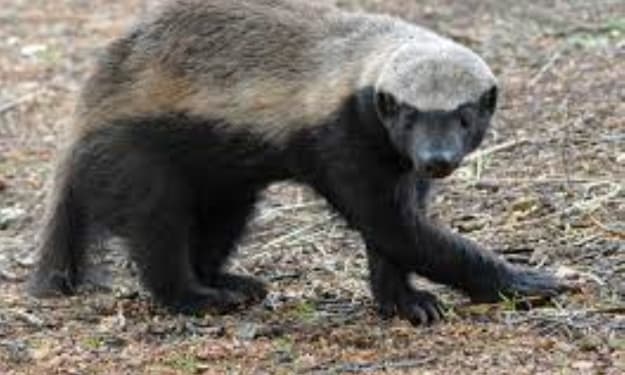
The Mellivora capensis, commonly known as the honey badger or ratel, is a mammal found extensively across Africa, Southwest Asia, and the Indian subcontinent. Its habitat diversity and wide distribution have led to its classification as Least Concern on the IUCN Red List. The honey badger, the sole living species in the Mellivora genus and Mellivorinae subfamily of mustelids, differs notably from other badger species and shares more characteristics with weasels. Predominantly carnivorous, this species faces few natural predators owing to its strong defense mechanism, thickness of skin, and power. Honey badgers are the largest terrestrial mustelids in Africa, with males weighing between 9 to 16 kg (20 to 35 lb) and females weighing between 5 to 10 kg (11 to 22 lb) on average. They can measure up to 28 cm (11.0 in) in shoulder height and 77 cm (30 in) in body length, with an additional 12-30 cm (4.7-11.8 in) of tail length. Studies show that this species can weigh anywhere between 6.4 to 12 kg (14 to 26 lb), with an average weight of around 9 kg (20 lb). The honey badger ranks as the third largest known badger and fourth largest terrestrial mustelid, following the European badger, hog badger, and wolverine. However, some honey badgers found in Iraq have weighed up to 18 kg (40 lb), which is comparable to male European badgers and wolverines in late autumn. Conversely, honey badgers in India were relatively smaller, with an adult female and two males weighing 6.4 kg (14 lb) and a median of 8.4 kg (19 lb). Male honey badgers have a skull length of 13.9–14.5 cm (5.5–5.7 in), while females have a skull length of 13 cm (5.1 in).
By Julio Javier3 years ago in FYI
Strategic Sourcing for Hard to Find FSC 5310 & 5305 Fasteners
In aerospace and defense supply chains, even the smallest hardware components play a crucial role in maintaining system integrity and operational safety. Fasteners classified under Federal Supply Class (FSC) 5310 and 5305 are among the most widely used hardware components across aircraft structures, mechanical assemblies, and defense equipment. These parts include washers, screws, bolts, and other securing hardware that ensure structural stability and precise assembly of complex systems.
By Beckett Dowhan2 days ago in FYI


Comments
There are no comments for this story
Be the first to respond and start the conversation.