
Six Bizarre Fossils I Wish I'd Found
With a Dabbler's Guide to Fossil Hunting


Every fossil hunter dreams of finding a dinosaur. I've spent many hours on holiday scrambling over mud, clay, sand and stone indulging that hobby... and while I found plenty of fossils, the closest I came to actually finding a dinosaur was their fossilized tracks.
Experts say that living birds are technically dinosaurs (yes, even chickens) but it's just not the same as finding ancient remains. What follows is a dabbler's guide to fossil hunting and six fossils I wish I'd found, including
- Gigantoraptor - the giant dinosaur parrot
- Carnotaurus - the stumpy armed "meat-eating bull"
- Jeholopterus - the hairy, pug-like pterosaur
- Mirasaura - the feather-crested reptile
- Pegomastax - the spiky chicken
- Deinocheirus - the doomsday duck
My Experiences With (and a Dabbler's Guide to) Fossil Hunting
You can go fossil hunting practically anywhere, though a few places (like nature reserves) don't allow it. All it takes is keeping your eyes open and having a sense of curiosity.
Now, I'm only a dabbler but I've found fossilized fern fronds in clay, shells in stone, sponges in flint, giant bivalves in a ploughed farmer's field and ammonites (some as big as a small tire - had to leave those behind) on a chalky beach. I did once find something that might have been a section of dinosaur rib, but it was in poor shape and I couldn't say for sure.
My favorite finds are naturally occurring casts of dinosaur footprints. Hanover Point on the Isle of Wight was once a forest, with the petrified remains of that woodland trapped amid clay just past the shoreline. Scattered in the stone are the tracks of dinosaurs that once called the forest home, some of which can be seen at low tide. Over time, some footprints have acted like molds for sediment and produced "casts" that can be seen on the beach... or (for the more adventurous) hidden amongst the clay, pools and petrified trees exposed at low tide!

Anyway, here are a few tips on fossil hunting from a dabbler...
- Clay or mud cliffs can be a good place to look... but you never know where something interesting may be hidden!
- Let the weather do the work for you - a storm or heavy rain can wash fossils from cliff faces, move topsoil or expose new things with a mudslide, leaving fresh fossils ready to be found in the morning. Dull weather can also mean you don't have much competition from other hunters...
- You probably don't need a hammer and chisel - the odds of finding a fossil by smashing up random rocks are very low. Simply walking along the base of a sea cliff and poking around the piled up stones can turn up plenty!
- If you do find something trapped in the rock, a digital camera or phone can be a good way of documenting where.
- Keep safe - loose stones can turn an ankle, clay can slip, beaches can have quicksand and tides can trap the unwary. Make sure you have a way to get help... and dress for the weather.
- Some places don't permit fossil hunting or set limits on how you can look. Check before you go!

Now, onto the fossils I wish I'd been the one to find...
Gigantoraptor, the Giant Dinosaur Parrot
The oviraptorosaurs are thought to have specialized in stealing and eating eggs - their name even means egg-snatcher. Most examples were quite small (about the size of a turkey in some cases) but the gigantoraptor seems to have reached 8m in length and may have been at least partially covered in feathers. One can only assume that the end result looked like a giant flightless parrot - an impression not helped by the blue color scheme given to it by the National History Museum!
These dinosaurs had a beak-like mouth without teeth, which it used to crush food. The gigantoraptor also seems to have had a particularly broad beak, implying that it wasn't a picky eater (bigger creatures usually need to be less choosy about food if they want reliable meals.)
A recovered gigantoraptor mandible (jaw) also suggests that they had a large, flexible tongue - this would have helped them move food around their mouth!

Carnotaurus, the Horned Butcher
Did you know that one dinosaur resembled a meat-eating bull?
Ok, it wasn't that close a resemblance - but the comparison still fits. The carnotaurus had small horns on its head, complimented by short snout, thick neck and a muscular (if somewhat rigid) tail. The overall impression is that the dinosaur made vicious straight-line charges at prey... though it's not clear if the horns were actually used to gore the victim. Few (if any) animals actually hunt using their horns.
The carnotaurus also had stumpy little arms that were all but vestigial - it's possible they were used as part of a mating dance or other display, but they were too short to be any use for hunting or moving.
Despite the goofy appearance, this 8 meter long slab of muscle, bone and scale would dwarfed humans and was an accomplished predator... hence their name meaning "meat-eating bull"
Still, I love the idea of this apex predator with dinky little arms!
Jeholopterus, the Hairy Pterosaur
Pterosaurs are famed for their bird-like heads and membranous wings, but the insectivorous Jeholopterus didn't have the same sleek grace. It was a small anurognathid (short-tailed pterosaur) with a rounded jaw resulting in a blunt, cartoonish head.
A fossil of Jeholopterus found in 2002 was very well preserved and even kept a coat of short, hair-like fibers. It's thought that the creature would have been rather fluffy in life, so I picture it as being something like a flying pug!

Mirasaura, the Feather-Crested Reptile
The drepanosaurs (which are neither dinosaurs nor lizards) were a weird bunch of reptiles from the Triassic period. Though they had a lizard-like body, they had beak-like mouths and prehensile tails - some of which had a claw like structure at the end.
Mirasaura wasn't content with being in this weird bunch - it also bore a massive crest of feathers running down the center of its back.
These feathers were not the same as those found in birds (they lacked barbs, for example) and it's likely that the "feathers" are the result of convergent (where the same thing evolves twice) evolution.
Only one other animal seems to have had a similar crest, the archosaur (older than the dinosaurs) Longisquama.
Pegomastax, the Spiky Chicken
Covered in spines and equipped with a beak-like mouth filled with fangs, Pegomastax sounds like a real terror. This fearsome first impression is diminished somewhat by a height under 2ft tall - researchers have suggested that it resembled a cross between a porcupine and a chicken.
The creature seems to have used those fangs for self-defense or sparring. The rest of its jaw is dedicated to consuming plant matter, with a set of cheek teeth that would actually sharpen themselves as they interlocked. This constantly honed set of chompers would have allowed pegomastax to shear off even the toughest bits of vegetation... and who doesn't like the idea of a real dinosaur chicken?

Deinocheirus, the Doomsday Duck
Over half a century ago, scientists discovered a set of lethal-looking arms fossilized in Mongolia. The heavy bones and wicked claws gave the unknown specimen the full scientific name Deinocheirus mirificus, or "strange and terrible hands." Now more examples have been discovered... and the owner doesn't really live up to the image.
To give the creature credit, it really was rather large (just shy of a Tyrannosaurus in size) and those claws could have done some serious damage. This strong start is spoiled by a duck-like toothless head, a humped back, a beer-belly and sporadic tufts of fuzzy feathers.
The poor creature has even been compared to the much-maligned character "Jar Jar Binks" of the Star Wars franchise.
The creature used a beak to rip up and collect plants, but also had a deep lower jaw that could have held a large tongue - it may have used this to generate suction and hoover up water or small aquatic prey. To complete the look, wide hips and big feet would have given it a slow, waddling gait, much like a giant prehistoric water-bird.
Wouldn't a T-Rex sized duck be a fitting centerpiece for a fossil collection?
Thanks for reading - you might also be interested in...
- 7 Out-of-This-World Animals So Strange They Seem Alien on Vocal
- Neanderthal Cannibals (and the Humans That Loved Them) on Blogspot
Sources and Further Info:
- Why are birds the only surviving dinosaurs?
- Natural History Museum: Gigantoraptor
- Functional anatomy of a giant toothless mandible from a bird-like dinosaur: Gigantoraptor and the evolution of the oviraptorosaurian jaw
- Butch tail made Carnotaurus a champion dinosaur sprinter
- The soft tissue of Jeholopterus (Pterosauria, Anurognathidae, Batrachognathinae) and the structure of the pterosaur wing membrane
- Pteros: Jeholopterus
- Bizarre new fossil reptile had crest unlike anything seen before
- New Fanged Dwarf Dinosaur Found—"Would Be Nice Pet"
- Fossils reveal 'beer-bellied' dinosaur
- "One of the weirdest dinosaurs" ever discovered
About the Creator
Bob
The author obtained an MSc in Evolution and Behavior - and an overgrown sense of curiosity!
Hopefully you'll find something interesting in this digital cabinet of curiosities - I also post on Really Weird Real World at Blogspot
A Planetary Alignment will coincide with Mercury Retrograde
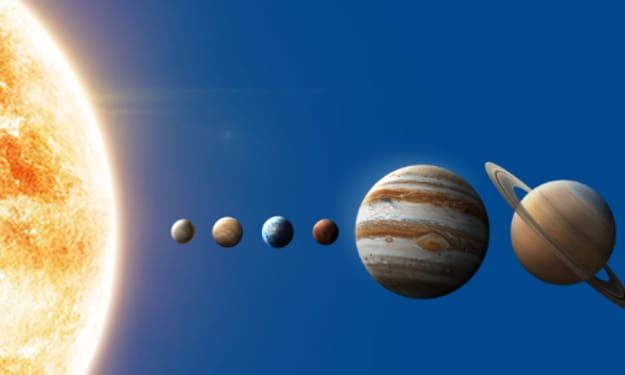
Double phenomena in the heavens Some people say in jest that the planets have aligned in their favor when life works the way they desire. Were you aware that there are seasons when things do line up in the heavens? There will be a planetary alignment AKA a planet parade, on February 28, 2026.
By Cheryl E Preston3 days ago in FYI
Common Parts Required During Aircraft Maintenance Checks
Aircraft maintenance checks are critical to ensuring safety, reliability, and regulatory compliance in aviation operations. Whether performed during routine A, B, C, or D checks, maintenance inspections require careful evaluation and replacement of various aircraft components. These checks are structured to identify wear, prevent system failures, and extend the operational lifespan of aircraft.
By Beckett Dowhan2 days ago in FYI



Comments
There are no comments for this story
Be the first to respond and start the conversation.