
Secrets of the World's Oldest Civilizations: Uncovering the Mysteries of the Ancients
Exploring the secrets of the world's most ancient civilizations and the enduring legacy they have left behind

Introduction:
The history of human civilization stretches back thousands of years, and the earliest civilizations have left behind a wealth of knowledge and artifacts that continue to fascinate and intrigue us. From the pyramids of Egypt to the ancient cities of Mesopotamia, the legacy of the world's oldest civilizations still shapes our modern world in countless ways. In this article, we will explore some of the most fascinating and enduring mysteries of these ancient civilizations, shedding new light on the past and helping us understand the present.
The Pyramids of Egypt
The pyramids of Egypt are among the most iconic structures in the world, and they continue to inspire wonder and awe to this day. Built more than 4,500 years ago, these massive structures were designed to serve as tombs for pharaohs and their consorts. But how were they built, and what secrets do they hold? Some theories suggest that the ancient Egyptians used advanced mathematics and engineering to construct the pyramids, while others suggest that they had help from extraterrestrial beings.
The Lost City of Petra
Petra is an ancient city located in modern-day Jordan that was carved into the rock by the Nabataeans more than 2,000 years ago. It was a major center of trade and commerce in the ancient world, and its stunning architecture and engineering feats continue to astound visitors to this day. Despite its importance, Petra was largely forgotten by the modern world until its rediscovery in the early 19th century.
The Hanging Gardens of Babylon
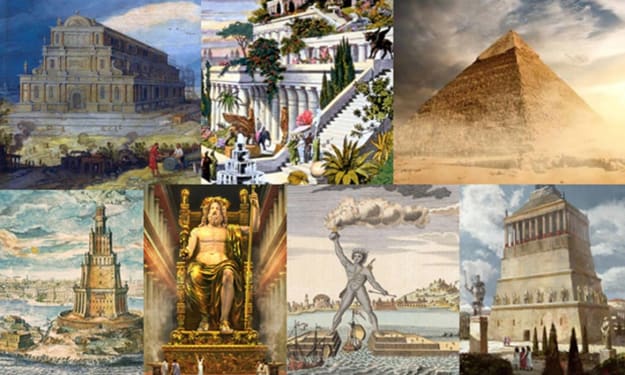
The Hanging Gardens of Babylon were one of the Seven Wonders of the Ancient World, and their beauty and grandeur were legendary. These lush gardens were said to have been built by King Nebuchadnezzar II more than 2,500 years ago, but their exact location and appearance remain a mystery. Some experts believe that the gardens were actually located in the ancient city of Nineveh, while others suggest that they may have been entirely fictional.
The Mayan Civilization
The Mayan civilization was one of the most advanced in the ancient world, and it left behind a wealth of knowledge and artifacts that continue to fascinate scholars to this day. The Mayans were skilled mathematicians, astronomers, and engineers, and their achievements include the creation of a complex calendar and the construction of impressive temples and palaces. Despite their many accomplishments, the Mayan civilization mysteriously collapsed in the 10th century, and the reasons for this decline remain a subject of debate among historians.
The Terracotta Army
The Terracotta Army is a collection of more than 8,000 life-size terracotta statues that were buried with the first emperor of China, Qin Shi Huang, more than 2,000 years ago. These stunning statues include soldiers, horses, and chariots, and they were designed to protect the emperor in the afterlife. The Terracotta Army was discovered by farmers in 1974, and it has since become one of the most popular tourist attractions in China.
The Nazca Lines
The Nazca Lines are a series of ancient geoglyphs located in the Nazca desert of southern Peru. These stunning designs include animals, plants, and geometric shapes, and they were created by removing the reddish-brown iron oxide-coated pebbles that cover the surface of the Nazca desert. The Nazca Lines have puzzled scientists and historians for decades, as their exact purpose and meaning remain a mystery to this day.
The Marquis de Sade's "120 Days of Sodom"
The Marquis de Sade was an 18th-century French nobleman and writer who is famous for his erotic and often perverse novels. Perhaps his most infamous work is "120 Days of Sodom," a novel that tells the story of four wealthy men who kidnap a group of young men and women and subject them to a range of sexual tortures and humiliations. The novel is full of graphic descriptions of violent and sadistic sexual acts, and it has been banned and censored in many countries over the years.
Despite its controversial subject matter, "120 Days of Sodom" has had a significant influence on literary and artistic movements over the years. The Surrealists, for example, were fascinated by the Marquis de Sade's work, and many of them saw him as a kind of hero who had challenged societal norms and conventions. The novel has also inspired countless artists and writers, and it remains a powerful and disturbing work of literature to this day.
The Black Death
The Black Death was one of the most devastating pandemics in human history. It first emerged in China in the 1330s, and it quickly spread across the world, killing millions of people in its wake. The disease, which was caused by the bacterium Yersinia pestis, was spread by fleas that infested rats, and it was highly contagious and deadly.
The Black Death had a profound impact on medieval Europe, and it led to significant social and economic changes. As people began to die in large numbers, labor became scarce, and wages rose as a result. The feudal system began to break down, and many peasants were able to gain more freedom and autonomy. The Black Death also had a significant impact on art and literature, and it is often seen as a turning point in European history.
The Voynich Manuscript
The Voynich Manuscript is a mysterious book that has puzzled scholars for centuries. The manuscript, which is believed to date from the 15th century, is written in an unknown script and contains a series of bizarre illustrations and diagrams. Despite numerous attempts to decipher the manuscript, no one has been able to definitively decipher its contents or determine its purpose.
Some scholars believe that the Voynich Manuscript may contain secret knowledge or hidden messages, while others think that it may be a hoax or a work of fiction. The manuscript has been the subject of numerous studies and investigations over the years, and it remains one of the most enigmatic artifacts in human history.
About the Creator
Ivy Lane
This is Ivy Lane, a skilled and dedicated writer with a passion for storytelling. Recognized for my talent through awards and writing competitions. My writing encompasses various forms and is characterized by its clarity and creativity.
Smart phones, Humans and Aliens.
WARNING. I will be tapping into one of your favorite creative tensions: The absurdity of humans worshipping their glowing rectangles as if they were tiny oracles. There’s something deliciously poetic about that contradiction, and it lends itself beautifully to an instructive proviso.
By Novel Allen4 days ago in Poets


Comments
There are no comments for this story
Be the first to respond and start the conversation.