

Music has been an integral part of human culture and society for thousands of years. From the earliest forms of music that were created with the use of basic instruments such as drums and flutes, to the more complex and intricate compositions of classical and contemporary music, the history of music is a long and diverse one. In this blog post, we will take a look at the evolution of music throughout history.
The Origins of Music
The origins of music can be traced back to the earliest known human civilizations. Archaeologists have discovered primitive instruments, such as flutes and drums, dating back to around 4000 BCE. These instruments were made from natural materials such as animal bones, wood, and shells, and were used in religious and ceremonial practices.
As human societies developed and became more complex, so too did music. In ancient Greece, music was an important part of religious and cultural events, with musicians and poets being highly regarded in society. The Greeks also developed the concept of musical notation, which allowed music to be written down and preserved for future generations.
The Medieval Period
During the medieval period, music continued to evolve and become more complex. The development of polyphony, the use of multiple melodies played at the same time, was a major breakthrough in musical composition. The Catholic Church also played a significant role in the development of music during this time, with composers such as Hildegard von Bingen and Guillaume de Machaut creating some of the most enduring musical works of the era.
The Renaissance
The Renaissance saw a renewed interest in the classical music of ancient Greece and Rome, as well as the development of new musical styles and forms. Composers such as Giovanni Pierluigi da Palestrina and William Byrd created intricate choral works that remain popular to this day. The invention of the printing press in the 15th century also allowed music to be disseminated more widely than ever before.
The Baroque Period
The Baroque period, which lasted from the early 17th century to the mid-18th century, was marked by a focus on elaborate ornamentation and the use of complex musical forms. Composers such as Johann Sebastian Bach, George Frideric Handel, and Antonio Vivaldi created some of the most enduring works of the era, including concertos, operas, and oratorios.
The Classical Period
The Classical period, which began in the mid-18th century, marked a return to simpler and more elegant musical styles. Composers such as Wolfgang Amadeus Mozart, Ludwig van Beethoven, and Franz Schubert created some of the most recognizable and enduring pieces of music in history, including symphonies, sonatas, and chamber music.
The Romantic Period
The Romantic period, which lasted from the early 19th century to the early 20th century, was marked by a focus on emotion and expression in music. Composers such as Frederic Chopin, Franz Liszt, and Richard Wagner created some of the most dramatic and powerful music in history, including operas, concertos, and piano music.
Contemporary Music
The 20th century saw the development of new musical styles and forms, including jazz, blues, rock and roll, and hip hop. These new forms of music were shaped by cultural and social changes, such as the civil rights movement, the feminist movement, and the rise of youth culture.
In recent years, advances in technology have allowed for even more experimentation and innovation in music. Electronic music, which relies on digital sound manipulation, has become increasingly popular, and new genres such as EDM (Electronic Dance Music) and dubstep have emerged.
Conclusion
The history of music is a long and diverse one, shaped by social, cultural, and technological changes throughout history. From the earliest forms
About the Creator
A Planetary Alignment will coincide with Mercury Retrograde
Double phenomena in the heavens Some people say in jest that the planets have aligned in their favor when life works the way they desire. Were you aware that there are seasons when things do line up in the heavens? There will be a planetary alignment AKA a planet parade, on February 28, 2026.
By Cheryl E Preston16 days ago in FYI
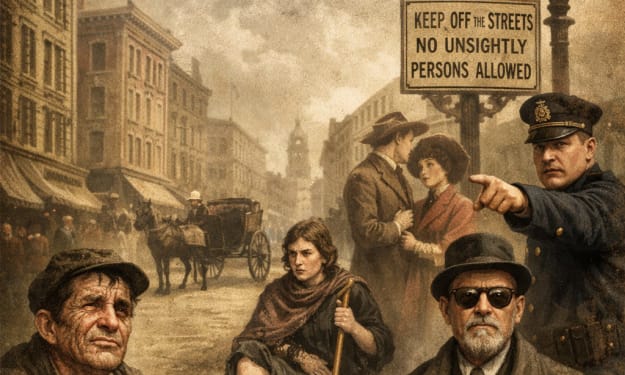
When Being “Ugly” Was a Crime: The Forgotten Laws That Targeted Disabled and Disfigured People in America
In modern times, the idea that someone could be arrested simply for being “ugly” sounds shocking and unbelievable. Yet, in the late nineteenth and early twentieth centuries, several cities in the United States enforced laws that effectively criminalized the public presence of people who were visibly disabled, disfigured, or deemed “unsightly.” These controversial rules, commonly known as **“Ugly Laws,”** reveal a troubling chapter in the history of discrimination against disabled individuals.
By Irshad Abbasi 7 days ago in FYI



Comments
There are no comments for this story
Be the first to respond and start the conversation.