
Reveal! The design life is 10 years, and 12 astronauts will be stationed successively
12 astronauts will be stationed successively

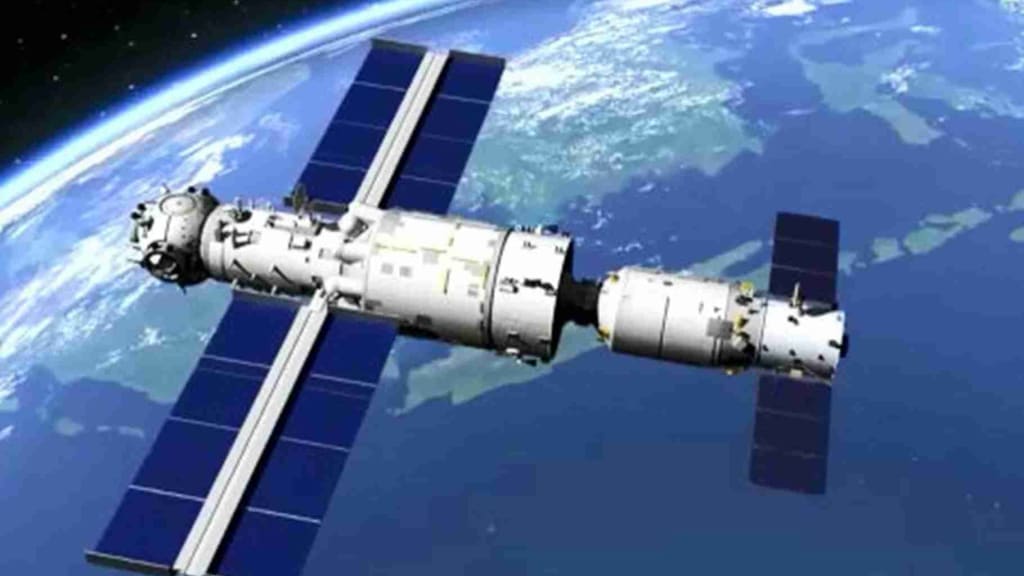
At 11:00 on April 29, Beijing time, China launched the Tianhe core module of the space station with the Long March 5B Yao-2 carrier rocket at the Wenchang Space Launch Site. What is the captain of the Chinese space station? How to build? Who will live? The reporter interviewed relevant experts to find out.
The Tianhe core module successfully launched this time is the "first flight" spacecraft of the Chinese space station mission. The start of the construction of the space station marks that it will no longer be a dream for China to have a "space home" in low-Earth orbit in the future.
Zhou Jianping, chief designer of China's manned space project, introduced that the basic configuration of China's space station includes three modules: Tianhe core module, Wentian experimental module and Mengtian experimental module, and the overall T-shaped configuration.
Among them, the Tianhe core module has a total length of 16.6 meters, a maximum diameter of 4.2 meters, and a launch mass of 22.5 tons. It is the management and control center of the future space station. Both the Wentian experimental cabin and the Mengtian experimental cabin are used as load support sections to support large-scale space science experiments and technical tests inside and outside the cabin. At the same time, the Wentian experimental cabin is also used as a composite control and management backup section, and has the ability to move out of the cabin; the Mengtian experimental cabin has the ability to automatically enter and exit the cabin.
After the three-cabin aircraft of the Chinese space station are successfully launched in sequence, they will pass rendezvous, docking and repositioning in orbit to form a "T" configuration assembly, which will operate in orbit for a long time. The on-orbit service life of the combination is not less than 10 years, and the service life can be extended through maintenance.
What will the Chinese space station look like after completion? Zhu Guangchen, deputy chief designer of the space station system of the Fifth Academy of China Aerospace Science and Technology Corporation, once made an image metaphor: if the Shenzhou spacecraft is a car, Tiangong-1 and Tiangong-2 are equivalent to a house with one room and one living room, while the space station is a three-room house. The two halls also have storage rooms, which are considered "luxury houses".
How to build: plan 11 tasks this year and next 2 years
According to the space station construction mission plan, China will carry out 11 flight missions this year and next, including 3 space station module launches, 4 cargo spacecraft and 4 manned spacecraft launches. The mission goal of the "third step" of the "three-step" development strategy of the manned space project.
So how will the next 10 missions be arranged? The reporter learned that during the orbital construction mission of the space station, the Long March 5B carrier rocket, the Long March 2F carrier rocket and the Long March 7 carrier rocket Type-3 rockets will perform their respective responsibilities to build a "transportation between heaven and earth" for the construction and operation of the Chinese space station. corridor". Among them, the Long March 5B rocket will launch the space station module, the Long March 2F rocket will send astronauts to the space station by launching the Shenzhou manned spacecraft, and the Long March 7 rocket will launch the Tianzhou cargo spacecraft; the manned spaceflight "Three Arrows" Will join hands to start the construction of the space station.
After the completion of the Chinese space station, it will become a national space laboratory, which will be engaged in space science research and new technology research experiments in space. Zhou Jianping said that scientists from all over the world are welcome to participate in the scientific experiment project of China's space station. China has promoted the implementation of the first batch of technical test projects with the United Nations Office for Outer Space Affairs, and has also reached relevant cooperation agreements with research institutions in space science or space science and technology in many countries or regions.
Who will live: 12 astronauts will be stationed in the space station one after another
Who will occupy the space station with "three rooms, two halls and storage rooms" in the future? Zhou Jianping pointed out that during the key technology verification and construction stage of the space station, 4 manned flight missions will be arranged. Each flight crew is composed of 3 astronauts. They will perform the tasks of technical verification, construction and scientific experiments of the space station. According to the arrangement of the task, the long-term on-orbit will reach 3 to 6 months.
In the normal operation of the space station, three astronauts fly as a crew for a long time, and the crew rotates regularly. During the rotation, up to 6 astronauts can work on the space station at the same time. After the handover is completed, the previous crew will return to Earth in a manned spacecraft.
It is worth mentioning that the space station not only has a large space for activities, but also the supplies of astronauts in the space station are better guaranteed. The previous record for Chinese astronauts in orbit was 33 days. The water and oxygen necessary for the survival of astronauts were sent directly into space by the spacecraft.
In order to allow astronauts to stay in orbit longer, the space station has designed a complete renewable life support system. The water vapor exhaled by the astronauts will be recovered by condensing water, and the excreted urine will also be recovered and purified, and reused as drinking water and domestic water. The hydrogen produced during the electrolysis of oxygen and the carbon dioxide exhaled by the astronauts will generate oxygen through a chemical reaction, which can also reduce the demand for oxygen supply.
In ancient times, Kunpeng roamed freely for thousands of miles, but now I can see the sky and spread its wings. With the Long March 5B Yao-2 rocket soaring into the sky, the Tianhe core module is about to be "enlisted", and the "complete" Chinese space station will no longer be far away.
About the Creator
witty lukas
The doubts held by human beings are the germs of science
Keep reading
More stories from witty lukas and writers in FYI and other communities.



Comments
There are no comments for this story
Be the first to respond and start the conversation.