
Real Monsters
Crazy creatures currently coexisting with humankind


Monsters exist - not just in nightmares, or in movies, or under the beds of children. This planet is home to many frightening living beings worthy of a good horror scream. Most are not dangerous, but you wouldn't know it to look at them. Prepare to be shocked and perplexed by 12 strange creatures found on our amazing planet. How many have you heard of?
1. Aye-aye.

This nocturnal member of the lemur family from Madagascar (the only place lemurs are found) was hunted to near extinction. Superstitiously, it was viewed as a bad omen. It hunts for insect larvae by tapping trees at a rate of up to eight times per second with its bony middle finger, which can be up to three times the length of its other fingers. It listens for irregularities, suggestive of its targets. Aye-ayes are the only primates to use echolocation to find their prey.
2. Blobfish.

Blobfish live in deep water, at depths of up to 2800 meters (nearly two miles) off the coasts of Australia and Tasmania. Their gelatinous bodies make it possible for them to withstand the extreme water pressure.
3. Glass Frog.

Okay, this one isn't exactly scary, but it is definitely creepy. It is thought that the translucency of these frogs is a method of camouflage to hide from predatory birds. By the way, you can see the eggs in this pregnant female. Is that clear enough?
4. Goblin Shark.

These freaky-looking sharks live at the bottom of the ocean. They prey on squid. If a slippery meal starts to swim away, they can thrust their jaws three inches out of their faces to grab on. Talk about Jaws! These pink creatures can grow up to 12 feet and 460 pounds.
5. Honduran White Bat.

These odd-looking, unique bats are very lithe, avoiding flying predators easily on the fly. Since they are most vulnerable when they sleep, they create "tents" by using their wing fingers to slice down the middle of a Helliconia leaf, causing an overhang. Up to 12 bats can be found in a single tent, used for just one day. At night, they scatter to eat.
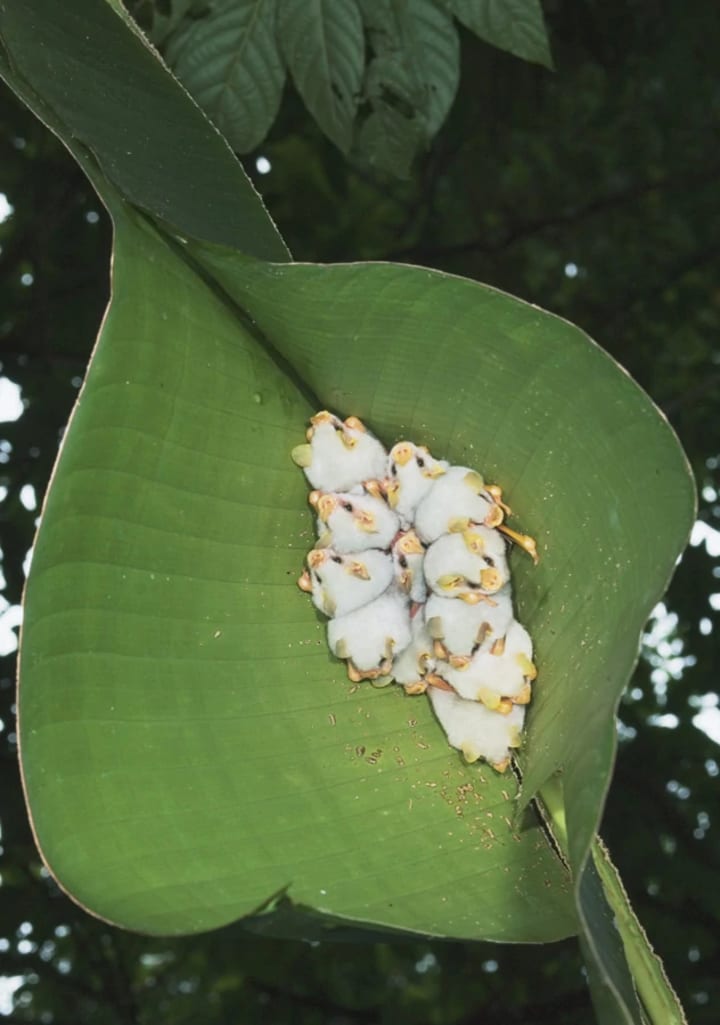
Well, now they just look cute! A group of Honduran white bats is called a cloud.
6. Indian Purple Frog.

This frog spends most of its life underground, emerging only at the start of the monsoons for a few days every year to breed. They are endangered due to deforestation.
7. Pink Fairy Armadillo.

These armadillos, found in Argentina, spend most of their lives underground. Pink Fairies are the smallest known armadillo species. They are so rarely seen that even their name is mythical.
8. Red-lipped Batfish.

This snarly-looking fish is a bottom-dweller around the Galápagos Islands. It isn't a very good swimmer, but it uses its appendages as legs. It has a fleshy appendage on its head, called an illicium, which emits a chemical that lures small fish.
9. Sea Pig.
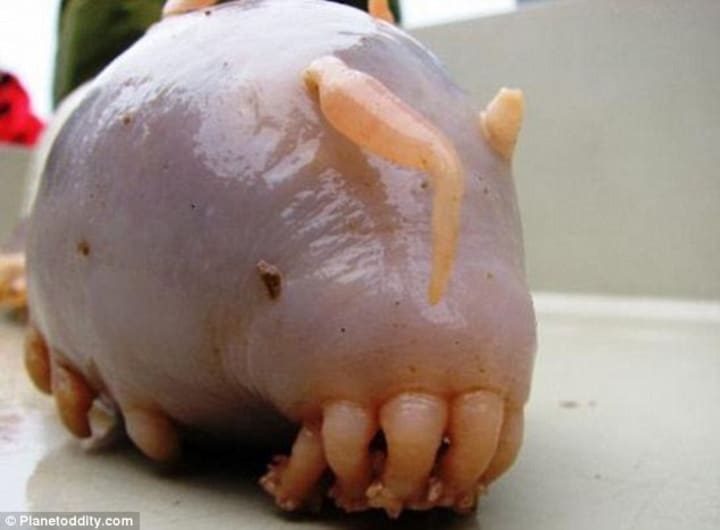
This blobby-looking thing is not a potato or even a sea slug. It's a sea pig, related to sea cucumbers. The "legs" are actually feet, used to shovel sea mud into their mouths so they can filter out microscopic food.
10. Star-nosed Mole.

Sorry, but this looks like a face only a mother could love! The star-nosed mole, also known as a water shrew, is rare creature which can smell under water by blowing bubbles to help it breathe. It preys on worms and insects.
11. Thorny Devil.
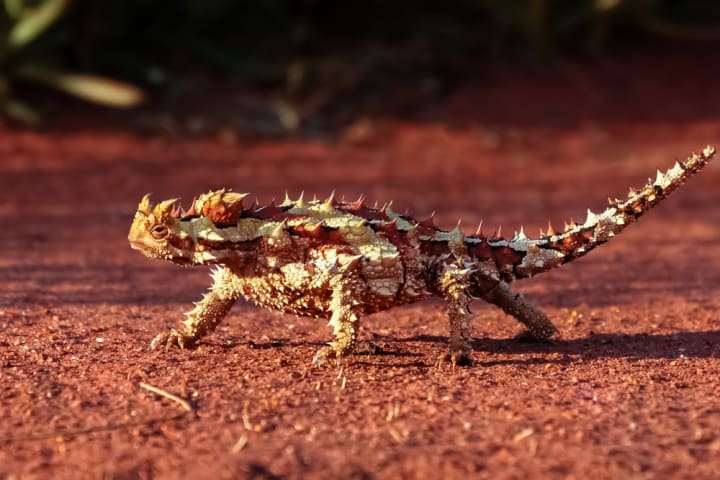
This unusual lizard lives in Australia. They survive the harsh deserts by burying their bodies in damp sand and drawing moisture out of it. They cannot lick water from puddles as their mouths have evolved specifically to feed on ants.
12. Water Bear.
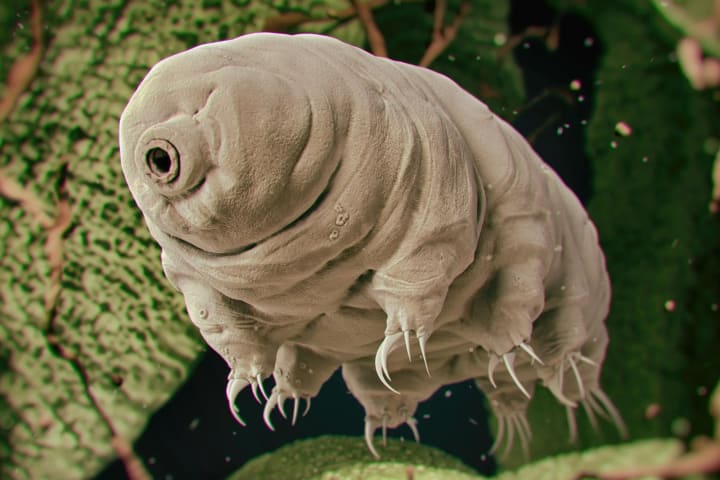
These near-microscopic creatures, called tardigrades, have eight legs with four to eight claws on each. They were discovered by German zoologist Johann August Ephraim Goeze in 1773, who called them water bears. They are nearly indestructible. They can survive in water from sub-zero to boiling temperatures. They can even survive in space. Who tested that?
Who knows what fascinating creatures have yet to be discovered on earth! These crazy monsters may have cousins hiding out in the depths, underground, or deep in rainforests. I hope you are as in awe of our planet as I am.
Online Resources:
https://blog.nus.edu.sg/lsm1303student2010/2010/03/29/aye-aye-creature/
https://www.thisislocallondon.co.uk/youngreporter/18909525.protect-blobfish/
https://earthlymission.com/translucent-glass-frog-science-camouflage-photography/
https://kids.nationalgeographic.com/animals/fish/facts/goblin-shark
https://comicvine.gamespot.com/profile/impurestcheese/blog/impurests-guide-to-animals-16-honduran-whte-bat/98347/
http://www.edgeofexistence.org/species/purple-frog/
https://www.earthtouchnews.com/cute-and-cool/cute/watching-this-pink-fairy-armadillo-digging-will-make-you-inexplicably-happy/
https://www.sciencefocus.com/nature/what-is-a-red-lipped-batfish/
https://www.dailymail.co.uk/news/article-1314184/Sea-pigs-The-ugliest-creature-beneath-waves.html
https://www.nationalgeographic.com/science/article/learn-to-smell-underwater-with-the-star-nosed-mole
https://www.abc.net.au/news/science/2016-11-03/how-the-thorny-devil-gets-a-drink/7987598
https://microcosmos.foldscope.com/?p=197685
About the Creator
Julie Lacksonen
Julie has been a music teacher at a public school in Arizona since 1987. She enjoys writing, reading, walking, swimming, and spending time with family.
Reader insights
Outstanding
Excellent work. Looking forward to reading more!
Top insights
Eye opening
Niche topic & fresh perspectives
Easy to read and follow
Well-structured & engaging content
Compelling and original writing
Creative use of language & vocab
On-point and relevant
Writing reflected the title & theme
Expert insights and opinions
Arguments were carefully researched and presented
Heartfelt and relatable
The story invoked strong personal emotions
Masterful proofreading
Zero grammar & spelling mistakes
Keep reading
More stories from Julie Lacksonen and writers in FYI and other communities.
The History of Flying - Part Two of Three
As long as there have been stories, there have been characters and creatures of flight. Many continue to capture people’s imaginations in modern stories, movies, and songs. Part two of this series focuses on mythical flying beings. Whether or not they are real is up to each reader to decide.
By Julie Lacksonen5 years ago in FYI
A Planetary Alignment will coincide with Mercury Retrograde
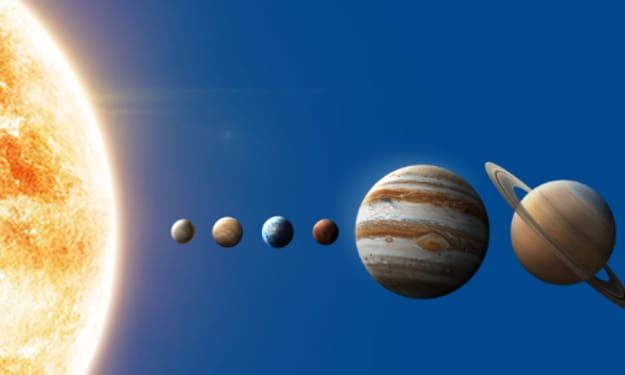
Double phenomena in the heavens Some people say in jest that the planets have aligned in their favor when life works the way they desire. Were you aware that there are seasons when things do line up in the heavens? There will be a planetary alignment AKA a planet parade, on February 28, 2026.
By Cheryl E Preston12 days ago in FYI



Comments
There are no comments for this story
Be the first to respond and start the conversation.