
Protests and Security Confrontations at UN Climate Talks in Belém
When Voices from the Amazon Met the Guard at COP30

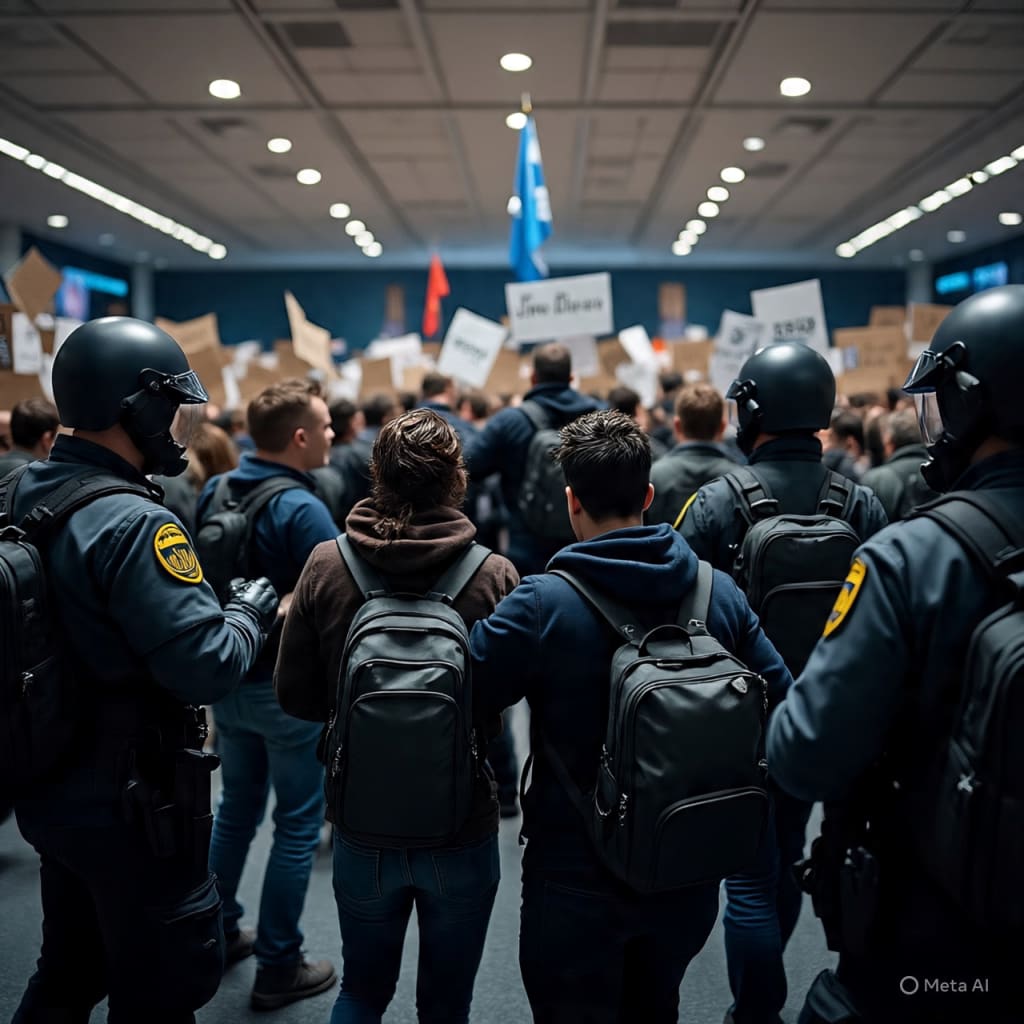
The annual climate talks of the 2025 United Nations Climate Change Conference (COP30) have drawn global attention this year as they take place in the Amazon-region city of Belém, Brazil. On November 11, 2025, a confrontation occurred between protesters and security personnel outside the main venue of the talks. The event highlights deep tensions over climate justice, Indigenous rights, and the role of global summits in the fight against climate change.
What happened
Late in the day, a group of protesters—many from Indigenous communities and local social-movements—gathered near the conference entrance chanting slogans such as “Our land is not for sale.” They sought access to the venue where global delegates were meeting. According to reports, some broke through barriers, prompting security forces from the United Nations and Brazil to rush reinforcements and form barricades.
In the process, two security guards suffered minor injuries. One was seen in a wheelchair after being hit in the stomach, another had a cut above the eye. Some damage occurred at the venue, and plastic bins and other objects were used during scuffles. The talks themselves continued on schedule after the area was secured.
Why protesters were upset
Many of the protesters came because they felt left out of key decisions affecting their lands and lives. They argued that Indigenous peoples and traditional communities must have a stronger voice in climate policies, especially in the Amazon region. One Indigenous leader said: “We can’t eat money. We want our lands free from agribusiness, oil exploration, illegal miners, and illegal loggers.”
They also pointed out that while the world talks about protecting the rainforest, local development projects tied to the summit have raised concerns. For example, roads and new infrastructure are being built in the region. Their frustration was not aimed at the summit itself, but at the sense they are sidelined. A youth activist said that some in the protest believed they were being excluded: “They cannot decide for us without us.”
Role of security and the venue
Because this summit is large—with thousands of participants from around the world—it required strong security and special arrangements. The venue is considered a diplomatic zone, where the United Nations is responsible for internal security. Security had erected barricades, metal detectors and other controls to manage access. When protesters tried to breach these controls, security responded with force and measures to clear the area.
Authorities said they followed established protocols. They also said negotiations were not interrupted. Still, critics say the incident shows underlying issues of trust, inclusion and fairness in major global events like these.
---
What this means for the Amazon and climate talks
The Amazon region is critical for the world’s climate. Forests absorb carbon dioxide, protect biodiversity, and sustain Indigenous ways of life. For many local people, the climate talks are not just about global targets, but about land rights, resource use and who gets to decide. Hosting the summit in Belém was seen as a chance to focus on the Amazon—but also increased the pressure.
The clashes show that when people feel excluded, protests can shift from peaceful chants to confrontations. For the summit’s organisers, this means taking seriously the voices of Indigenous groups, ensuring their participation, and addressing local grievances alongside global goals.
Key lessons for students and future leaders
1. Inclusion matters: When decisions affecting people’s lives are made without their involvement, frustration builds.
2. Local and global are linked: Even world-level talks can cause effects in local communities and regions.
3. Peaceful protest has limits: It opens a voice, but if issues aren’t heard, escalation can follow.
4. Security and rights must balance: The right to protest and the need for safety must both be considered.
5. Long-term change needs action: Symbolic summits mean little unless policies lead to real changes.
Conclusion
At the COP30 summit in Belém, what began as a gathering of global delegates became also a scene of local — and very human — conflict. It wasn’t just about climate science or emissions targets. It was about land, representation, justice and the right of people to shape their future. The protest and security confrontation are a reminder that when the world meets to act on climate, it must listen to all the voices—including those from the forests and rivers of the Amazon.
About the Creator
Saad
I’m Saad. I’m a passionate writer who loves exploring trending news topics, sharing insights, and keeping readers updated on what’s happening around the world.
Virginia was once a mega-state until it gave up most of its land
The year 2026 marks the 250th anniversary of the Declaration of Independence. According to Cardinal News, Virginia was originally much larger than it is today. Virginia came out of the Revolutionary War much smaller than it was when it went in.
By Margaret Minnicksa day ago in FYI



Comments
There are no comments for this story
Be the first to respond and start the conversation.