
President Donald J. Trump announced that U.S. forces have destroyed a “very large drug-carrying submarine”
U.S. Destroys “Drug-Carrying Submarine” in the Caribbean — What We Know and Why It Matters


President Donald J. Trump announced that U.S. forces have destroyed a “very large drug-carrying submarine” that was reportedly traveling along a well-known narcotrafficking route toward the United States. According to Trump’s statement, the vessel was “loaded mostly with fentanyl and other illegal narcotics.” He claimed that four “narcoterrorists” were on board — two were killed during the strike, while the remaining two, citizens of Ecuador and Colombia, were captured and will be returned to their home countries for detention and prosecution. Trump emphasized that “under my watch, the United States of America will not tolerate narcoterrorists trafficking illegal drugs by land or by sea.”
The reported incident is part of a broader campaign by the Trump administration to target suspected drug-trafficking operations in the Caribbean and Pacific corridors. In recent months, U.S. authorities have released footage of interdictions and airstrikes against so-called “narco-subs,” claiming they form a crucial part of the supply chain bringing fentanyl, cocaine, and other synthetic opioids into the country. These statements have drawn intense attention — and controversy — from legal experts, foreign governments, and human rights organizations.
Legal Controversies and International Reactions
The legality of using military force against civilian or unflagged vessels in international waters has been heavily debated. Under international law, including the United Nations Convention on the Law of the Sea, states may only intervene under specific circumstances, such as piracy or clear evidence of trafficking confirmed through prior inspection. Critics argue that preemptive strikes without verifiable evidence of imminent threat could constitute a violation of international norms.
Venezuela and other regional governments have condemned similar U.S. strikes in the past, calling for international investigations. Human rights groups and several members of Congress have urged greater transparency, asking who authorized these operations, under what legal framework they were conducted, and what evidence supports claims that the destroyed vessels carried narcotics.
The Fate of the Captured Suspects
Trump stated that the two surviving suspects would be repatriated to Ecuador and Colombia “for detention and prosecution.” This decision avoids the potential legal complications of holding them in U.S. custody, where questions of jurisdiction and detainee rights could arise. However, experts warn that repatriation raises concerns about due process and the ability of those nations to conduct transparent prosecutions, especially if the suspects’ testimony could implicate larger networks.
Assessing the Threat and Verifying the Claims
Trump claimed that allowing the submarine to reach U.S. shores could have resulted in the deaths of “at least 25,000 Americans.” The figure echoes his long-standing rhetoric about fentanyl’s devastating impact on American communities — a substance responsible for over 70,000 overdose deaths annually, according to the CDC. However, no independent verification has yet been provided to confirm the alleged quantity or type of narcotics onboard the destroyed submarine. Journalists and analysts have called for the administration to release intelligence or physical evidence to substantiate such extraordinary claims.
Political and Strategic Implications
From a political standpoint, the announcement strengthens Trump’s “law and order” narrative and his pledge to combat the fentanyl crisis. It plays well with voters who view the opioid epidemic as a national security issue. Strategically, however, expanding military engagement in counternarcotics operations risks escalating tensions with Latin American governments and could blur the line between law enforcement and warfare.
Diplomats and defense experts warn that if such operations continue without clear multilateral oversight, they could trigger diplomatic disputes and undermine regional stability. Transparency and cooperation with organizations such as the Organization of American States (OAS) and the United Nations Office on Drugs and Crime (UNODC) are seen as essential to maintaining legitimacy in the fight against transnational narcotrafficking.
What Comes Next
If the administration continues to authorize direct strikes against suspected drug-smuggling vessels, it will need to navigate growing scrutiny at home and abroad. Calls for congressional oversight are likely to increase, especially if further incidents occur without clear legal justification or corroborating evidence. Internationally, Washington may face demands to justify its actions under maritime and humanitarian law.
Meanwhile, the fentanyl crisis remains a genuine and deadly problem. Even if the submarine destruction story proves accurate, experts agree that such high-profile military actions alone cannot solve the systemic issues of drug demand, production, and distribution. Combating synthetic opioids effectively requires diplomacy, intelligence sharing, and comprehensive health and prevention strategies.
Conclusion
The alleged destruction of a “drug-carrying submarine” under President Trump’s orders underscores both the urgency of the fentanyl epidemic and the complex legal and moral challenges of militarizing the fight against narcotics. Whether seen as a bold act of defense or an overreach of executive power, the episode highlights the delicate balance between protecting national security and upholding international law. The coming weeks will reveal whether evidence supports the administration’s narrative — and whether America’s war on drugs is entering a new, more aggressive maritime phase.
Sources: Reuters, Associated Press, Al Jazeera, The Guardian, Newsweek, and UNODC reports.
About the Creator
Keep reading
More stories from Deyan Marinchev and writers in FYI and other communities.
Water wells the key of our future
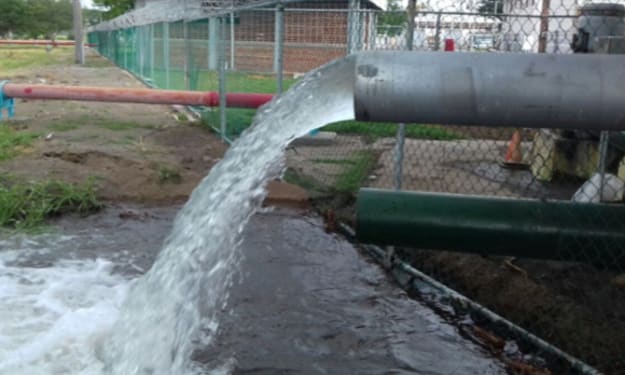
The average lifespan of a water well ranges from 25 to 40 years if it has carbon steel piping. Other steel alloys can increase the well's durability; however, a crucial point is sustainability. This means that over the years, the well continues to provide a constant and sustainable flow of water. To achieve this, it largely depends on the underground aquifers not being overexploited and on the recharge rate being greater than or equal to the extraction volume. However, today most aquifers are overexploited due to the large amount of water extracted each year. Another important factor that will ensure the sustainability of water wells is the periodic maintenance that the user must perform to keep them free of sediment and at their full depth. This includes minimizing corrosion of the steel casing pipe, thus extending its lifespan. Continuous monitoring of static and dynamic water levels in the well is also crucial, as is annual water quality analysis to identify any potential partial or total aquifer contamination.
By Ximena Ramirez4 days ago in FYI



Comments
There are no comments for this story
Be the first to respond and start the conversation.