
Nigerian Democracy ( 1999- 2023)
Democracy
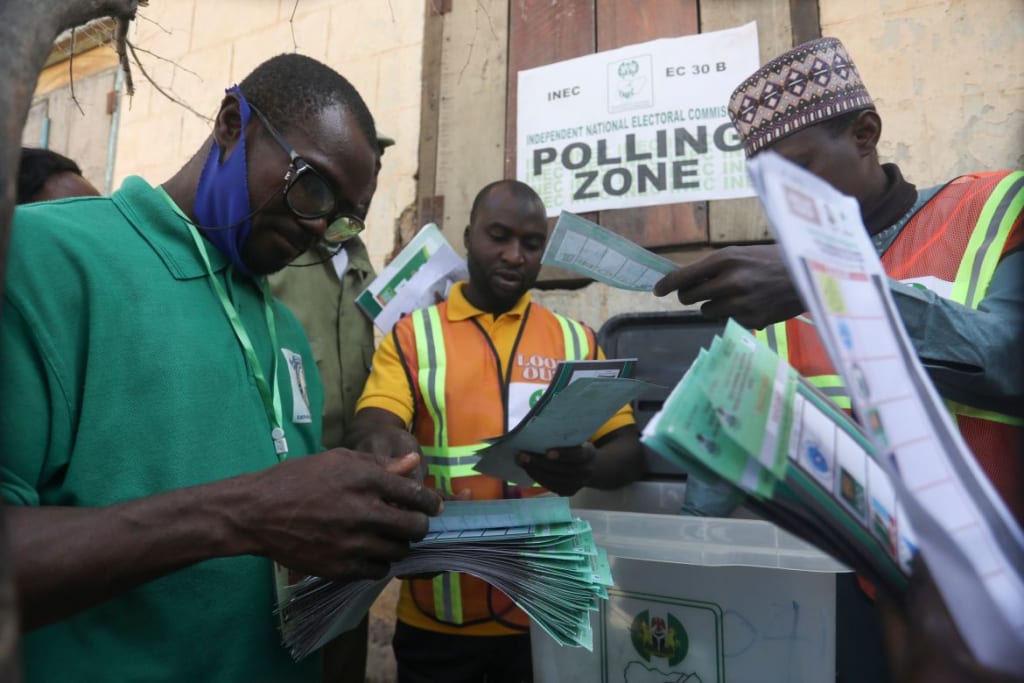
Nigeria is a country located in West Africa with a population of over 200 million people. It is the most populous country in Africa and the seventh most populous country in the world. Nigeria gained independence from British colonial rule in 1960, and since then, it has experienced a turbulent political history.
The country has had several military coups, which have disrupted the democratic process and led to the establishment of military rule. However, in 1999, Nigeria returned to democracy after 16 years of military rule. Since then, the country has made significant progress in its democratic process, but there have been several challenges along the way.
In this article, we will explore the history of Nigerian democracy since the return of democracy in 1999 to date.
1999 - 2007: The Obasanjo Administration
In 1999, Olusegun Obasanjo was elected as Nigeria's president in the country's first democratic election in 16 years. Obasanjo had previously been a military ruler in the late 1970s and early 1980s, but he had been in prison for several years after he was accused of plotting a coup.
Obasanjo's administration was characterized by efforts to improve the country's economy and infrastructure, fight corruption, and promote good governance. However, there were also several challenges during his tenure, including allegations of corruption within his administration and human rights violations.
In 2003, Obasanjo was re-elected for a second term, but his administration faced criticism for its handling of the elections. There were allegations of widespread fraud and irregularities, which led to protests and unrest in several parts of the country.
2007 - 2010: The Yar'Adua Administration
In 2007, Umaru Yar'Adua was elected as Nigeria's president. Yar'Adua was a former governor of Katsina State and was seen as a reformist who would address some of the country's most pressing issues.
However, Yar'Adua's administration was cut short when he fell ill and was unable to carry out his duties. His vice president, Goodluck Jonathan, took over as acting president in 2010, and Yar'Adua later died.
2010 - 2015: The Jonathan Administration
Goodluck Jonathan was sworn in as Nigeria's president in 2010 after the death of Umaru Yar'Adua. Jonathan's administration focused on addressing corruption, improving the country's infrastructure, and promoting economic growth.
However, his administration faced several challenges, including the Boko Haram insurgency in the northeast region of the country, which led to the displacement of millions of people and the deaths of thousands.
In 2015, Jonathan lost his bid for re-election to Muhammadu Buhari, a former military ruler who had promised to tackle corruption and improve security in the country.
2015 - Present: The Buhari Administration
Muhammadu Buhari was elected as Nigeria's president in 2015, and his administration has focused on fighting corruption, improving security, and promoting economic growth.
However, his administration has faced several challenges, including the Boko Haram insurgency, which has continued to pose a threat to the country's security. There have also been concerns about the government's handling of protests and dissent, with allegations of human rights violations by security forces.
Conclusion
Since the return of democracy in 1999, Nigeria has made significant progress in its democratic process, but there have been several challenges along the way. The country has had several administrations, each with its own successes and challenges.
Moving forward, Nigeria must continue to address issues such as corruption, insecurity, and human rights violations, to ensure that its democracy is strengthened and that the country can reach its full potential.
The recent elections conducted in February and March 2023 has produced new set of leaders but there massive outcry about the conduct of the elections.
About the Creator
Keep reading
More stories from MOTIVATIONAL QUOTES- LIVE YOUR LIFE -Mindsight and writers in FYI and other communities.
AI AND THE FUTURE OF LEARNING
The rise of Artificial Intelligence (AI) is rapidly transforming various industries. One of the most significant changes that we have seen in the recent past is the application of AI in the education sector. AI has the potential to revolutionize the way we learn and teach, making education more personalized, efficient, and effective. In this article, we will discuss the future of AI in the world of learning.
By MOTIVATIONAL QUOTES- LIVE YOUR LIFE -Mindsight3 years ago in Lifehack
The Visionary Behind Modern Chhattisgarh
When Chhattisgarh was carved out as a separate state on 1 November 2000, the announcement marked only the beginning of a far more demanding journey. Creating a new state is not merely a political decision; it is an administrative test of the highest order. Systems must be built, institutions must be established, and continuity of governance must be ensured often under intense time pressure and public scrutiny.
By Muddasar Rasheed4 days ago in FYI
A Dart at Dusk
Seconds ago, the sullen sun set on the two of us… my exuberant furry companion and me. A fresh breeze embraces us, delivering welcome relief from the day’s oppressive heat. His typical stumbling and staggering along — apace with a sloth — has turned into trip-trapping, high-stepping, almost skipping along.
By Angie the Archivist 📚🪶6 days ago in Petlife



Comments
There are no comments for this story
Be the first to respond and start the conversation.