
New Paradigms in Ketamine Treatment for Mental Wellness
Exploring Modern Paths to Healing

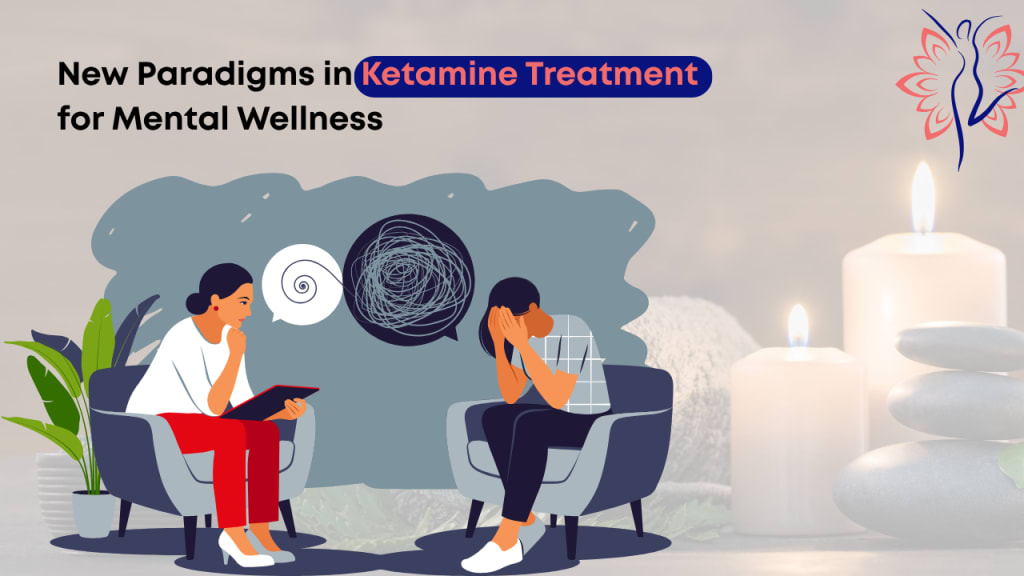
I still remember the day I sat across from a friend of mine, let’s call her Megan, as she quietly admitted something most people don’t dare to say out loud: “I don’t feel like I exist in my own life anymore.”
She wasn’t just tired. She wasn’t just sad. She was stuck in a place so dark, even the thought of trying another antidepressant felt exhausting. Like many, Megan had cycled through years of therapy, medication, and self-help books. Nothing touched the core of what she was experiencing.
That’s when her psychiatrist brought up something she’d never considered: ketamine treatment.
Once stigmatized as a party drug, ketamine is now being embraced as one of the most promising breakthroughs in mental health care in decades. And in 2025, we’re seeing new paradigms in ketamine treatment that go far beyond symptom relief; they're reshaping the very foundation of how we think about mental wellness.
A Shift From Symptom Management to Deep Healing
Most traditional approaches to mental health focus on managing symptoms. If you’re anxious, here’s a pill to calm your nerves. If you’re depressed, here’s a medication that might adjust your serotonin levels, eventually.
Ketamine, however, invites a different question: What if the mind doesn’t just need fixing, if it needs resetting?
Unlike standard antidepressants, ketamine doesn’t take weeks to kick in. It can begin working within hours by stimulating the brain’s glutamate system, particularly the NMDA receptor, which helps form new neural connections.
That means more than just relief; it means neuroplasticity, a rewiring of the brain’s pathways. For someone like Megan, it wasn’t about feeling “less depressed.” It was about finally feeling present again.
Ketamine-Assisted Psychotherapy: The Next Evolution
One of the most exciting shifts in 2025 is the widespread adoption of Ketamine-Assisted Psychotherapy (KAP). In this model, ketamine isn’t just administered as a standalone drug; it’s used as a catalyst for deep therapeutic exploration.
Here’s how it works:
- Preparation: A therapist works with the patient to set intentions and build trust.
- Administration: Ketamine is given in a controlled setting, often with music, eye masks, and a calming atmosphere.
- Integration: After the experience, the patient and therapist unpack what came up, connecting insights to life outside the session.
The altered state of consciousness that ketamine provides isn’t just trippy, it’s transformational. For many, it creates the space to process trauma, access long-buried emotions, and shift destructive thought patterns.
Think of it like this: traditional therapy is like digging a tunnel with a spoon. KAP hands you a shovel.
Personalized Protocols Are the New Norm
Gone are the days of “one-size-fits-all” mental health care. Clinics in 2025 are developing individualized ketamine protocols based on a person’s unique biology, history, and treatment goals.
Some patients do well with six infusions over two weeks. Others benefit more from lower-dose oral lozenges taken at home in a safe, guided setting. Some combine ketamine with EMDR or mindfulness-based therapy for added effect.
New technology is also helping track patient progress in real time. Some clinics use wearable devices to monitor sleep, mood, and heart rate, adjusting treatment accordingly.
We’re entering a phase where mental health care is no longer reactive; it’s proactive, dynamic, and precise.
From Emergency Relief to Ongoing Wellness
Initially, ketamine was largely used as a last resort for those in mental health crisis, especially those struggling with suicidal ideation. And yes, it remains one of the few treatments shown to reduce suicidal thoughts within hours. But we’re now seeing its potential as part of ongoing wellness.
Think of ketamine not as a crutch, but as a launchpad. Used responsibly and thoughtfully, it becomes part of a broader wellness ecosystem that might include:
- Regular therapy
- Mindfulness practices
- Nutrition and sleep support
- Community and connection
Many patients describe ketamine as giving them a “window” of clarity or relief, one that allows them to do the real work of healing in therapy and daily life.
The Importance of Safe, Ethical Access
Of course, not every clinic offering ketamine is created equal. With its rise in popularity, there's also been a rise in questionable practices, pop-up providers, inexperienced staff, or clinics offering ketamine without adequate therapeutic support.
That’s why it's critical to find clinics with proper licensing, medical oversight, and experienced mental health professionals on staff. Ethical treatment centers emphasize integration therapy, safety screenings, and long-term follow-up care.
In cities like Philadelphia, ketamine clinics are setting the standard with holistic programs that treat the whole person, not just their diagnosis.
A Story of Renewal
Let me bring you back to Megan.
She completed six sessions of ketamine-assisted therapy over three weeks. During her third session, she had what she later described as a “deep, cosmic breath.” She saw herself at different stages of her life, childhood, heartbreak, and grief. But instead of fear, she felt forgiveness.
And here’s the remarkable part: It wasn’t just a good experience. It stuck. She followed up with weekly integration therapy. She began journaling again. She got out of bed earlier. She started to hope.
She still has hard days. But now she has a blueprint for navigating them, a blueprint that ketamine helped uncover.
Final Thoughts
If mental health care in the past was about controlling symptoms, the future is about reclaiming wholeness. Ketamine treatment is one of the most exciting doors opening that future, not just because it works fast, but because it helps people feel like themselves again.
But healing is never one-size-fits-all. If you’re exploring ketamine for yourself or a loved one, look for a provider who sees you as a whole human being, not just a diagnosis.
And if you’re in the Northeast and looking for experienced, integrative care, Philadelphia ketamine treatment options are among the most forward-thinking in the country. Here, innovation meets compassion, and that’s where true healing begins.
About the Creator
Adrienne D. Mullins
Driven by a deep passion for health and wellness, I specialize in holistic therapies that nurture both the mind and body. My mission is to guide individuals toward balance, healing, and sustainable well-being.
Keep reading
More stories from Adrienne D. Mullins and writers in FYI and other communities.
Which Type of Ketamine Therapy Is Right for You?
I’ll be honest, if someone had asked me five years ago what ketamine was, I would’ve said, “Wasn’t that a party drug from the ’90s?” I didn’t know much about it. I definitely didn’t know it was quietly changing the lives of people with treatment-resistant depression, PTSD, chronic pain, and more.
By Adrienne D. Mullins6 months ago in FYI
Europe Commercial Greenhouse Market Size and Forecast 2025–2033
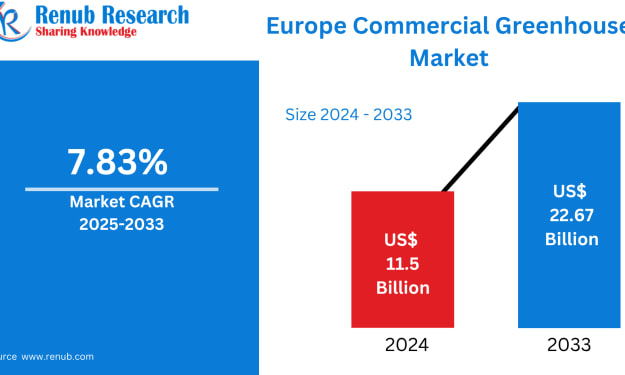
The Europe Commercial Greenhouse Market is set for dynamic expansion over the coming decade, reflecting the region’s accelerating transition toward sustainable, technology-driven agriculture. According to Renub Research, the market is projected to reach US$ 22.67 billion by 2033, rising from US$ 11.5 billion in 2024, at a robust CAGR of 7.83% during 2025–2033. This growth is being driven by increasing demand for year-round crop production, the rapid adoption of Controlled Environment Agriculture (CEA), and a strong policy push toward climate-resilient and resource-efficient farming.
By Renub Research6 days ago in FYI



Comments
There are no comments for this story
Be the first to respond and start the conversation.