
New doubts about the real "Mermaid" in history
Are mermaids real? Until now, researchers are still trying to find the answer to whether mermaids really exist as the stories circulated around the world.

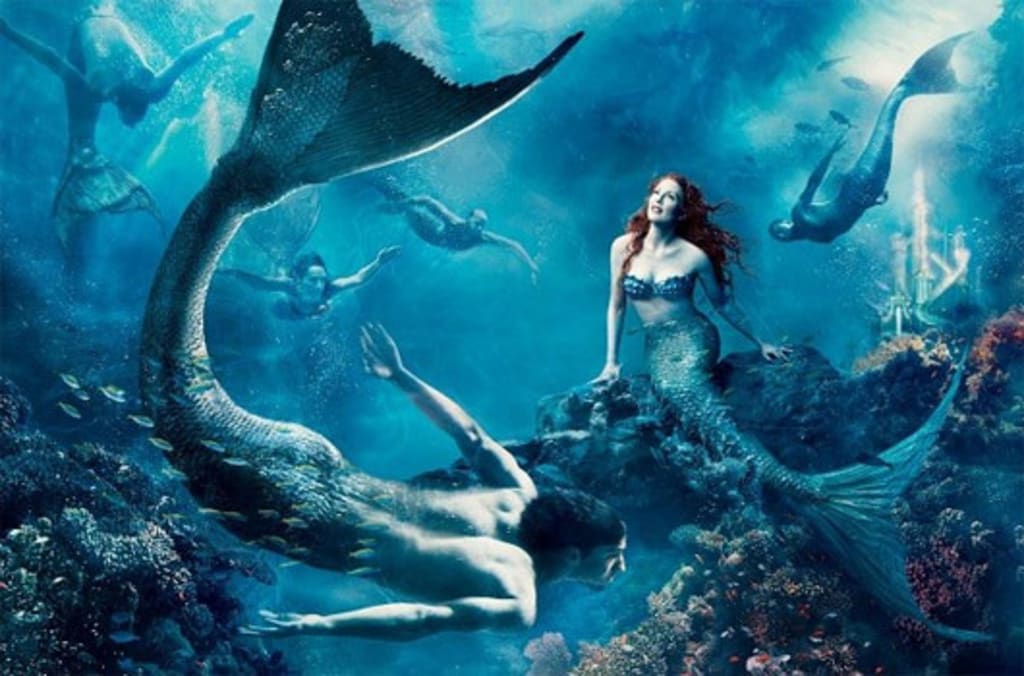
Are mermaids real? Until now, researchers are still trying to find the answer to whether mermaids really exist as the stories circulated around the world.
Anyone who has ever read Andersen's fairy tales will surely know the touching story of the beautiful Little Mermaid. Many people believe that the Little Mermaid is simply a fictional character and does not exist. However, there is a lot of evidence that proves that the Little Mermaid is real.
Recently, new evidence was also published showing the existence of the Little Mermaid when two sailors diving in the Greenland seabed suddenly discovered a white hand placed on the submarine's glass behind their backs .
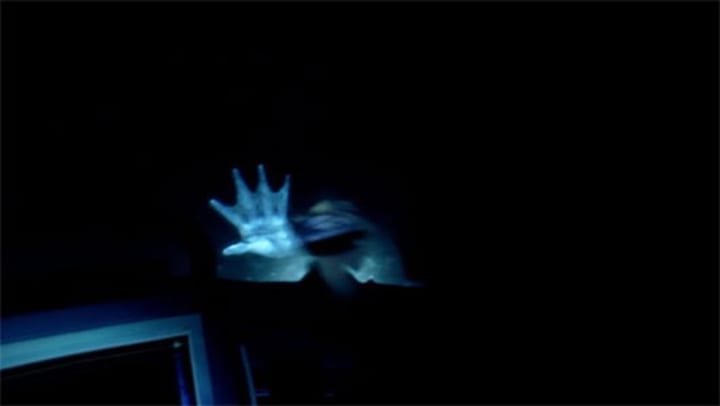
The white hand shows that the existence of the Little Mermaid is grounded.
The hand has 5 fingers, 4 of which are fused together like a webbed duck's foot. However, many people believe that the image of the hand is just a joke and is not convincing enough that the "half-human, half-fish" creature is real.
Previously, in 2012, the Animal Planet TV channel aired a program that pointed out the evidence that Mermaids are real. The program appeared as a complete documentary, with interviews with "scientists and experts" analyzing and evaluating the existence of this "half-human, half-fish" creature .
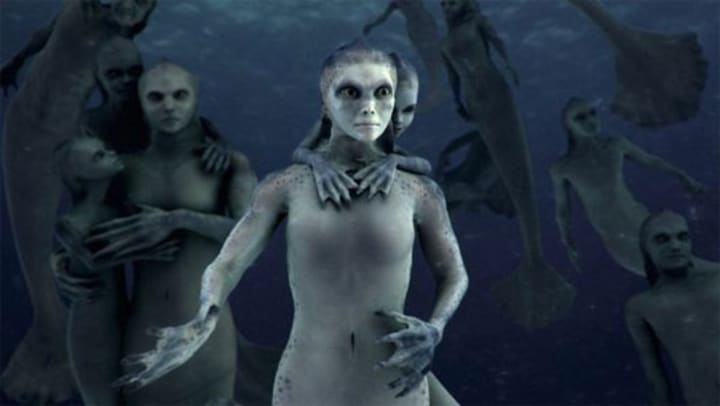
The documentary aired on Animal Planet in 2012.
However, the US National Oceanic and Atmospheric Administration (NOAA) has officially spoken out and posted a statement on its website denouncing the inaccuracies in Animal Planet's programming. And those "scientists" are paid actors on demand.
According to them, many rumors and not a little evidence in the past make mermaids one of the greatest mysteries of the ocean. Belief in "half-man, half-fish" creatures appeared right from the dawn of mankind, in cave paintings of the late Paleolithic period about 30,000 years ago, when humans began to sail to conquer the sea.
Creatures with half human form (commonly called chimeras ) have also "made waves" in many myths and legends. And since 1403, the discovery of many mermaid mummies has made archaeologists around the world extremely confused.
Mermaid Appearances in History
The first legends of the Little Mermaid date back to around 1,000 BC – a story about a Syrian goddess who jumped into a lake to transform into a fish. However, the beautiful Syrian was unable to fully transform into a fish, only her lower half. Since then, many different cultures around the world have created stories about this strange creature.
Historically, even famous explorers have said they have seen the Little Mermaid. Among them is Christopher Columbus, who said he saw the Little Mermaid near Haiti in 1493 and described her as " not as beautiful as the legends, although her face resembled a human's ".
He also noted that similar creatures had been seen several times before on the coast of West Africa.
According to the book " Speculum Mundi " published by the British Minister John Swan in 1635, mermaids seem to integrate into the life of " mortals " quite quickly. They like to wear beautiful clothes, like to walk around and listen to the ladies confide but never say a word.
The story became more and more exciting and intriguing when even the press got involved. In 1738, a London newspaper published a shocking photo proving that mermaids really existed. It was a photo of a small mermaid found on the coast of the Hebrides, but she was stoned to death because she was mistaken for a monster.
After that, she was buried carefully. The villagers also tried their best to protect the story of this mermaid. Anyone who expressed doubts, they were ready to swear to prove that it was a completely true story.
If we talk about the most famous mermaid, we must probably mention the FeeJee mermaid, a writhing creature with a hideous face and a strange shape with a length of only 525 mm, a height of 210 mm and a width of 212 mm.
First introduced to the public in 1842 in New York, FeeJee was like a miracle to the curious eyes of those who witnessed it.
Many people believe that the Little Mermaid is just a character created by the rich human imagination.
A gentleman calling himself " Dr. Griffith " guarantees that this is " a 100% real mermaid caught by a Japanese fisherman ."
Since then, the FeeJee mummy has been made into a model and has become more popular than ever. For a long time, it was displayed at the Barnum Museum as the strongest evidence to confirm that the Little Mermaid was real.
To this day, replicas of the FeeJee mermaid can be found in many places, but the original was completely destroyed in a fire that broke out at Barnum's museum in the early 1860s.
A version of the FeeJee is still preserved at Harvard University's Peabody Museum of Archaeology and Ethnology. The FeeJee was a phenomenon that left scientists at the time scratching their heads because they could not explain the existence of this strange creature.
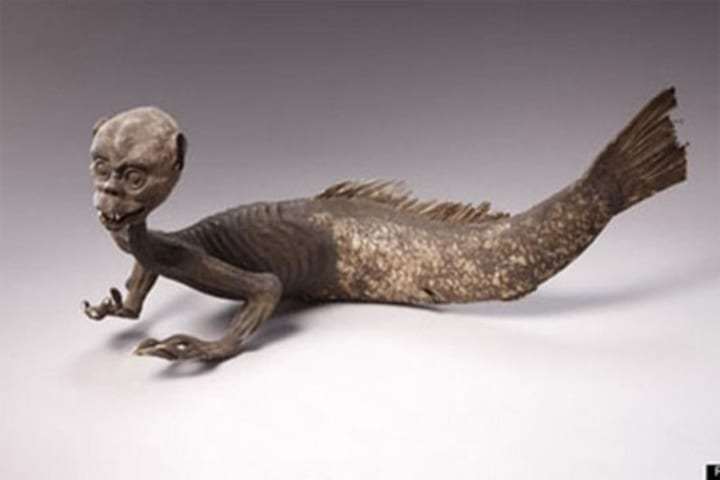
FeeJee Mummy
FeeJee's image continues to be spread in the newspapers with assertions such as " The mermaid returns ", " The mermaid is no longer a legend "... But besides that, many people still doubt the existence of mermaids, that's why FeeJee's mummy attracts more attention from researchers.
The Truth About FeeJee Mermaid Mummy
FeeJee is also known as " monkey fish " because this strange mummy has the upper body of a monkey and the lower body of a fish.
The mummy is 60 percent human in the upper half and 40 percent fish in the lower half, said Juanita Hollis, an expert at the University of Cambridge, England. This assertion gives people more reason to believe in the existence of mermaids.
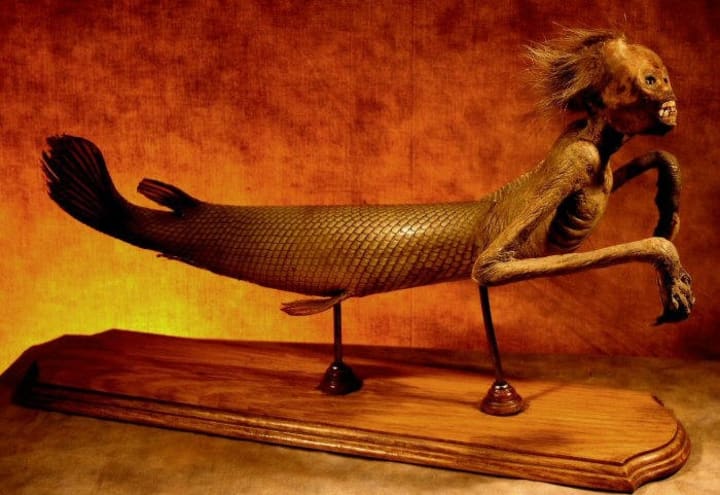
FeeJe Model.
People began to think that just as humans evolved from apes, so mermaids originated from monkey fish.
Some people even speculate that FeeJee is the last ancestor of the mermaids, who became extinct due to climate change and changes in the earth's surface.
In 2011, a research team from St George's University came to a conclusion that stunned the scientific community when it confirmed that FeeJee was actually a hoax.
It is a sophisticated implant of a monkey's body and a fish's tail. The team used advanced technology to thoroughly investigate the structure of this monkeyfish. In March 2011, they took an X-ray of the monkeyfish mummy at the Horniman Museum.
James Moffatt, a physiologist at St George's University, gave a surprising result: " We used modern technology such as CT scans, X-ray machines, microscopes and 3D printers to conduct tests. The results showed that the monkey fish mummy was actually made of paper, leaves, iron wire, clay, pieces of fish bones and chicken feet. There was not a single trace related to monkeys ."
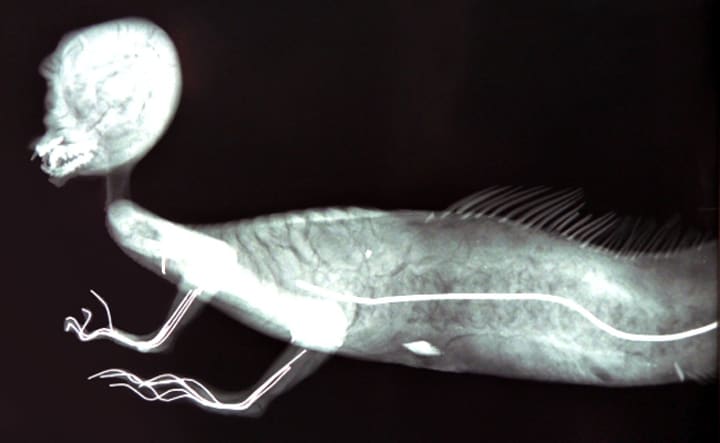
FeeJee is also known as " monkey fish " because this strange mummy has the upper body of a monkey and the lower body of a fish.
Thus, FeeJee was initially created as a lucky charm for fishermen every time they went far out to sea, but unexpectedly it became famous, making many people believe more in the existence of mermaids.
From the above announcement, scientists continue to question the authenticity of the previous stories. Are they real or not? But whether the Little Mermaid is real or not, it is still a beautiful image in the minds of many people. People still hope that one day they will see a real mermaid, not a fake mummy.
About the Creator
Ken Daklak
Telling stories my heart needs to tell <3 life is a journey, not a competition
If you like what you read, feel free to leave a tip,I would love some feedback
https://s.shopee.vn/VwwLTGLe9
Keep reading
More stories from Ken Daklak and writers in FYI and other communities.
A Planetary Alignment will coincide with Mercury Retrograde
Double phenomena in the heavens Some people say in jest that the planets have aligned in their favor when life works the way they desire. Were you aware that there are seasons when things do line up in the heavens? There will be a planetary alignment AKA a planet parade, on February 28, 2026.
By Cheryl E Preston17 days ago in FYI
How NSN Systems Improve Interoperability Among Allied Forces
Modern military operations increasingly rely on cooperation between allied nations. Joint missions, multinational exercises, and coalition defense operations require seamless coordination not only at the strategic level but also within logistics and supply chain systems. One of the most important tools that supports this cooperation is the National Stock Number (NSN) system. Developed to standardize the identification and classification of military components, the NSN system enables allied forces to share equipment resources, maintain operational readiness, and streamline procurement processes.
By Beckett Dowhana day ago in FYI



Comments
There are no comments for this story
Be the first to respond and start the conversation.