
Navigating Advanced Missile Technology: A Look at Norwegian NSM and JSM Systems
By Prajesh Majumdar

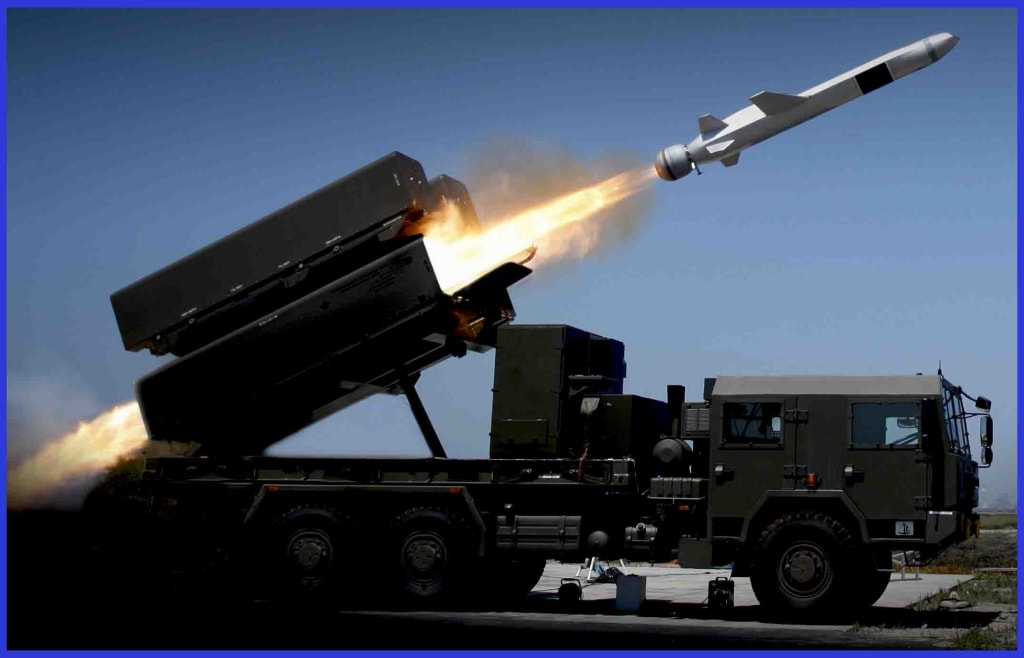
Exploring Cutting-Edge Missile Technology: Get to Know the Best of the Norwegian NSM JSM Missile Systems, manufactured by Kongsberg Defence & Aerospace (KDA). These highly advanced, precision-guided anti-ship and land-attack cruise missiles serve as the successors of the Penguin missile system. Additionally, the Joint Strike Missile (JSM) represents a multi-role, air-launched version of the NSM, currently under development by KDA in collaboration with the American company Raytheon Missiles & Defense.
At a length of approximately 3.95 meters (13 feet) and featuring partial stealth attributes, the latest NSM 1A (Naval Strike Missile) showcases an impressive range that surpasses 250 km (130 nautical miles; 160 miles). Its standout characteristic lies in its capacity to glide just above the ocean’s surface, making it exceptionally difficult for enemy radar systems to detect. This unique sea-skimming capability, combined with state-of-the-art target recognition and navigation systems, significantly enhances the likelihood of successful mission outcomes.

The NSM is compatible with a variety of naval platforms, including frigates, corvettes, and coastal defence vessels, making it a versatile choice for modern naval forces. Its ability to engage both ships and land-based targets with pinpoint precision makes it a valuable asset for maritime security and coastal defence operations. On the other hand, the Joint Strike Missile (JSM) is a multi-role air-launched version of the NSM currently in development and production. Its service with a particular nation is yet to be established, with an expected timeframe of 2023 to 2024.
Analyzing the Design of the Naval Strike Missile (NSM)
The design of the Naval Strike Missile (NSM) is a testament to its effectiveness and adaptability in modern naval warfare, especially in the 21st century, where other nations’ state-of-the-art missiles have already demonstrated a high degree of success.

Stealth and Low Observability: The NSM incorporates stealth features designed to reduce its radar cross-section and infrared signature. This focus on low observability makes it a formidable challenge for enemy radar systems to detect and track the missile, greatly enhancing its survivability during the approach to the target. The use of state-of-the-art design principles and composite materials further enhances its sophisticated stealth capabilities. Additionally, the missile’s launch system is meticulously engineered to minimize its signature, thus reducing the risk of detection during launch. These combined efforts significantly bolster the overall survivability of both the missile and its launching platform.
Sea-Skimming Capability: One of the remarkable features of the NSM is its capacity to fly very close to the ocean’s surface at low altitudes during its flight. This sea-skimming approach enables it to take advantage of natural terrain masking, remaining undetected by radar until it approaches the target, thereby enhancing its likelihood of reaching and accurately striking the intended objective. Similar to its predecessor, the Penguin missile, the NSM can traverse over and around landmasses, operate in sea-skimming mode, and execute random manoeuvres during the terminal phase, making it a challenging target for enemy countermeasures.
Advanced Target Recognition: The NSM comes equipped with advanced target recognition and discrimination systems, allowing it to distinguish among different types of naval vessels and prioritize high-value targets effectively. This capability is achieved through the integration of an imaging infrared (IIR) seeker and an onboard target database. The NSM’s navigation is supported by GPS, inertial, and TERCOM systems, further enhancing its effectiveness in navigating within a complex naval environment.
Following its launch into the air via a solid rocket booster, which is subsequently jettisoned upon burnout, the missile achieves propulsion to its target at a high subsonic speed, thanks to its turbojet sustainer engine. This propulsion leaves the 120 kg multi-purpose blast/fragmentation warhead to perform its designated task, which, in the case of a ship target, involves impacting the ship at or near the waterline.
Standard Long Range and Warhead: With a range exceeding 200 kilometres (110 nautical miles), the NSM is capable of engaging targets at extended distances, reducing the risk to the launching vessel and enhancing the standoff capability of naval forces. The missile weighs slightly over 400 kg (880 lb), and it is designed to operate effectively in littoral waters as well as open sea scenarios.
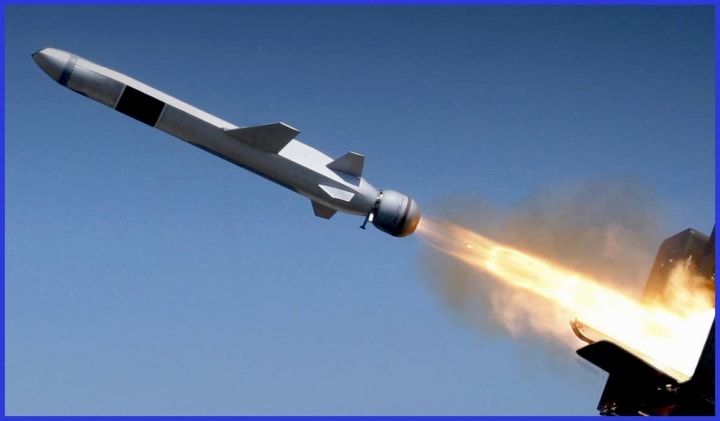
The use of a high-strength titanium alloy blast/fragmentation warhead, manufactured by TDW (a European company specializing in warhead development for guided weapons), aligns with modern lightweight design principles and incorporates insensitive high-explosive features. Warhead initiation is achieved through a void-sensing Programmable Intelligent Multi-Purpose Fuze designed to optimize effectiveness against hard targets.
Versatile Platform Integration: The NSM is intentionally designed to offer compatibility with a wide array of naval platforms, encompassing frigates, corvettes, and coastal defence vessels. This adaptability allows various naval forces to seamlessly integrate the missile into their existing fleets without necessitating major modifications. In ship installations, NSMs can be deck-mounted in configurations of one, two, three, four, or six launchers. The total installation weight, encompassing electronics and cabling, stands at 8,600 lb (3,900 kg) for 4 launchers, 17,000 lb (7,700 kg) for 8 launchers, and 26,000 lb (12,000 kg) for 12 launchers.
The NSM coastal battery comprises three missile launch vehicles (MLVs), one battery command vehicle (BCV), three combat command vehicles (CCVs), one mobile communication centre (MCC), one mobile radar vehicle (MRV) equipped with TRS-15C radar, one transport and loading vehicle (TLV), and one mobile workshop vehicle (MWV). Each MLV is capable of carrying 4 missiles and can establish connections with the CCV through optical fibre or radio, spanning distances of up to 10 km (6.2 mi). This network allows for the integration of up to 6 launchers, totalling 24 missiles, to operate cohesively at once.
"Click here to read the complete article on AirPra"

About the Creator
Prajesh Majumdar
Hi there, I'm Prajesh, the creator of airpra.com
The site is dedicated to nurturing a community of individuals with a keen interest in exploring the intricate aspects of defence equipment and related news.
Keep reading
More stories from Prajesh Majumdar and writers in FYI and other communities.
Unveiling the Best of the Penguin Anti-Ship Missile
Introducing a Maritime Marvel: Unveiling the Best of the Penguin Anti-Ship Missile. Designed primarily for naval and coastal defence applications since the 1970s and designated as AGM-119 by the U.S. military, this Norwegian passive IR seeker-based short-to-medium-range anti-ship guided missile, designed exclusively for naval use, is renowned for its precision.
By Prajesh Majumdar2 years ago in FYI
User Experience Basics - Top 15 Principles Every Designer Must Know
User experience basics form the backbone of successful digital products in today’s competitive online ecosystem 🌐. Whether you are building a SaaS platform, enterprise dashboard, AI tool, mobile app, or eCommerce website, understanding user experience basics can dramatically influence engagement, retention, conversion rates, and long-term business growth.
By Rajiv Menon2 days ago in FYI
The Forsyth House Fire
Since 1851, Forsyth House has stood on the corner of Union Street and Gordon Street in the heart of Glasgow. Its iconic, or was... because on Sunday 8th of March, 2026, a fire broke out in a small, seemingly un-named shop in the building and tore all that history down. As I write, the rubble is still unsettled and the street is still blocked off. Central Station is quiet on the upper level, and around 30 small businesses have quite literally gone up in smoke.
By S. A. Crawford3 days ago in The Swamp


Comments
There are no comments for this story
Be the first to respond and start the conversation.