
Must-Have Marketing Automation Platforms for Scaling Brands
As someone who's watched countless brands struggle with manual marketing tasks, I can tell you that the difference between companies that scale successfully and those that plateau often comes down to one thing: automation.

As someone who's watched countless brands struggle with manual marketing tasks, I can tell you that the difference between companies that scale successfully and those that plateau often comes down to one thing: automation.
When you're running a growing business, you quickly realize that manually sending emails, posting on social media, and nurturing leads simply doesn't scale. That's where marketing automation platforms come in - they're not just nice-to-have tools anymore; they're essential for any brand serious about growth.
After working with dozens of scaling brands over the past few years, I've seen firsthand which platforms deliver real results and which ones fall short. Here's my breakdown of the marketing automation tools that actually move the needle.
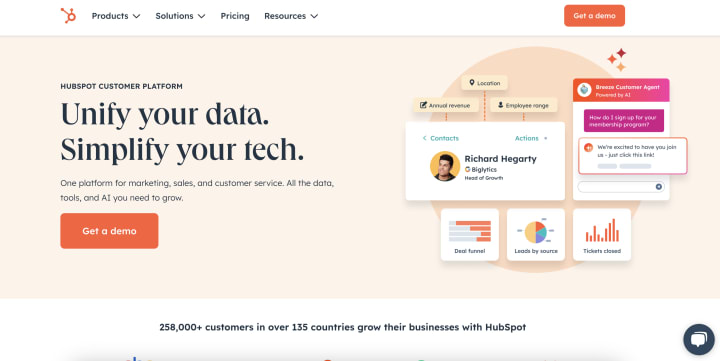
HubSpot: The All-in-One Powerhouse
Let's start with the elephant in the room: HubSpot. Yes, everyone talks about it, but there's a reason why. HubSpot isn't just a marketing automation platform-it's an entire ecosystem that grows with your business.
What sets HubSpot apart is its seamless integration between marketing, sales, and customer service. I've seen companies completely transform their operations by using HubSpot's lead scoring, email workflows, and CRM integration. The platform's strength lies in its ability to create sophisticated nurture sequences that feel personal, not robotic.
The free tier is genuinely useful for small businesses, but as you scale, the paid plans (starting around $45/month) unlock features like advanced automation, A/B testing, and detailed analytics that make the investment worthwhile.
Klaviyo: The E-commerce Email Champion
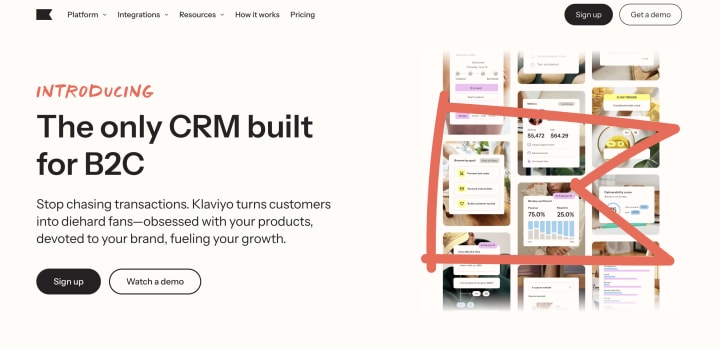
For e-commerce brands, Klaviyo is in a league of its own. This platform was built specifically for online retailers, and it shows in every feature.
What I love about Klaviyo is its predictive analytics. The platform doesn't just send emails-it predicts customer lifetime value, identifies your best customers, and creates segments that actually make sense for your business. The abandoned cart recovery alone has helped brands I've worked with recover 15-20% of potentially lost sales.
The Shopify integration is seamless, and the email templates are beautiful without requiring design skills. Pricing starts at $20/month for up to 500 contacts, which is reasonable considering the ROI most e-commerce brands see.
Mailchimp: The User-Friendly Starter
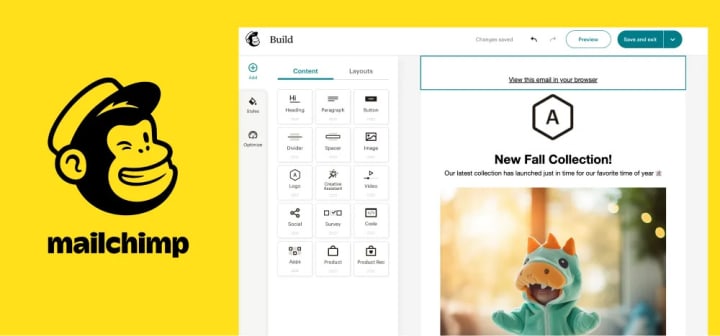
Mailchimp often gets dismissed as too basic, but I think that's unfair. For brands just starting with automation, Mailchimp's simplicity is actually a strength.
The drag-and-drop email builder is intuitive, and the automation workflows are straightforward enough that anyone on your team can set them up. I've seen many brands successfully use Mailchimp's welcome series and birthday campaigns to drive significant engagement.
The free plan supports up to 2,000 contacts, making it perfect for startups. As you grow, the paid plans (starting at $10/month) add features like advanced segmentation and multivariate testing.
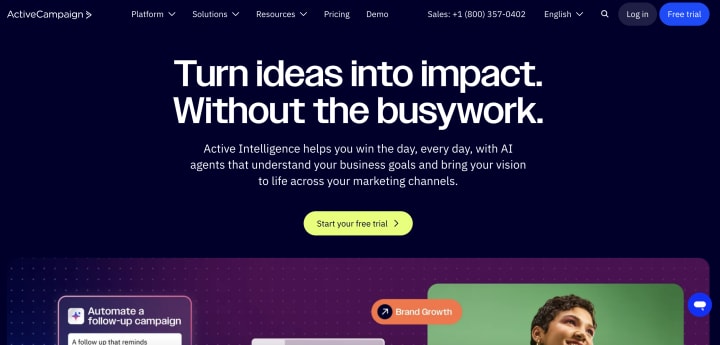
ActiveCampaign: The Automation Specialist
If you want automation that feels truly intelligent, ActiveCampaign is your best bet. This platform excels at creating complex, behavior-based workflows that adapt to how customers interact with your brand.
The conditional logic in ActiveCampaign is incredibly powerful. You can create automation that says, "If someone opens this email but doesn't click, wait 2 days then send this follow-up, but if they do click, add them to this other sequence." It's like having a personal assistant who never forgets.
The CRM integration is solid, and the machine learning features help optimize send times and content. Plans start at $29/month, positioning it between Mailchimp and HubSpot in terms of both features and price.
Pardot: The B2B Heavy Hitter
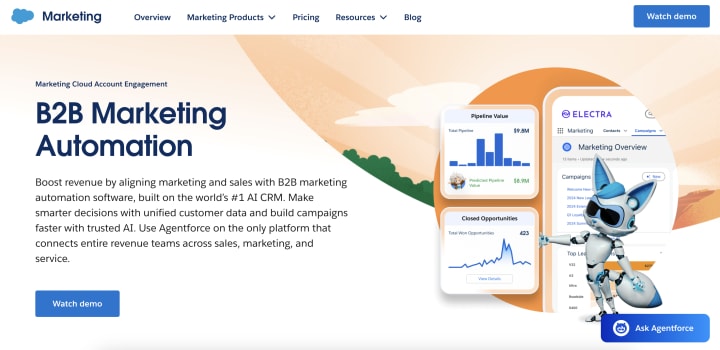
For B2B companies with complex sales cycles, Pardot (now part of Salesforce) remains the gold standard. This platform was designed for sophisticated lead nurturing and account-based marketing.
What makes Pardot special is its ability to track and score leads based on multiple touchpoints. It can tell you that a prospect visited your pricing page three times, downloaded two whitepapers, and attended a webinar—then automatically notify your sales team when they're ready to buy.
The Salesforce integration is obviously seamless, and the reporting capabilities are enterprise-grade. However, the learning curve is steep, and pricing starts at $1,250/month, making it suitable primarily for larger B2B companies.
Marketo: The Enterprise Solution
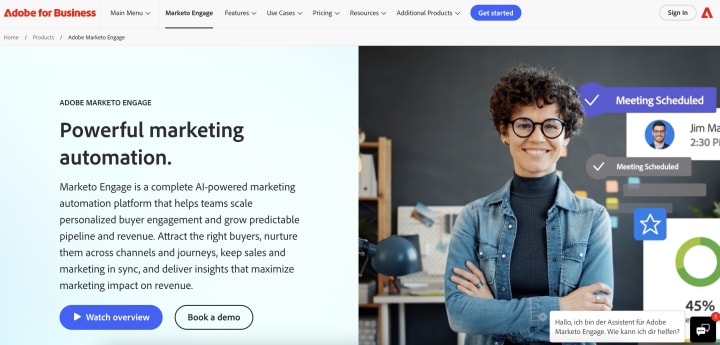
Marketo is the platform of choice for large enterprises that need serious automation horsepower. It's complex, powerful, and designed for companies with dedicated marketing operations teams.
The lead management capabilities are unmatched, and the ability to create sophisticated scoring models based on demographic and behavioral data is impressive. Marketo excels at account-based marketing and can handle the most complex B2B sales processes.
However, this power comes with complexity. Implementation typically requires consultants, and the learning curve is significant. Pricing starts around $1,000/month, making it suitable only for larger organizations.
Improvado.io: Marketing Analytics Powerhouse
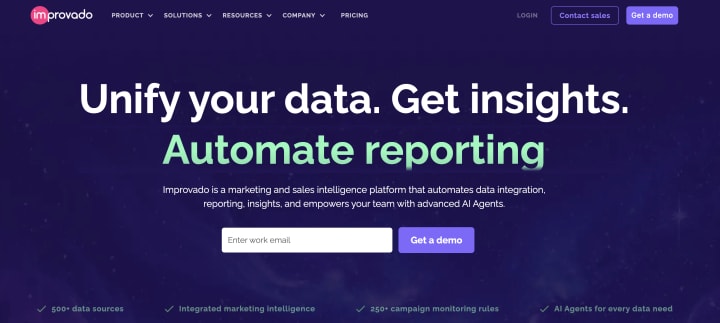
Improvado is the go-to analytics solution for mid-to-large enterprises and marketing agencies that demand robust data integration and reporting automation. Designed for sophisticated marketers, it seamlessly centralizes data from over 500 marketing and sales platforms, delivering AI-driven insights to fuel strategic decisions.
Its standout AI Agents let users query data through natural language, effortlessly creating advanced analytics reports and dashboards. Improvado shines in automating complex analytics tasks—drastically cutting manual reporting time and improving data accuracy.
Like any powerful platform, initial setup can be involved, often requiring professional onboarding. Pricing is custom, typically suited for organizations ready to leverage extensive analytics and reporting capabilities at scale.
Fera: Product Reviews Application
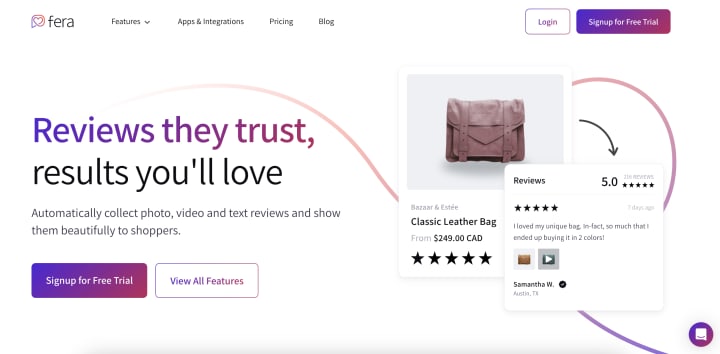
98% of consumers read online reviews before making a purchase. So the impact of product reviews on sales conversion rates for e-commerce businesses is vital in building a successful and scalable business. Here comes Fera - the platform for e-commerce businesses to turn customer feedback into a powerful marketing asset. Fera helps e-commerce stores to automatically request reviews from customers and showcase them beautifully on their website through various widgets.
What’s great about Fera is they allow you to collect not just star ratings and text reviews, but also photo and video submissions. You can directly respond to customer reviews and instead of manually chasing reviews from customers, Fera now automates the process to help stores build trust and credibility.
Fera helps e-commerce stores selling on Shopify, Wix, Big Commerce, Ecwid get started in a few clicks. No coding required. Pricing starts at $9/month, making it suitable for e-commerce stores of all sizes.
Choosing the Right Platform for Your Brand
After evaluating dozens of platforms, here's my framework for choosing the right one:
Start with HubSpot if you want an all-in-one solution that can grow with your business. It's particularly strong for B2B companies and service-based businesses.
Choose Klaviyo if you're an e-commerce brand. The specialized features for online retailers make it worth the investment.
Consider Mailchimp if you're just starting out and want something simple and affordable. It's perfect for small businesses getting their feet wet with automation.
Go with ActiveCampaign if you want powerful automation without the complexity of enterprise platforms. It's the sweet spot for mid-sized companies.
Pick Pardot if you're a B2B company with a complex sales process and you're already using Salesforce.
Select Marketo if you're an enterprise with dedicated marketing ops resources and need maximum flexibility.
Choose Improvado if you're a mid-to-large enterprise or agency seeking powerful analytics automation, robust data integration, and AI-driven insights at scale.
Go with Fera if you’re an e-commerce brand looking to increase social proof through reviews.
The Bottom Line
Marketing automation isn't just about sending emails—it's about creating systematic, scalable processes that nurture relationships and drive growth. The right platform can be the difference between a brand that struggles to scale and one that grows exponentially.
The key is to start with your specific needs and growth trajectory in mind. A platform that works for a startup might not work for a scaling company, and what works for B2B might not work for e-commerce.
Don't get paralyzed by choice. Pick a platform that matches your current needs with room to grow, implement it properly, and start automating. Your future self will thank you for making the leap.
Frequently Asked Questions
Q: How much should I expect to spend on marketing automation?
A: Budget depends on your business size and needs. Small businesses can start with free tiers (Mailchimp) or low-cost options ($20-45/month for HubSpot or Klaviyo). Mid-sized companies typically invest $200-500/month, while enterprises might spend $1,000-5,000/month or more. Consider it an investment-most brands see 3-5x ROI within the first year.
Q: Which platform is best for beginners?
A: Mailchimp is the most beginner-friendly, with an intuitive interface and extensive educational resources. HubSpot is also excellent for beginners due to its comprehensive onboarding and HubSpot Academy. Both offer free tiers to get started without financial commitment.
Q: Can I switch platforms later if I outgrow my current one?
A: Yes, but it requires planning. Most platforms offer migration tools and services. HubSpot and ActiveCampaign have particularly good import tools. Plan for 2-4 weeks of transition time and consider running both platforms in parallel initially to ensure smooth migration.
Q: Do I need technical skills to use these platforms?
A: Not necessarily. Mailchimp, HubSpot, and Klaviyo are designed for non-technical users. ActiveCampaign requires some learning but is still manageable. Pardot and Marketo typically require more technical expertise or dedicated marketing ops personnel.
Q: How do I measure ROI from marketing automation?
A: Track key metrics like email open rates, click-through rates, conversion rates, and revenue attribution. Most platforms provide built-in analytics. Focus on metrics that tie directly to revenue: cost per acquisition, customer lifetime value, and overall marketing-influenced pipeline.
Q: Should I integrate my automation platform with my CRM?
A: Absolutely. CRM integration is crucial for lead scoring, sales alignment, and comprehensive customer journey tracking. HubSpot includes CRM functionality, while others integrate well with Salesforce, Pipedrive, or other popular CRMs.
Q: How long does it take to see results from marketing automation?
A: Basic campaigns can show results within 2-4 weeks, but sophisticated automation typically takes 3-6 months to optimize fully. The key is consistent testing, refinement, and patience. Most brands see significant improvements in efficiency within the first month and revenue impact within 3 months.
About the Creator
Laslo Povanych
Laslo Povanych is a guest post writer specializing in B2B, SaaS, marketing, and customer service. With a passion for creating actionable, insightful content, he helps brands connect with their audience, build authority, and drive growth.
Keep reading
More stories from Laslo Povanych and writers in FYI and other communities.
Top AI Tools That Reduce Workplace Stress and Boost Productivity
In today's fast-paced business environment, the pressure to perform can take a serious toll on employee well-being. A 2024 Gallup report revealed that 44% of employees worldwide experience daily stress at work. As companies grapple with burnout and disengagement, artificial intelligence (AI) is emerging as a surprising ally in the fight for better mental health and productivity.
By Laslo Povanych9 months ago in FYI
Water wells the key of our future
The average lifespan of a water well ranges from 25 to 40 years if it has carbon steel piping. Other steel alloys can increase the well's durability; however, a crucial point is sustainability. This means that over the years, the well continues to provide a constant and sustainable flow of water. To achieve this, it largely depends on the underground aquifers not being overexploited and on the recharge rate being greater than or equal to the extraction volume. However, today most aquifers are overexploited due to the large amount of water extracted each year. Another important factor that will ensure the sustainability of water wells is the periodic maintenance that the user must perform to keep them free of sediment and at their full depth. This includes minimizing corrosion of the steel casing pipe, thus extending its lifespan. Continuous monitoring of static and dynamic water levels in the well is also crucial, as is annual water quality analysis to identify any potential partial or total aquifer contamination.
By Ximena Ramireza day ago in FYI




Comments
There are no comments for this story
Be the first to respond and start the conversation.