
Modern Interpretations of the Traditional Stone Arch in Architecture
Evolution of the Stone Arch: From Ancient Engineering to Modern Design

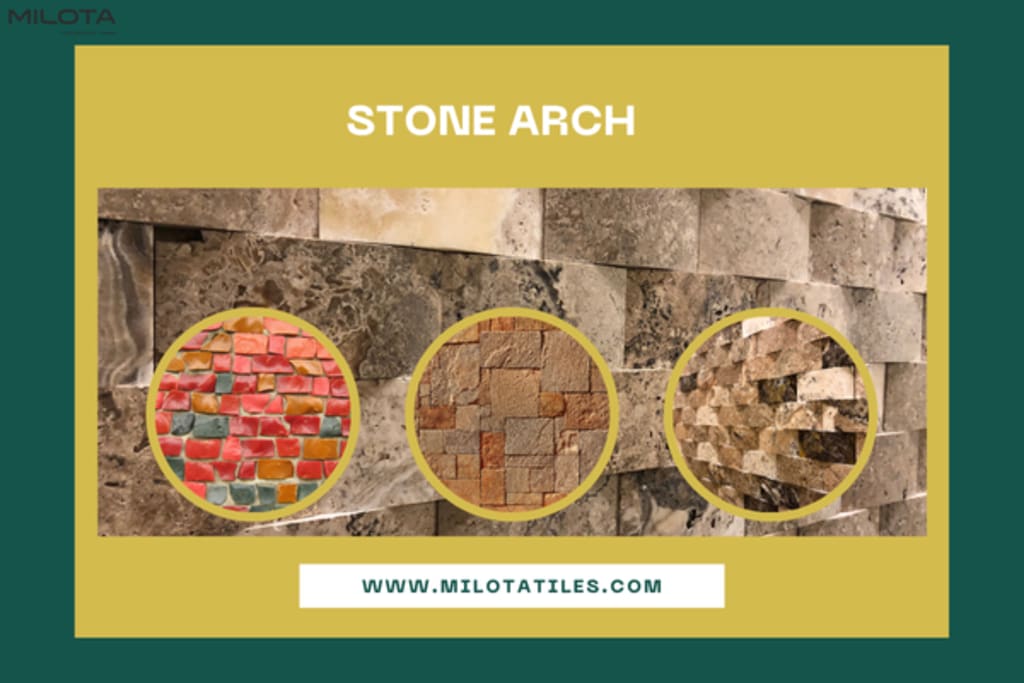
The Stone Arch is one of the most enduring and evocative architectural elements in human history. From Roman aqueducts to Gothic cathedrals, from grand gateways in Mughal forts to rustic barn doorways, the arch has long provided both structural strength and symbolic beauty. In today’s architectural landscape, the traditional stone arch is being reimagined in ways that respect its heritage while pushing boundaries. Modern interpretations blend artistry, innovation, and material technology to preserve the arch’s timeless appeal, often integrating natural stone and natural stone tiles for both wall and floor applications.
For brands like Milota Tiles and projects inspired by their Stone Arch collection, these reinterpretations offer rich opportunities: combining authenticity with modern design trends, creating interior and exterior features that feel both rooted in tradition and contemporary in execution. This article explores how traditional stone arches are being reinvented, the role of natural stone and stone tiles in this evolution, the design strategies, technical considerations, and inspiring examples that illustrate where the arch is headed.
Origins & Essence of the Stone Arch
Before exploring modern reinterpretations, it helps to understand what makes the stone arch such a powerful architectural form.
- Structural intelligence: The arch turns vertical loads into compression forces, distributed through wedge-like stones (voussoirs) toward supports. This allows spans over wider openings without requiring large lintels. The keystone locks the arch together, making it stable and durable.
- Material qualities: Historically, arches were built using natural stone types like limestone, granite, sandstone, marble. These stones offered durability, resistance to weather, natural beauty of texture and color, and—depending on the stone—varying levels of polish or roughness.
- Symbolism and beauty: Arches signify transition (doorway, gateway), grandeur, permanence. They form rhythmic patterns in façades, offer inviting entrances, carry light and shadow in compelling ways. Even when not structurally necessary, arch shapes are used to evoke nostalgia, elegance and architectural gravitas.
These core traits are what designers today draw on when reinterpreting arches: strength, beauty, symbolism, craftsmanship, and the interplay of light and texture provided by stone.
Why the Stone Arch Sees a Modern Revival
The resurgence and reinterpretation of the traditional stone arch in modern architecture isn’t just nostalgia. Several converging factors make it relevant:
- Authenticity and material truth: In contrast to synthetic surfaces and mass-produced elements, natural stone still carries uniqueness — veining, variation, texture. When paired with minimalism or modern detailing, stone gives a sense of grounded authenticity.
- Sustainability: Well-quarried natural stone has a long lifespan, low maintenance, and often lower embodied energy (especially if sourced locally). Using stone tiles instead of heavy masonry also reduces material transport, structural load, and waste.
- Technology and fabrication: Modern cutting, machining, CNC, CAD/CAM tools allow precision carving, shaping, and assembly of stone. This enables arches to be built more efficiently, or approximated using mosaic or tile pieces.
- Blending old and new aesthetics: Many modern architectural projects want to combine the warm, textured, human scale of traditional stone work (arches) with sleek glass, steel, open spaces. Arches help mediate between the past and present in visual experience.
Versatility: The arch form can be structural, decorative, symbolic. It can function as a full load-bearing element or be adapted as ornament, niche, portal, frame. Natural stone tiles make many of these applications feasible.
Modern Interpretations: How Designers are Reimagining the Stone Arch
Modern interpretations take many forms. Here are some ways designers and architects are reworking the traditional stone arch in contemporary settings:
Decorative & Framing Arches
Rather than constructing full masonry arches, many designers use arch shapes as frames—over doorways, windows, walkways, feature walls. The arch may not carry weight, but it provides visual alignment, rhythm, and charm. In those cases, the curve of the arch is often accentuated by choice of stone or tile material. Natural stone tiles for wall cladding around these frames draw attention to texture, depth, and shadow. Using rough or split stone adjacent to smoother surfaces helps the arch stand out.
Arch Motifs in Wall & Ceiling Details
Arches show up in niches, vaulted ceilings, arcade-like corridors, and transitional zones inside buildings. For example, an interior corridor might have a series of shallow arches embedded in the side walls, each arch faced with natural stone tiles or slabs. The focus is no longer just on load-bearing masonry, but on spatial experience: how the arch shapes perception of space, light, sound.
Portal & Entrance Features
Modern entrances benefit from arches in façades: grand arch entrances clad in stone, or portal frames with arch shapes surrounded by glass or steel. These features often use natural stone for the arch, with natural stone tiles for floor in the threshold or entry hall so that the material continuity helps mediate between outside and inside. Floor tiling in arch shapes or radial patterns under archways enhances the drama and arrival experience.
Minimalist & Abstract Arches
Some architects take the arch and strip it down: no ornament, clean curves, minimal depth. The arch might be very thin or suggested via tile pattern rather than built form. For instance, an arch line embedded in a wall of stone tiles. Or a thin stone veneer arch‐frame over glass or open space. Here the elegance of natural stone tiles for wall lies in subtle texture and color variation, and precision of edge and joint work.
Hybrid Material Arches
Traditional stone arches were built entirely from stone. Modern ones are hybrid: stone plus steel, concrete, glass. Sometimes steel frames are clad in stone, or hidden steel support lies behind masonry-looking stone surfaces. This allows for much larger spans, thinner stone faces, or greater openness (larger windows) while keeping the stone aesthetic. For example, an arch might frame a large window wall, with the arch built in stone or stone veneer, and the wall infill of glass to let light penetrate.
Sculptural & Landscape Arches
In public spaces, landscape architecture, and art installations, arches become sculptural gestures rather than purely architectural components. Stone arches built as freestanding art, as gates in gardens, or as garden pergolas. Grounds around them may be paved with natural stone tiles for floor in circular patterns, or pathways that respect the arch’s curve visually. These installations emphasize texture, light, and setting as much as material.
Role of Natural Stone & Natural Stone Tiles
The presence of natural stone and natural stone tiles is central in the modern reinterpretation of the arch. Without the properties of these materials, much of the arch’s experiential value would be lost. Here’s how:
Types of Natural Stone & Their Finishes
Different stone types bring different qualities: marble offers polish, grandeur; limestone gives warmth, softness; sandstone offers color variation; granite gives durability and ruggedness; slate offers texture and depth. Finish matters: polished vs honed vs brushed vs split face vs rough cut. Rough textures create shadow, depth; smoother finishes reflect light, feel more formal.
When designing a modern arch, the selection of stone type and finish influences mood: a rugged split stone arch might evoke rustic, vernacular architecture; a soft limestone or honed marble arch might feel luxurious or formal; textured stone that plays with natural irregularities feels deeply organic.
Natural Stone Tiles for Wall: Cladding & Features
Walls surrounding or framing arches are often clad in natural stone tiles for wall. Tiles allow greater flexibility than massive stone blocks: easier to handle, shape, install; thinner; can accommodate curves more flexibly. In arch features, wall tiles can highlight the curve, provide consistent color/texture transitions, act as backdrop for lighting. Designers often use larger format tiles for flatter wall surfaces and smaller/mosaic tiles for curved or more detailed arched regions.
Natural Stone Tiles for Floor: Layout & Continuity
The flooring around an arch is often overlooked but plays a key role. Using natural stone tiles for floor that match or complement the arch material can reinforce the arch’s presence. Layouts that echo the arch — radial patterns, semi-circular motifs, concentric inlays under arch thresholds — help the floor become part of the design story. Also, the texture and durability of natural stone tiles for floor are important: entry areas often get heavy use, so finishes must resist slipping, staining, and wear.
Harmonizing Wall & Floor Tile Work
One of the most impactful modern interpretations comes when the wall and floor tile work around the arch are designed together: matching tones, complementary textures, transitions of tile size, pattern or orientation that guide the eye from floor up through arch to wall and ceiling. Rather than having the arch appear as an isolated element, this integrated approach creates immersive experience: you walk through a space acknowledging the arch, its form, its material, its story.
Visual & Sensory Experience: Light, Shadow, Texture, Scale
Beyond materials and form, modern interpretations exploit light, shadow, texture, and scale in ways that amplify the experience of the stone arch.
- Light and shadow interplay: Curved surfaces cast shadows that shift with the sun; recessed stone work and natural stone tiles with relief or texture exaggerate shadow patterns. In interiors, daylight passing through arch windows or doorways changes throughout the day, bringing the stone arch to life.
- Texture contrast: Combining smooth and rough surfaces (e.g. honed stone next to split face or rough‐cut stone) draws attention to form. Natural stone’s variations—veins, mineral inclusions, fissures—become features rather than flaws.
- Scale: Arches don’t need to be monumental to be impactful. In residential architecture, a modest arch in an interior wall or niche can create a sense of transition or ceremony (for example, arch between living and dining space; arch over fireplace). In public space, large scale arches create focal points or landmarks.
- Tactility and sound: Natural stone has a weight, a density, a feel. Walking on stone-tiled floor, touching stone surfaces around arches, hearing sound echoes through arch‐framed spaces — these sensory experiences root people in the architecture.
Technical & Practical Considerations
When interpreting the traditional stone arch in modern architecture, there are practical challenges and technical considerations. Getting these right is what separates successful projects from beautiful but flawed ones.
- Support & load bearing vs decorative: If an arch is structural, stone must be able to withstand load; supports (abutments), foundations, possibly hidden reinforcement may be needed. If decorative, stone veneers or tile work must still be properly supported and anchored, especially in curved regions.
- Curved geometry & cutting: Stone or tile must often be cut to follow the curve of the arch. Precision in stone cutting or waterjet / CNC cutting of tile pieces or thin stone veneer is essential to ensure continuity of curve, even joints, consistent depth.
- Weight & material thickness: Natural stone is heavy. If using thick stone blocks, weight adds up; for decorative arches, thinner stone tiles or veneers reduce load. Flooring under arches must handle load and wear; adhesives and substrates must be chosen appropriately.
- Tile adhesion and substrate preparation: For natural stone tiles for wall, proper substrate, adhesives, backing are required. For arches or curved surfaces, extra care in supporting tiles so they do not slip or crack. For natural stone tiles for floor, substrate must be sturdy and flat, allowing for expansion, movement, moisture.
- Weathering, moisture, sealing: Natural stone is porous to varying degrees. Outdoor arches or those in moisture-exposed environments need sealing, drainage, frost resistance. Finish selection matters (some finishes grip moisture; some are smoother and need sealing for protection).
- Maintenance and aging: Natural stone changes over time — patina, slight discoloration, wear. Designers often choose stone types and finishes that age gracefully. Tile selection influences ease of cleaning and maintenance.
Examples & Inspiration
Here are some illustrative modern projects and conceptual examples that show how designers are applying these principles. While not all are stone-arch-heavy, they illustrate how arch forms and stone tile work combine.
- Sculptural installations of arches in natural stone: Some public art or plaza installations use stacked limestone or other stone blocks to form freestanding arches. These serve as visual landmarks rather than structural gateways. The texture and natural stone grain become part of the expression. Importance of stone tiles for wall or nearby wall cladding, and stone tile flooring under and around the arch, help ground the form visually.
- Modern homes with simplified stone arch entrances: Contemporary residences in Mediterranean or desert climates often feature one large arched entrance portal clad in stone or stone veneer. Flanker walls may be smooth plaster or glass, but the arch portal in natural stone anchors the façade. In interiors, accent walls around that arch may use stone tiles for wall in matching or complementary tone. Floors at the entry may have natural stone tiles for floor that integrate with the arch’s material.
- Commercial / hospitality spaces: Luxury hotels, restaurants, spas are using arch forms behind front desks, in lobby zones, or in dining areas. The arches might be framed in stone or tile, backed by recessed lighting to accentuate the curve. Walls clad with stone tile, floors in matching or harmonizing stone tile, sometimes with inlays echoing the arch shape.
- Adaptive reuse and restoration with modern reinterpretations: Old buildings with original stone arches are being renovated; designers often preserve original arches and then incorporate new materials like stone tile walls / floors to bridge old and new. For example, an old stone arch gateway restored, then inside the arch area, floor tiling in modern stone tile with radial pattern underfoot, and wall cladding behind arch with stone tile that highlights its texture.
- Landscape architecture: Gardens, courtyards and outdoor paths incorporate archways that are decorative or functional (gates, pergolas). Stone arches in open air, paired with paving of natural stone tiles for floor, sometimes with circular or semi-circular paving aligned with the arch. Wall tiles or stone cladding in nearby walls echo the arch to maintain harmony.
The Milota Tiles Stone Arch Collection: Modern Applications
Brands like Milota Tiles are uniquely positioned to supply materials that align with modern reinterpretations. Their Stone Arch collection offers several features that make it suitable for architects, designers, and homeowners wanting the arch look with contemporary performance.
- Material and finish authenticity: Natural stone aesthetics — texture, color, pattern, variation — are fundamental to the Stone Arch collection. These qualities let arches clad in these tiles feel genuine, not synthetic.
- Versatility in tile formats: Stone Arch collections often come in multiple sizes and shapes. Smaller tiles are better for curved and detailed regions, arch frames, niches. Larger tiles suit flatter surfaces, large walls and contiguous surfaces, or floor expanses. Having options helps align with both decorative arches and structural/articulation-rich arches.
- Suitable for wall and floor use: Many collections are rated or suitable for both interior and exterior applications; natural stone tiles for wall installations around arches or adjacent walls; natural stone tiles for floor in entry halls, thresholds, outdoor paving. Using the same or complementary tiles ensures consistency.
- Durability, finish, technical performance: Modern designs need materials that resist moisture, staining, friction. Stone Arch tiles that are slip-resistant, properly sealed, with robust adhesion, are better suited for arch installations that see traffic, water exposure, or weather.
- Design harmony: The ability to pair wall and floor tile variations from the same collection helps maintain design coherence. For example, an arch portal clad with Stone Arch-collection wall tile, with matching or harmonizing floor tile underfoot capturing radial or semi-circular pattern, creates unity.
Design Strategies for Applying Modern Stone Arches
To successfully bring modern arch interpretations into your project, here are practical strategies:
- Determine whether the arch is structural or decorative early in design. If structural, engineer accordingly. If decorative, veneer or tile may be used, lighter materials, hidden supports.
- Select stone types and finishes that match your design mood. Rough textures for rustic, natural finishes; honed or polished for formal or luxurious; soft colors for serene spaces; bold veining for dramatic moments.
- Use natural stone tiles with appropriate sizes and shapes to follow curves smoothly and avoid awkward cuts or misaligned joints. Smaller or mosaic tiles help with tighter curves. Larger tiles for broad areas.
- Design floor patterns that echo the arch. Radial or semi-circular inlays under arch portals; thresholds that mirror arch shape; transitions in tile orientation that lead visitors through the arch.
- Lighting as an accent. Both natural light (windows, skylights) and artificial light (recessed, uplight, backlight) can emphasize the curvature, texture, and depth of the arch and stone surfaces.
- Contrast and complementary surfaces. Pair the arch’s stone with other materials like plaster, glass, steel, or wood to highlight its form. Use contrasting finish (rough vs smooth) or color (stone arch lighter or darker than surrounding materials) to make the arch pop.
- Detailing matters: joint widths, edge profiles, grout color, sealing – these small things influence perception heavily. For example, matching grout to stone color for seamless look; using tight, clean joints for modern minimal aesthetic; selecting non-slip finish for floor tiles.
Challenges & Solutions
Translating traditional stone arches into modern buildings comes with some challenges, which must be addressed carefully.
One such challenge is geometry and cutting. To get a smooth curve, stone or tile must be cut precisely. If curved surfaces are irregular, joints can be wide or misaligned which breaks the visual effect. The way around this is to use smaller tile pieces where needed, select stones with similar thickness, and use modern cutting tools.
Another issue is weight and structural load. Natural stone is heavy. If the arch is load bearing, foundational and support design must account for this. If decorative, the weight still matters — heavy stone veneers or thick slabs need secure fixings. Using stone tiles or thin veneer surfaces reduces weight while retaining aesthetic.
Moisture and weather can degrade stone or stain it, or degrade tile grout. For outdoor arches or arches near water, using stone with good weather resistance, sealing where needed, providing drainage so water doesn't collect at joints, and choosing finishes that are forgiving to moisture is important.
Cost can be significant: stone, especially natural stone, and custom cutting, may cost more than synthetic alternatives. But designers often justify the cost through durability, appearance, value over time, and the way stone arches become architectural highlights.
A Vision Forward: What’s Next in Arch Reinterpretation
Looking ahead, there are promising directions in which modern stone arch reinterpretation is moving.
- Parametric and digitally-designed arches: Using algorithmic design to generate arch forms that optimize curve, strength, aesthetics, and that can be prefabricated or assembled with precision stone segments or tile modules.
- Prefabricated stone arch modules: Components built off-site—pre-cut or pre-assembled arch segments that can be mounted on site—reducing costs, waste, and construction time.
- Hybrid materials and lightweight veneers: Stone veneer over lighter cores, or composites that look like natural stone but reduce weight and enable more daring spans.
- Sustainable sourcing and reclaimed stone: Stone that is recycled or reclaimed from older structures; sourcing stone closer to project site to reduce carbon footprint. The patina of aged stone adds character.
- Interactive lighting and texture: Advances in lighting, projection, or materials that change over time (e.g. weathering or aging intentionally) to make arch surfaces dynamic. Light sensors, LED accents, backlighting behind stone tile work to emphasize curves and textures.
- Interior arch motifs in non-traditional spaces: Offices, galleries, retail. Using arches not just in façade or entrance, but in lobby transitions, signage, partitions. Using natural stone tiles for wall and natural stone tiles for floor in those contexts to carry the arch motif through the entire spatial experience.
Conclusion
The Stone Arch, once purely a structural necessity, has evolved into a rich architectural language. In modern architecture, reinterpretations of the stone arch celebrate its heritage while exploring new material, form, and spatial possibilities. Key to this evolution are natural stone and natural stone tiles — as materials that preserve texture, variation, beauty, and durability. Applications of natural stone tiles for wall and natural stone tiles for floor allow both dramatic feature moments and integrated continuity throughout spaces.
For those working with Milota Tiles’ Stone Arch collection, these modern reinterpretations offer many paths: from grand portal entrances to interior niche arches; from rustic textures to polished minimalism; from public art to private home features. When well designed—with attention to proportion, material, finish, light, and context—the stone arch continues to be more than a structure; it is a narrative element that connects past, present, and future.
About the Creator
Milota Tiles
Milota Tile is a proud venture of the Milota Group, rapidly emerging as a leading name in the manufacturing, distribution, and export of premium ceramic and porcelain tiles under the MILOTA brand.
Keep reading
More stories from Milota Tiles and writers in FYI and other communities.
Materials Matter: Choosing the Right Stone for Your Arch
From the grand Roman aqueducts to the intricate arches of Moroccan palaces, the Stone Arch has stood for centuries as a symbol of strength, artistry, and architectural excellence. Its appeal lies not only in its structural ingenuity but also in the natural beauty of the materials that compose it. The choice of stone defines the arch’s visual character, durability, and emotional resonance within a space.
By Milota Tiles5 months ago in FYI
Oil Prices and the Hidden Struggles Behind Global Energy
Oil prices influence daily life in ways many people rarely notice. From the cost of gasoline at the pump to the price of food in grocery stores, shifts in oil prices ripple through the global economy. A sudden rise can strain family budgets, while a sharp drop can shake entire industries. Behind these changes are complex forces such as political tension, supply shortages, economic growth, and environmental concerns. Yet for many people, oil prices remain a distant headline rather than a personal story. The truth is far more connected to everyday life. Understanding how oil prices move, why they change, and who feels the impact most can reveal a deeper picture of the modern world and the fragile balance that keeps global energy flowing.
By Muqadas khan7 days ago in FYI
A Transparent Look at Vocal Challenges and Top Stories
Almost three years ago, we shared a resource article that served as a place for people to suggest new challenge prompts. We thought it would be a good idea to refresh that thread, and take the opportunity to answer a few common questions about top stories, how challenges are judged and how submissions are reviewed.
By Vocal Curation Team4 days ago in Resources




Comments
There are no comments for this story
Be the first to respond and start the conversation.