
Miracle on the Hudson: The Harrowing True Story of Flight 1549
When all hope seemed lost at 3,000 feet, one man’s calm and courage turned a doomed flight into an unforgettable miracle...

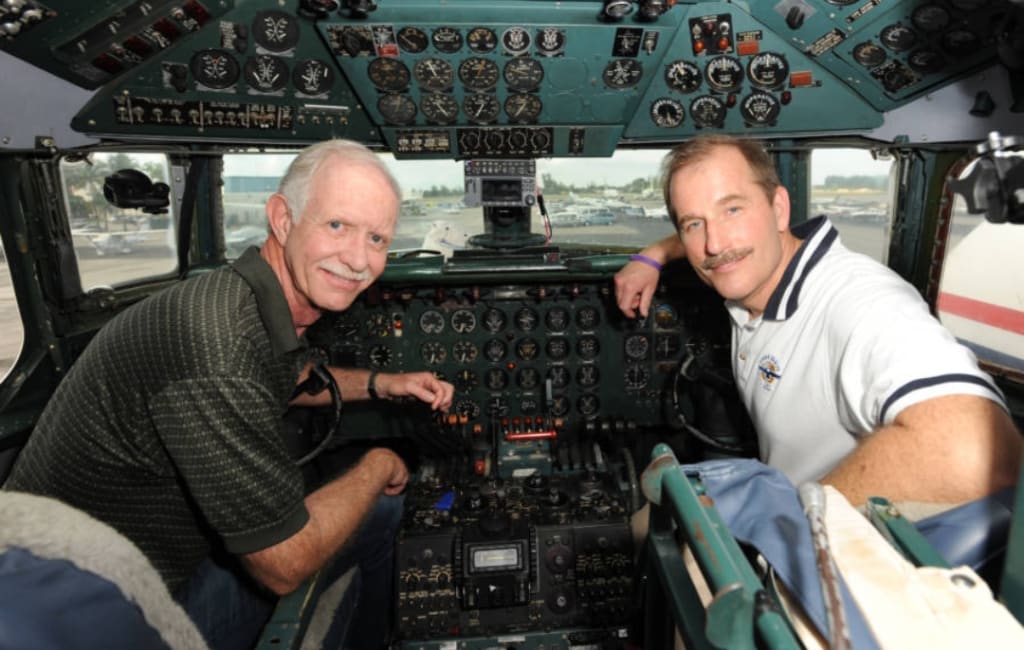
January 15, 2009 — a day like any other in New York City. Cold winds swept through the boroughs, and the Hudson River flowed silently under grey winter skies. At 3:25 PM, US Airways Flight 1549, an Airbus A320, took off from LaGuardia Airport, bound for Charlotte, North Carolina. Onboard were 150 passengers and five crew members, including Captain Chesley “Sully” Sullenberger and First Officer Jeff Skiles.
For the first two minutes, everything was normal. Skies were clear, communication was steady, and the aircraft climbed smoothly. But at exactly 2 minutes and 7 seconds into the flight, at an altitude of 2,800 feet, the unimaginable happened.
A flock of Canada geese slammed into the aircraft, disabling both engines in an instant. A thunderous silence fell inside the cockpit — the engines had gone completely dead. No thrust. No power. No second chance.
---
🧠 Decisions in Chaos
The cockpit, once full of humming machinery, now echoed with only the voices of two men making the most critical decision of their lives. Captain Sully radioed calmly, “We’ve lost thrust in both engines… we’re turning back towards LaGuardia.”
Air Traffic Control scrambled. Options were tossed: “You can try LaGuardia… or Newark… or Teterboro.”
Sully’s eyes scanned the skyline. His instincts — trained over decades — told him the ugly truth: they wouldn’t make it to any runway.
He looked to the left. The Hudson River stretched like a silver ribbon between concrete towers.
He spoke firmly:
“We’re gonna be in the Hudson.”
The decision was terrifying. No commercial aircraft had ever successfully executed a water landing in a river. The odds of survival? Practically none.
But Sully was not like most men.
---
🌊 Impact Without Explosion
At 3:31 PM, just under six minutes after takeoff, Flight 1549 struck the surface of the Hudson River at around 140 knots. The nose of the plane tilted upward slightly, absorbing the blow. The fuselage groaned but didn’t break. The water, instead of becoming their grave, cushioned them — barely.
Inside, screams. Cold air. Water rushing in.
Flight attendants rushed to open emergency exits. Inflatable slides deployed, doubling as life rafts. Passengers — dazed, panicked, and wet — stumbled out onto the wings, the rafts, or into the freezing water.
And yet, no fire. No explosion. The plane floated.
Within minutes, ferries, NYPD boats, and Coast Guard vessels swarmed in — pulled people from water and wings like angels in uniforms.
When the last passenger was evacuated, Captain Sully walked the entire cabin — twice — to make sure no one remained. Only then did he exit, the last man to leave the sinking plane.
---
👨✈️ A Hero, Not a Showman
In the hours and days that followed, Captain Sully became a national icon. His calm voice, stoic face, and precise actions were replayed on news channels across the globe. But to him, he had just done his job.
He would later admit to battling PTSD. The landing played in loops in his mind. He questioned everything: Could I have made it to LaGuardia? Was ditching the only option?
Flight simulations later showed that a perfect immediate return to LaGuardia might have been possible — but only if the decision was made within 20 seconds of the bird strike. Sully had taken 35.
But the NTSB concluded that given the real-world uncertainty, lack of altitude, and time needed to assess the situation, his choice was the safest. They called it:
“The most successful ditching in aviation history.”
---
🌍 Survivors Who Were Changed Forever
Among the passengers, stories of transformation followed.
A young couple who had postponed their wedding finally got married after surviving the crash.
A man who had never swum before told reporters he’d always feared water — now, he embraced every moment of life.
Two strangers who met during the evacuation would go on to start a relationship — bonded by the moment that nearly ended them.
People on that plane re-evaluated their lives, their priorities, their definitions of miracles.
---
🏆 Legacy That Floated Above Time
Sully and First Officer Skiles received heroic honors, including the Master’s Medal from the Guild of Air Pilots.
The aircraft, recovered mostly intact, now rests at the Sullenberger Aviation Museum in Charlotte, North Carolina — not repaired, not polished — but preserved with all the scars of that fateful flight.
In 2016, Clint Eastwood directed the film “Sully”, starring Tom Hanks as Captain Sullenberger. The movie brought this miracle to a new generation, showing that true heroism lies in quiet competence and selfless duty — not theatrics.
---
💡 Why This Story Still Matters
It’s not just a plane crash story — it’s a human story.
It proves that calm minds can save lives under impossible pressure.
It reminds us that leadership is often silent, steady, and grounded in care for others.
And above all, it teaches us that sometimes, miracles are man-made.
---
📊 Timeline at a Glance:
Time Event
3:25 PM Flight 1549 takes off from LaGuardia
3:27 PM Bird strike disables both engines
3:28–3:29 Crew attempts restart, assesses options
3:30 PM Sully declares water landing
3:31 PM Plane lands in the Hudson River
3:35 PM Rescue boats arrive
3:55 PM Last person evacuated safely.
About the Creator
Muhammad Usama
Welcome 😊
Keep reading
More stories from Muhammad Usama and writers in FYI and other communities.
The Edge of Despair: A Leap of Faith
The news article caught my attention like a whisper in the wind. A 19-year-old university student, Sneha, from Delhi University, had left behind a trail of messages and a note, before taking a taxi to the Yamuna river bridge at dawn. She stood there, watching the sunrise, a new day unfolding before her, unaware that it would be her last. The taxi driver, oblivious to her intentions, dropped her off, concerned only with collecting his fare. Passersby noticed a lone figure, lost in thought, but none suspected the tragedy that was about to unfold.
By Muhammad Usama6 months ago in FYI



Comments
There are no comments for this story
Be the first to respond and start the conversation.