
Mariana Trench:
The Most Enigmatic and Deepest Frontier on Earth


The Most Enigmatic and Deepest Frontier on Earth
Most people agree that the Mariana Trench is the lowest spot on Earth. It is situated in the Pacific Ocean, east of the Philippines and south of Japan. Challenger Deep, the trench's deepest section, is the lowest point on Earth, plunging about 11,000 meters below sea level. To put this into perspective, the top of Mount Everest would still be more than two kilometers below the surface of the trench if it were positioned at the bottom.
The Mariana Trench is still one of the most isolated and inaccessible locations on Earth, despite being just 200 kilometers from the island of Guam and around 2,500 kilometers from Manila, the Philippine capital. Despite being close to urban areas, it remains mainly undiscovered and elusive due to its huge and inhospitable environment. A few people have been inside the trench, and those who have had to depend on advanced equipment and submersibles that can resist harsh conditions.
According to geologists, the trench was created by the subduction process, which involves the pushing of one tectonic plate under another. This region is a part of the Pacific "Ring of Fire," a seismically active region known for its frequent earthquakes and underwater and onshore volcanic activity. The trench's enormous depth and the distinctive geological phenomena that exist here are caused by the tectonic activity in this area. In addition to being crucial for comprehending Earth's tectonic processes, subduction zones like the Mariana Trench also help produce oceanic crust and add to the planet's dynamic character.
Only a few courageous people have dared to enter this huge, dangerous habitat because of its amazing depth and the crushing pressure at the bottom. Because of this, the trench is still one of the least visited places on the planet. Humans and the majority of other living forms cannot survive at Challenger Deep due to the air pressure there being more than 1,000 times that of sea level. Such an environment tests even the most sophisticated submersibles, making exploration difficult and costly. Nevertheless, both scientists and explorers are still intrigued by the enigma surrounding the trench.
A Startling Variety in Life
A very wide variety of living types may be found in the Mariana Trench, despite its severe isolation and harsh environment. In order to live in the harsh conditions of the trench, scientists have found unusual types of fish, jellyfish, and other marine life that have undergone remarkable adaptation. These animals have evolved unique abilities, such as bioluminescence, to help them survive in the pitch-black trench. While some organisms have adapted to exist in an environment where conventional photosynthesis is not feasible, others have developed to tolerate the extreme strain.
One of the most remarkable instances of life on Earth flourishing in harsh environments is the biosphere found in the trench. Since sunlight cannot reach these depths, the inhabitants of the trench must depend on other means of life. Unlike any other environment on Earth, the species that survive under these severe circumstances have evolved unique adaptations. Others have developed to eat organic stuff that sinks from the ocean's top layers, while others rely on chemical energy from the Earth's crust to thrive. The ability of life to adapt and endure in even the most harsh conditions is shown by the discovery of these hardy species.
However, since so many species have not yet been identified, a large portion of the life in the trench is still unknown. Scientists are hopeful that as the study goes on, more species will be discovered and our knowledge of how life can persist in such a harsh environment will continue to expand. Studying life's adaptability and its capacity to survive in additional harsh settings on Earth or possibly beyond is made possible by the trench.
Investigating the Depths: A Record of Findings
The Mariana Trench's depths have been the subject of decades' worth of exploration by both human and robotic operations. Swiss adventurer Jacques Piccard and U.S. Navy Lieutenant Don Walsh made the first successful dive to Challenger Deep in 1960 aboard the specially built submersible Trieste. Their historic journey offered revolutionary insights about the trench and the deep ocean, despite the fact that their stay at the bottom was short owing to the extreme pressure. Although the voyage was fraught with perils, including the possibility of the submersible collapsing under the tremendous pressure, their expedition proved that it was feasible to reach the deepest region of the ocean.
In a submersible designed especially for the trip, director James Cameron traveled alone to Challenger Deep in 2012. Although much of the trench is still unknown, our expedition helped us learn more about it. In addition to its accomplishment, Cameron's expedition was noteworthy for the technical developments that enabled it. Future expeditions were made possible by the submersible he used on his voyage, which was built to resist the pressure and harsh conditions encountered in the trench.
Longer and more thorough trips are now possible because of technological advancements, and experts are optimistic that we will continue to uncover the mysteries of this enigmatic abyss. Advances in imaging technology, improved robotic exploration equipment, and new submersible designs are opening up previously unattainable avenues for scientists to research the trench. Longer investigation periods and deeper dives are made possible by these advancements, which will surely result in additional groundbreaking findings.
A Discovery-Driven Future
One of the world's most mysterious and poorly known regions is still the Mariana Trench. Exploration is made very difficult by its isolated location and harsh climatic conditions. Ongoing study and exploration are nonetheless motivated by the fascination of finding new species, solving geological riddles, and realizing the deep ocean's crucial role in Earth's ecosystems. Scientists are hopeful that if technology develops further, we will be able to conduct even more extensive and prolonged exploration than in the past.
The Mariana Trench has the potential to reveal some of the most deep mysteries of our planet, from its geological past to the discovery of hitherto undiscovered life forms. This dark, alien realm under the ocean's surface could contain the answers to some of the biggest scientific problems facing humanity as we continue to push the limits of exploration and inquiry. Additionally, research on the trench may provide important information on the condition of our seas, the effects of climate change, and the ability of life to survive under harsh conditions.
Modern science and discovery will determine the Mariana Trench's destiny, and its secrets will always pique the interest of scholars, explorers, and everybody else who is curious about the unknown. This enigmatic realm under the ocean's surface could eventually expose its darkest secrets as long as we keep pushing the limits of discovery.
About the Creator
Muhannad Al-Zanati
I am Muhannad Al-Zanati, a passionate writer dedicated to sharing stories and experiences with the world. With extensive experience in writing, I can transform ordinary moments into inspiring stories that add value to readers' lives.
Reader insights
Nice work
Very well written. Keep up the good work!
Top insights
Compelling and original writing
Creative use of language & vocab
Easy to read and follow
Well-structured & engaging content
Excellent storytelling
Original narrative & well developed characters
Expert insights and opinions
Arguments were carefully researched and presented
Eye opening
Niche topic & fresh perspectives
Heartfelt and relatable
The story invoked strong personal emotions
Masterful proofreading
Zero grammar & spelling mistakes
On-point and relevant
Writing reflected the title & theme
Keep reading
More stories from Muhannad Al-Zanati and writers in FYI and other communities.
Historic Arrest Warrant Issued for South Korean President Yoon Suk Yeol Amid Martial Law Controversy.
In a historic and unprecedented move, the Seoul Western District Court has approved an arrest warrant for South Korean President Yoon Suk Yeol. This follows an investigation into his controversial decision to impose martial law on December 3, 2024. The warrant, which was granted on Tuesday, marks the first time in South Korea’s history that an arrest order has been issued for a sitting president.
By Muhannad Al-Zanatiabout a year ago in FYI
A Planetary Alignment will coincide with Mercury Retrograde
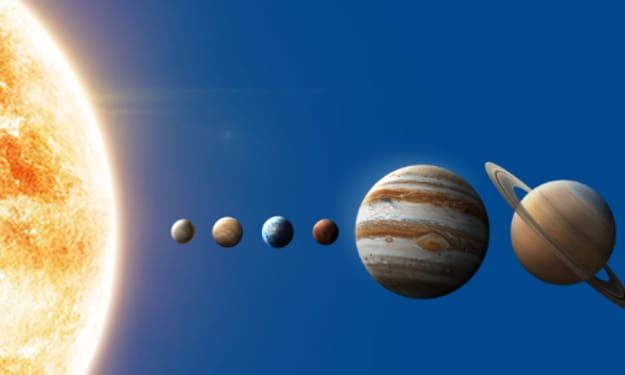
Double phenomena in the heavens Some people say in jest that the planets have aligned in their favor when life works the way they desire. Were you aware that there are seasons when things do line up in the heavens? There will be a planetary alignment AKA a planet parade, on February 28, 2026.
By Cheryl E Preston6 days ago in FYI
I was in a Toxic Relationship, with my Workplace
“You got that?” My ex yelled. His hands were balled into fists at his side. At six foot three, he towered over me. A normal person would have been afraid, but I looked up a video of George Lopez repeatedly saying, “I got this,” and showed it to him. I had grown used to this treatment, so much so that I didn’t blink when he ripped the phone from my hand and threw it across the room.
By Jade M.5 days ago in Confessions



Comments (4)
❤️👍
Your descriptions of the trench's extreme environment and the challenges of exploring it are vivid and engaging
Your descriptions of the trench's extreme environment and the challenges of exploring it are vivid and engaging. The historical context, including the pioneering dives by Jacques Piccard and James Cameron, adds a layer of human intrigue to the scientific exploration. This article is a testament to the enduring human fascination with the unknown and the relentless pursuit of knowledge about our planet.
:)