
LONDON'S CANNIBAL CLUB
The club members saw themselves as sex rebels and outsiders

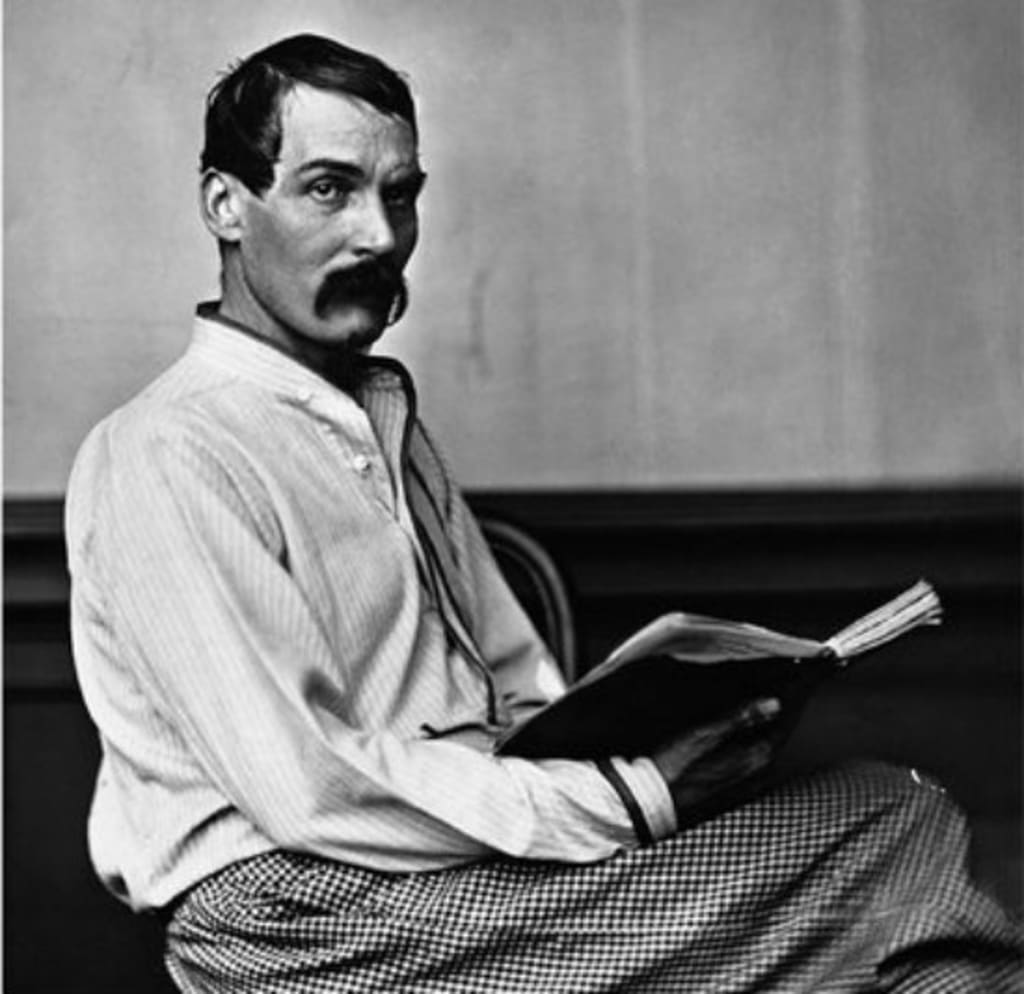
In 1863, a group of Victorian men gathered in a London club. They were there to create the Cannibal Club, a so-called anthropological society that, its members hoped, would explore far-off cultures in order to discover what made humans tick, even cannibals.
After the club was formed, they met regularly at Bartolini’s dining rooms in London. Cannibal club members were freethinkers, who came together to dine, drink, smoke and discuss topics such as censorship, polygamy, bestiality, female circumcision, ritual murders and cannibalism. In which one of its founders, Sir Richard Burton, called them ‘orgies’–although not of the sexual kind.
The club members also saw themselves as sex rebels and outsiders, and this is how they are treated by many historians, but many of the Cannibals were members of the Establishment – members of parliament, diplomats, the legal profession, the Army and even the church. They had a wide range of influential contacts – both formal and informal – with respected bodies such as the Royal Geographical Society and the government. It was through these contacts they gained much of the erotic literature that they prized.
Some Cannibals held the view that erotic literature was a form of truth-telling; a form of anthropological reportage. The reading about sex could be then seen as a scientific investigation. And also a frankness about sexual matters that was a mark of scholarly accuracy.
Richard Francis Burton, who possessed a mysterious love for shocking people, was to be the mastermind behind the new secret society. A knowledgeable geographer and explorer, he spoke 29 languages. A decorated captain in the army of the East India Company and renowned cartographer, Burton was also considered by some to be a rogue, a murderer, an impostor and betrayer, a sexual deviant, and a heroic boozer and brawler. He was a massive man, standing over six feet tall, with an imposing scar on his left cheek.
In 1853, Burton famously infiltrated Mecca disguised as a merchant, and for translating the raw texts of literature such as the Kama Sutra and the Arabian Nights. When asked by a priest if he’d ever killed a man, Burton replied, ‘Sir, I’m proud to say that I have committed every sin in the Decalogue.’ (the ten commandments). Burton was one of Hell’s original hounds and the club was his sanctuary.
On one occasion, erotica was smuggled into Britain via bag containing dispatches for Lord Palmerston. It was arranged by an officer with sadistic tastes who, on one occasion, asked Richard Burton to buy for him the skin of a young African woman which he could use to bind one of his volumes of erotica.
The group held the view of erotic literature as truth-telling; a form of anthropological reportage. The pleasure of discussing and reading about sex acts could then be seen as a form of scientific investigation. They met after the sun went down in Bartolini’s dining rooms near Fleet Street. A carved mace made to look like an African head chewing on a human thighbone was the club’s symbol. The club’s name is thought to derive from Burton’s interest in cannibalism.
Before launching into their meetings, a member would stand and recite the club’s Cannibal mantra.
Preserve us from our enemies;
Thou who art Lord of suns and skies;
Whose meat and drink is flesh in pies;
And blood in bowls!
Of thy sweet mercy, damn their eyes;
And damn their souls!
Later in the second half of the nineteenth century, the viewing privileges of the club and its consumers were weakened as French and British companies produced pornographic postcards. Many of them exploiting colonial imagery much like the Cannibal Club, had been doing all along.
About the Creator
Paul Asling
I share a special love for London, both new and old. I began writing fiction at 40, with most of my books and stories set in London.
MY WRITING WILL MAKE YOU LAUGH, CRY, AND HAVE YOU GRIPPED THROUGHOUT.
paulaslingauthor.com
Keep reading
More stories from Paul Asling and writers in FYI and other communities.
BEING A GOOD WIFE IN VICTORIAN TIMES THE RULES!
Have you ever wished you could live in an earlier, more romantic era? Let’s talk about the rules for being a married woman in Victorian times. The following pieces are from various guides for married women, published during the Victorian age.
By Paul Asling4 years ago in FYI
The Art of Traveling in Style: A Guide to Luxury Travel Services
Traveling has always been more than just moving from one place to another—it’s a chance to discover, unwind, and experience life in ways that stay with you forever. But there’s a distinct difference between a standard trip and a journey that feels truly luxurious. Luxury travel services are not just about expensive hotels or first-class flights; they are about crafting experiences that are seamless, personalized, and meaningful.
By All 4 Season7 days ago in FYI
March 15, 2026
Merriam Webster - Word of the day: Tranche refers to a division or portion of a whole. World Contact Day is commemorated every year on March 15. It is a unique observance held globally to focus on communicating with extraterrestrial life and exploring the possibility that intelligent beings may exist beyond Earth. World Contact Day inspires people to invoke their curiosity and spend time thinking about the universe and the mysteries surrounding it. What is the “Ides of March”? According to the Roman calendar, the Ides are a monthly occurrence. In March and other months with 31 days, the Ides always falls on the 15th; it falls on the 13th in months with 30 days. The Ides traditionally marked the arrival of the new Moon and was cause for celebration. The word “Ides” is derived from Latin, meaning “to divide.” Mothering Sunday in 2026 falls on Sunday, March 15. Mothering Sunday, celebrated in the United Kingdom and Ireland, occurs on the fourth Sunday of Lent, which is exactly three weeks before Easter. Unlike the fixed-date Mother's Day in countries like the United States, Canada, and Australia, Mothering Sunday’s date changes each year according to the Christian liturgical calendar. On March 15, 2026, several notable observances and events are celebrated: Dumbstruck Day: A day to express frustration. Everything You Think is Wrong Day: A day to challenge and celebrate wrong beliefs. International Day Against Police Brutality: A day to raise awareness and advocate against police violence. My look at today, March 15, 2026 below:
By Denise E Lindquistabout 19 hours ago in Writers



Comments
There are no comments for this story
Be the first to respond and start the conversation.