
Loeb Scale - Decoding the Cosmos
Is That an Alien Spaceship or Just a Really Weird Rock?
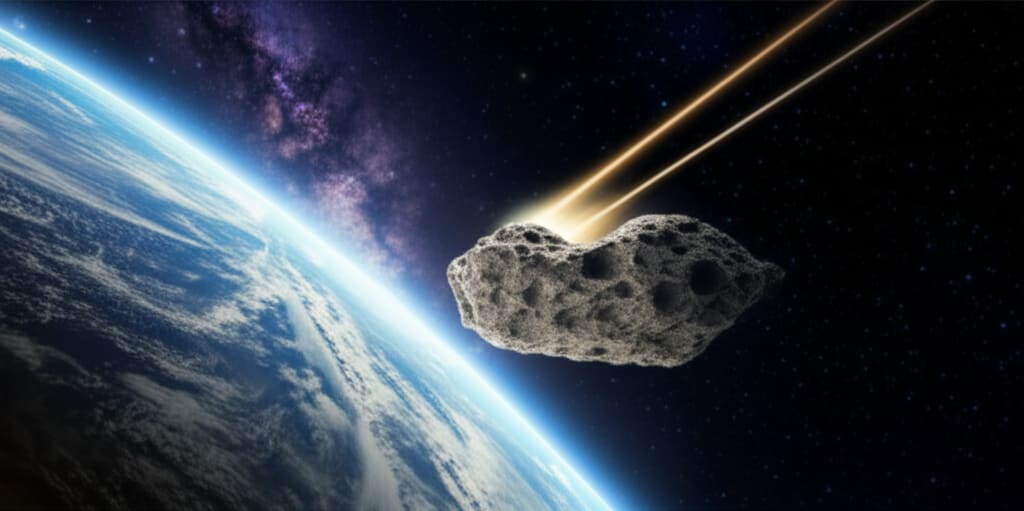
The Universe's Uninvited Guests
Imagine, if you will, a solitary wanderer, an object of unknown origin, hurtling through the inky blackness between stars before finally gracing our solar system with its fleeting presence. Is it merely a frozen vagrant, a cosmic shard of ice and rock, born of familiar stellar processes? Or could it be something… more? Something engineered, intentional, a whisper of a civilization beyond our comprehension?
Interstellar Objects (ISOs), once a theoretical rarity, are now increasingly within our observational grasp. Each one presents a tantalizing enigma, a potential message in a bottle cast adrift from distant shores. But how are we to discern the natural from the… unnatural? Enter the "Loeb Scale" (formally the Interstellar Object Significance Scale, or IOSS) – a fascinating new framework designed to grapple with precisely this mind-bending question.
The Cosmic Thermometer: What is the Loeb Scale?
The Loeb Scale is not simply another means of cataloging cosmic debris. It's a 0-10 classification system, meticulously crafted by Harvard's Avi Loeb and his collaborators, to specifically evaluate ISOs for the potential of artificial origins. Think of it as a sophisticated filter, sifting through the data to highlight those objects that warrant a second, closer look.
If the familiar Torino Scale (which assesses the impact risk of near-Earth objects) is concerned with planetary self-preservation, the Loeb Scale gazes outward, into the deep unknown.
Consider the dial:
- Levels 0-3 are the realm of the definitively natural. "Move along," it whispers, "nothing to see here."
- Levels 4-7, however, mark a threshold, a point where anomalies begin to accumulate. These are the "Hold on a second…" objects, displaying increasingly peculiar characteristics that hint at possible "technosignatures" – telltale signs of alien technology. Level 4 is the critical juncture, the point at which a dedicated investigation becomes imperative.
- Levels 8-10 represent confirmation. "Uh oh," the scale declares, "it's confirmed!" – a definitively artificial origin.
Crucially, the Loeb Scale is not a static judgment but a "living framework." Classifications can shift as new data emerges, as our understanding evolves, and as we subject these cosmic visitors to ever more scrutiny.
A Spark in the Dark: Why Was This Scale Needed?
To understand the necessity of the Loeb Scale, one must recall the 'Oumuamua moment. In 2017, the first officially detected ISO, 'Oumuamua, arrived, an enigma wrapped in a riddle and shrouded in scientific debate. Its bizarre acceleration, its unusual shape – everything about it seemed to defy easy categorization.
What became apparent was that the scientific community, understandably, often defaulted to natural explanations, even when confronted with the truly bizarre. There existed a "gap," a void in structured research into potential technosignatures. A reluctance, perhaps, to even entertain the possibility.
With new observatories like the Vera C. Rubin Observatory poised to flood us with a deluge of ISO detections – shifting from a handful per decade to potentially one every few months! – A consistent, evidence-based framework becomes essential.
The Loeb Scale embodies Avi Loeb's vision: a standardized system to explore all possibilities, without prematurely dismissing the "alien" hypothesis.
Galactic Gossip: The Controversies and Opinions
Inevitably, the Loeb Scale has ignited considerable debate. It's intertwined with the lingering ghost of 'Oumuamua and the more recent enigma of 3I/ATLAS.
Loeb has boldly suggested that 'Oumuamua might be a solar sail, propelled by the gentle pressure of sunlight. Regarding 3I/ATLAS, he has even ventured to suggest an "alien mothership" or "nuclear-powered spacecraft" – citing its peculiar glow, lack of a discernible tail, reddish hue, and unusual trajectory.
Critics retort that these theories are premature, that natural explanations, however convoluted, remain more plausible. The mantra echoes: "Extraordinary claims require extraordinary investigation!"
Then there's the "sensationalism" debate. Is Loeb genuinely driven by scientific curiosity, or is this a strategic maneuver to garner attention (and funding) for projects like the Galileo Project, attracting media coverage, book sales, and more?
At its core, the clash is between conventional scientific caution and Loeb's self-proclaimed "open-minded" approach. Is it "real science" to entertain such possibilities, or is it a descent into reckless speculation?
A more grounded perspective suggests that it's simply good sense to have such a scale in place, a rational approach to the unknown. Some even question whether the broader society is truly prepared for the implications of such a discovery.
Real-World Cosmic Case Files: How It's Applied
Let's examine the Loeb Scale in action:
- Oumuamua, as mentioned, garnered a Level 4 – anomalous, warranting a dedicated technosignature investigation.
- 2I/Borisov, on the other hand, registered a solid Level 0 – a definitively natural comet.
- 3I/ATLAS currently sits at Level 4, its classification a subject of ongoing scrutiny. Should it be conclusively identified as a comet, its rating could well drop to Level 0. This exemplifies the "living framework" at work.
It's worth noting that a definitive alien signal – an electromagnetic beacon, for example – could catapult an object directly to Level 6 or higher!
Stargazing into Tomorrow: The Future of the Loeb Scale
With the anticipated surge in ISO detections, the Loeb Scale will become indispensable.
It provides a structured, systematic method for searching for technosignatures, moving beyond ingrained assumptions.
Higher classifications will trigger targeted observational campaigns, perhaps employing Mars orbiters to obtain close-up images of objects like 3I/ATLAS.
The scale itself will undoubtedly adapt and refine as our knowledge of ISOs deepens.
Beyond the purely scientific realm, the Loeb Scale holds the potential to ignite public imagination and, should we ever confirm an artificial visitor, compel humanity to re-evaluate its place in the cosmos and its very priorities.
Are We Alone, or Just Not Looking Hard Enough?
The Loeb Scale, in its essence, is a provocative yet practical tool for navigating the perplexing mysteries of interstellar space.
It dares us to contemplate possibilities that were once confined to the realm of science fiction.
Whether it ultimately reveals natural wonders or confirms the existence of extraterrestrial technology, the Loeb Scale is pushing the very boundaries of astronomical inquiry, preparing us for whatever may come knocking from across the vastness of the galaxy.
Who in the Cosmos is Avi Loeb?
Imagine a Harvard professor, not just any professor, but one who has helmed prestigious astrophysics departments, and who also happens to believe that alien spacecraft might be nonchalantly cruising through our solar system. Meet Avi Loeb. This isn't mere speculation for him; it's a scientifically grounded hypothesis.
The central question beckons: Who exactly is this figure, and why is he causing ripples – and considerable skepticism – within the scientific community with his audacious assertions regarding extraterrestrial technology? As we stand on the precipice of understanding our place in the cosmos, Loeb's perspectives force us to confront uncomfortable possibilities.
We're poised to delve into his remarkable journey, from his early academic triumphs to his current, often controversial, pursuits. We'll explore his mind-bending theories, navigate the cosmic controversies, and contemplate his vision for humanity's continuing quest for extraterrestrial life.
From Israeli Farmland to Harvard's Hallowed Halls: The Making of an Astrophysicist
His origins are far removed from the sterile labs of Cambridge. Born in 1962 on a farm in Israel, Loeb's early fascination wasn't with the cosmos, but with the deeper philosophical questions that underpin existence itself. One might say he was always searching for meaning beyond the mundane.
His intellectual prowess became evident early. At the tender age of 18, he was admitted to Israel's Talpiot program, a testament to his exceptional abilities. By 24, he had secured a BSc, MSc, and PhD in physics. It's a dizzying pace, indicative of a mind operating at a different frequency.
The trajectory toward the stars wasn't a straight line. He initially led a US Strategic Defense Initiative project, before gravitating towards theoretical astrophysics at Princeton's Institute for Advanced Study. He joined Harvard in '93, rapidly achieving tenure. His ascent continued as he became the longest-serving Chair of Astronomy, Director of the Institute for Theory and Computation, and founder of Harvard's Black Hole Initiative. Loeb is no mere dilettante; he's a force of nature in the world of astrophysics.
His contributions to mainstream astrophysics are substantial. He predicted black hole "hot spots" and shadows – later confirmed through observation. He mapped out the formation of the first stars and galaxies and even contributed to the detection of exoplanets through gravitational lensing. These aren't the credentials of a fringe theorist; they are the hallmarks of a respected, established scientist.
The 'Oumuamua Outburst: When Mainstream Met... Martians?
Despite his success in traditional astrophysics, Loeb increasingly turned his attention to a more profound question: Are we alone? It was a shift, a divergence from the well-trodden path.
The arrival of 'Oumuamua in 2017, the first interstellar object to visit our solar system, marked a turning point. While most scientists classified it as a "weird comet," Loeb proposed a far more provocative hypothesis: it might be an alien spacecraft.
'Oumuamua's unusual acceleration away from the Sun, the absence of a cometary tail, and its peculiar, flattened shape fueled his speculation that it could be a "light sail" propelled by radiation pressure. It was an audacious claim, one that immediately drew criticism.
The IM1 incident in 2014, in which an interstellar meteor crashed off the coast of Papua New Guinea, further solidified Loeb's conviction. He posited that IM1 could be another piece of alien technology. Leading an expedition, he recovered "spherules" from the ocean floor, claiming they were fragments of this technology.
Now, his focus is on 3I/ATLAS, the third interstellar object detected, which he speculates could be an "alien mothership" or a reconnaissance probe, citing its unusual trajectory, size, and enigmatic glow. He even devised the "Loeb Scale" to quantify the "alien-ness" of these objects.
To validate his theories, Loeb launched the Galileo Project in 2021, aimed at systematically searching for evidence of extraterrestrial technological artifacts. This involves scanning the skies with observatories and employing AI to identify anything unnatural.
The Cosmic Controversy Club: Why Loeb's Peers Are Fuming
Loeb's willingness to entertain unconventional ideas has not been met with universal acclaim. He faces significant resistance from his peers.
The primary point of contention is the lack of definitive evidence. The scientific community largely adheres to the principle that "extraordinary claims require extraordinary evidence," and many believe Loeb's theories fall short.
The spherules recovered from the IM1 crash site have been met with skepticism, with critics suggesting they are more likely to be human-made coal ash or ordinary space dust. The seismic signal used to locate them has also been questioned, with some suggesting it was merely the rumble of a truck.
Accusations of "sensationalism" have been leveled against Loeb, with some claiming that he prioritizes media attention over rigorous peer review, "polluting good science" in the process.
Loeb's tendency to compare himself to Galileo Galilei, a lone visionary challenging established scientific dogma, has also drawn criticism, with some labeling it a self-serving "Galileo complex."
His background in plasma physics, rather than planetary science, has also been used to question his expertise on comets and meteors.
Loeb counters that science should be open-minded and not constrained by outdated paradigms. He attributes the criticism to "jealousy," "myopia," or "risk-aversion" and argues that the public's interest in extraterrestrial life warrants serious, well-funded investigation.
Glimpsing the Future: What's Next on Loeb's Cosmic Radar?
Loeb's ambitions extend far beyond mere speculation.
The Galileo Project is expanding, with plans to build a network of multi-sensor observatories to continuously monitor the sky for UAPs and interstellar objects, employing machine learning to analyze the vast amounts of data collected.
The Vera C. Rubin Observatory, currently under construction in Chile, is expected to detect interstellar objects every few months, significantly increasing the odds of finding something truly unusual.
Loeb has even proposed using NASA's Juno spacecraft, currently orbiting Jupiter, to intercept 3I/ATLAS for a close-up examination.
He also contemplates the potential intentions of extraterrestrial visitors, considering both benign and malign possibilities and advocating for a planetary defense system to monitor and potentially intercept any threats.
If his theories prove correct, the discovery of alien technology would fundamentally reshape humanity's understanding of its place in the universe, potentially unlocking new technologies and inspiring interstellar travel. Loeb's conviction is that we are not the "center of the intellectual universe."
The Cosmic Verdict: Visionary or Outlier?
The debate surrounding Avi Loeb continues, unresolved.
Whether you view him as a scientific trailblazer pushing the boundaries of knowledge or a sensationalist overstating the evidence, there's no denying that he has brought the search for extraterrestrial intelligence into the mainstream.
Ultimately, Avi Loeb reminds us that the universe is immense and full of mysteries. Sometimes, the most outlandish theories can spark the most crucial inquiries. What if, against all odds, he's right?
About the Creator
Francisco Navarro
A passionate reader with a deep love for science and technology. I am captivated by the intricate mechanisms of the natural world and the endless possibilities that technological advancements offer.
Keep reading
More stories from Francisco Navarro and writers in FYI and other communities.
The Buzzer: Russia's Mysterious UVB-76 Radio Station
Tune In to the Mystery Imagine, if you will, a world where the airwaves aren't filled with the curated noise of modern media, but instead, a constant, monotonous drone. A buzz that permeates the background, a digital hum that persists day and night, year after year. No catchy jingles, no breaking news, just the unwavering, unsettling… buzz.
By Francisco Navarro6 months ago in FYI




Comments
There are no comments for this story
Be the first to respond and start the conversation.