
Liquid Paper: Not Just Monkee Business
The Mistake that Grew Into Millions of Dollars
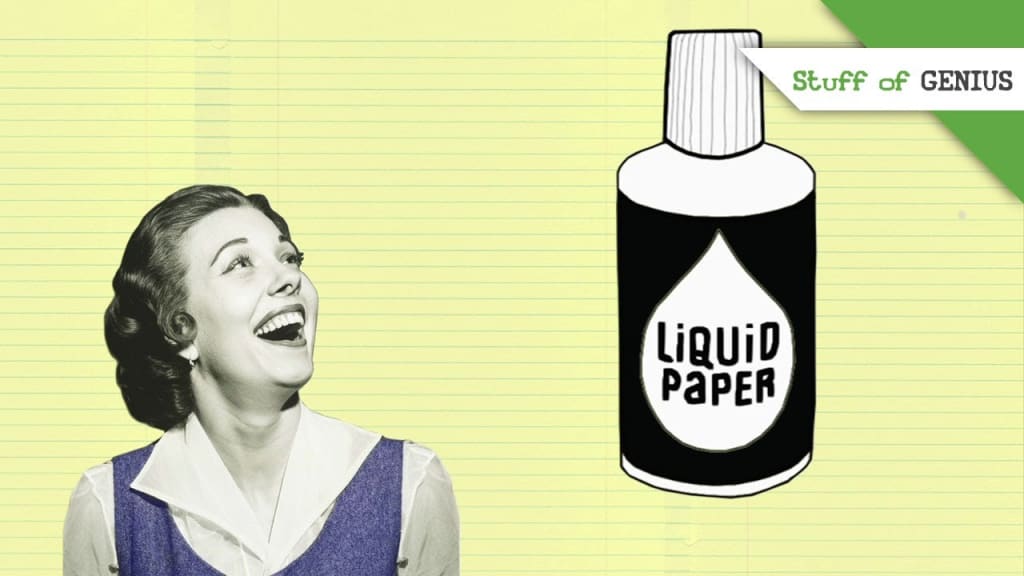
For those who remember typewriters, you also remember liquid paper. Liquid Paper was that small bottle of paint like substance used to correct typos. It wasn’t created by some large company. Rather it was invented out of necessity. This is the story behind it.
In case you don’t remember typewriters:
Typewriters were things we had before computers. They had physical keys with raised letters on them. It still used a qwerty layout. The keys were pressed and then hit an inked ribbon. This then made an inked letter appear as if by magic on the paper you had previously inserted in the roller. First there were manual ones, then electric ones came into being. Typos couldn't be fixed with a backspace key. All kinds of things were tried to make “mna” into “man”. Many didn't work too well and often people had to re-type an entire page because of one minor typo.
Think of the writing scene in "Love Actually" if you're still confused about typewriters.
One enterprising woman, Bette Nesmith Graham, invented a substance to literally paint the mistake away. In the early 50's while working as a secretary in a Dallas (TX) bank, she started playing around with tempera paint to rid the paper of the offending keystroke. It all started due to her looking away from her work at some sign painters at a building across the street. When they made a mistake, they simply painted over it using the background color on the sign. Why couldn’t the same work for her typing she reasoned.
Bette’s mother was an artist. Growing up she thought she would follow the same path. But, while she learned the process, she lacked the talent. As an adult, though she remembered the lessons her mother taught her. At her kitchen table she played with the water-based paint until it had the right consistency. Some were too runny; some were too thick and clogged her blender. She was further inspired to put the paint into an empty nail polish bottle so she could simply brush the mistake away.
Graham tried to keep her invention a secret, hiding the bottle away in her desk when not in use. Imagine the furtive movements as she used her body to shield her mistake correcting fluid from prying eyes. But despite her best efforts, her bottle of timesaver was discovered. The other typists and secretaries noticed and wanted in on the goods. The sales may have taken the form of black market sales or bootlegged booze:
“Psst, you got the stuff?” one would ask.
“Show me the dough,” Bette would respond peering around before slipping the nail polish bottle into the others’ hand.
It started as many small businesses do, in her garage. She paid her son, Michael, and his friends to fill nail polish bottles with the gooey liquid. This was then sold to other secretaries. Things hummed along for a few years and her invention, “Mistake Out,” barely broke even. Not to be stopped, Graham continued to research and improve her product.
Ironically, she was fired from her job for a mistake. She was so caught up in thinking about her business, she signed a letter with the name of her company. In retrospect, this was the best thing to happen to the single mom.
Her business really took off. She applied for a patent under the new name Liquid Paper. IBM passed on an opportunity to acquire the company. Not to be stopped, Graham continued to grow the company moving the headquarters to ever larger spaces to accommodate the demand.
She remarried during this time to a man who would try to take away her company. At one point she was even banned from the building. Being the strong woman she was, she fought for, and regained control before selling the company to the Gillette Company for $47.5 million, plus royalties in 1979. Due to a stroke, she died 6 months later, leaving half her money to her son, Michael Nesmith and the rest to the two foundations she started to support women in the arts and business.
For those wondering, this is the same Michael Nesmith who had been with the Monkees in the 1960’s. Thanks to his mother, he was able to buy his way out of his contract and be separate himself from the Monkees to pursue his own singing career.
About the Creator
Keep reading
More stories from writers in FYI and other communities.
The Pentagon’s Secret Videos: Are UFOs Finally “Official”?
For decades, the idea of Unidentified Flying Objects (UFOs) was relegated to the fringes of late-night talk shows and sci-fi conventions. Believers suspected the military was hiding the truth, while the "powers that be" remained silent.
By Areeba Umair6 days ago in FYI



Comments
There are no comments for this story
Be the first to respond and start the conversation.